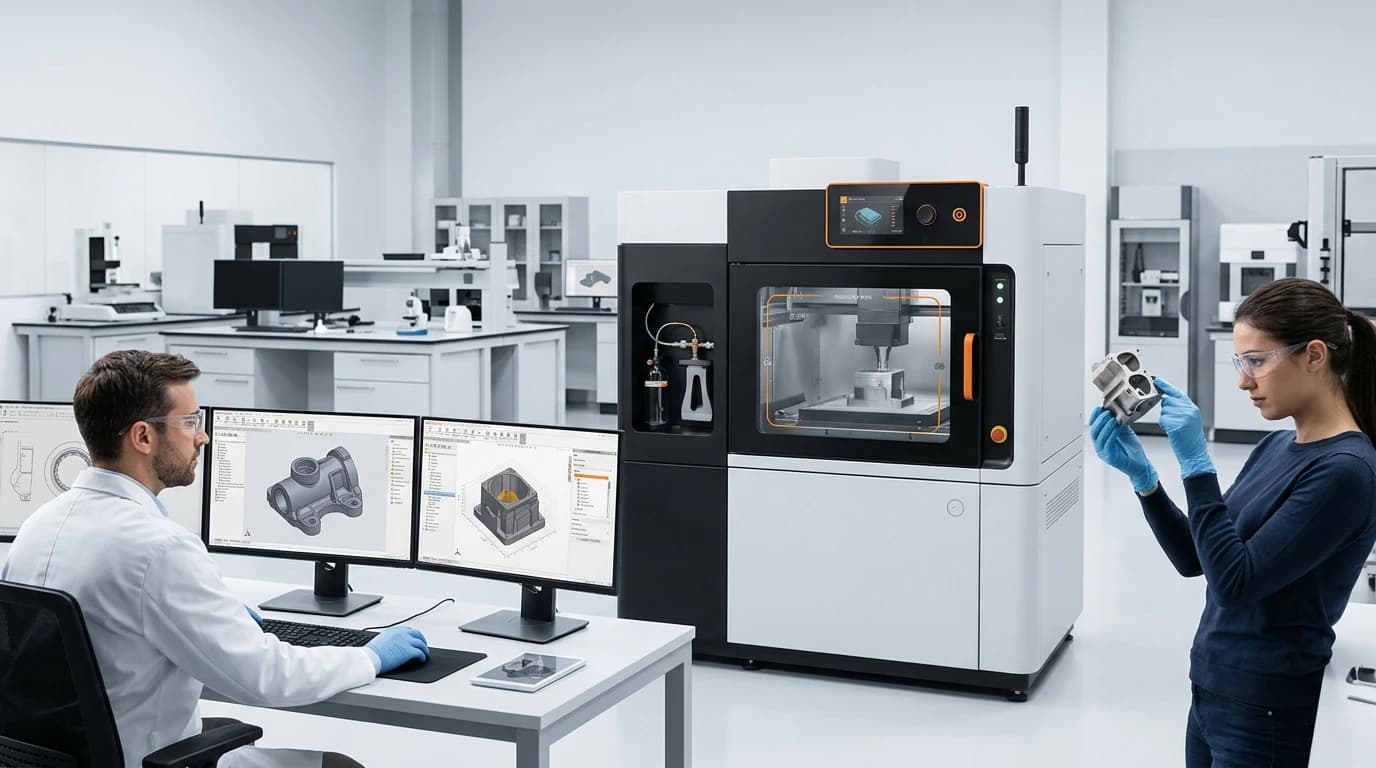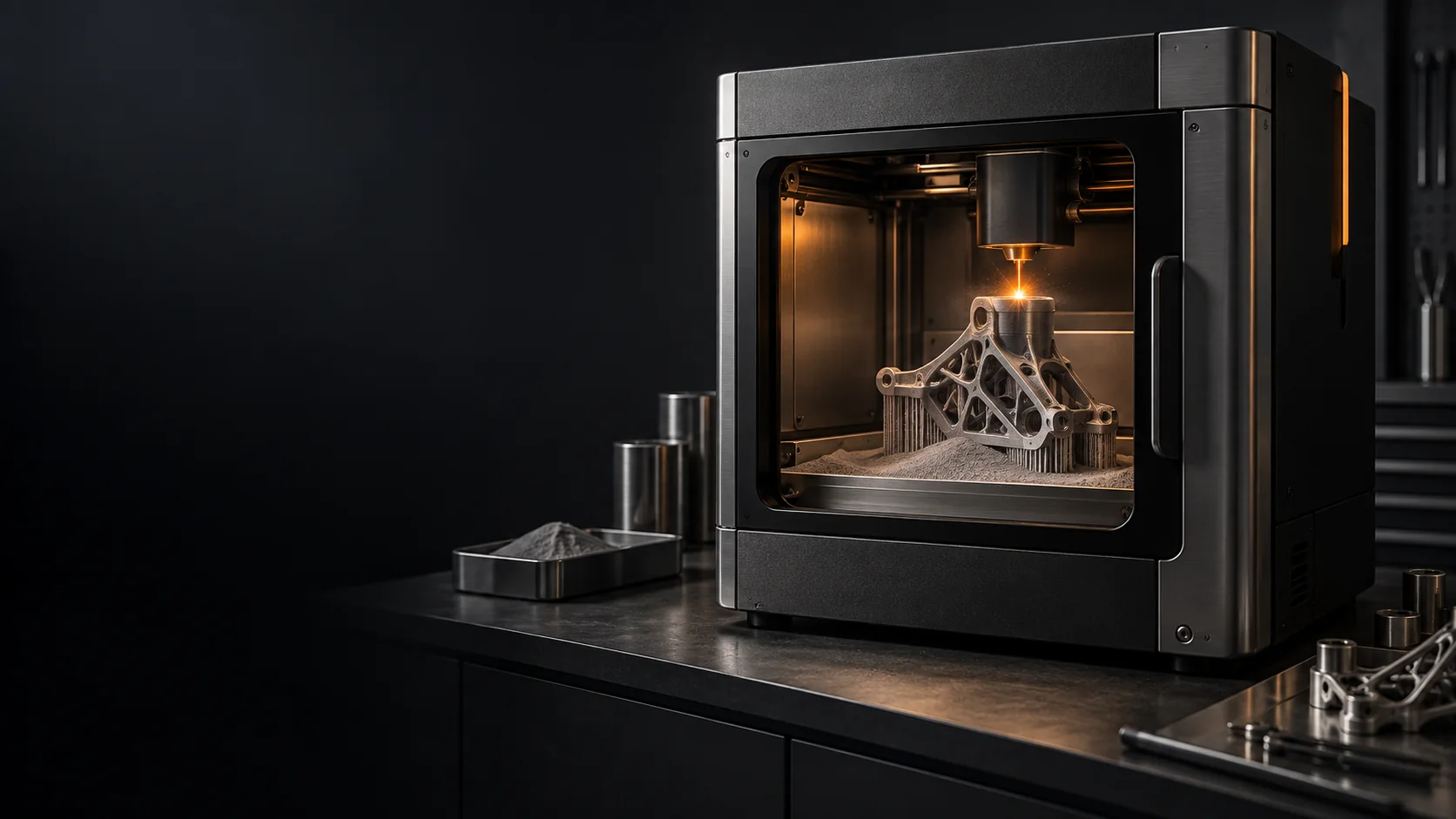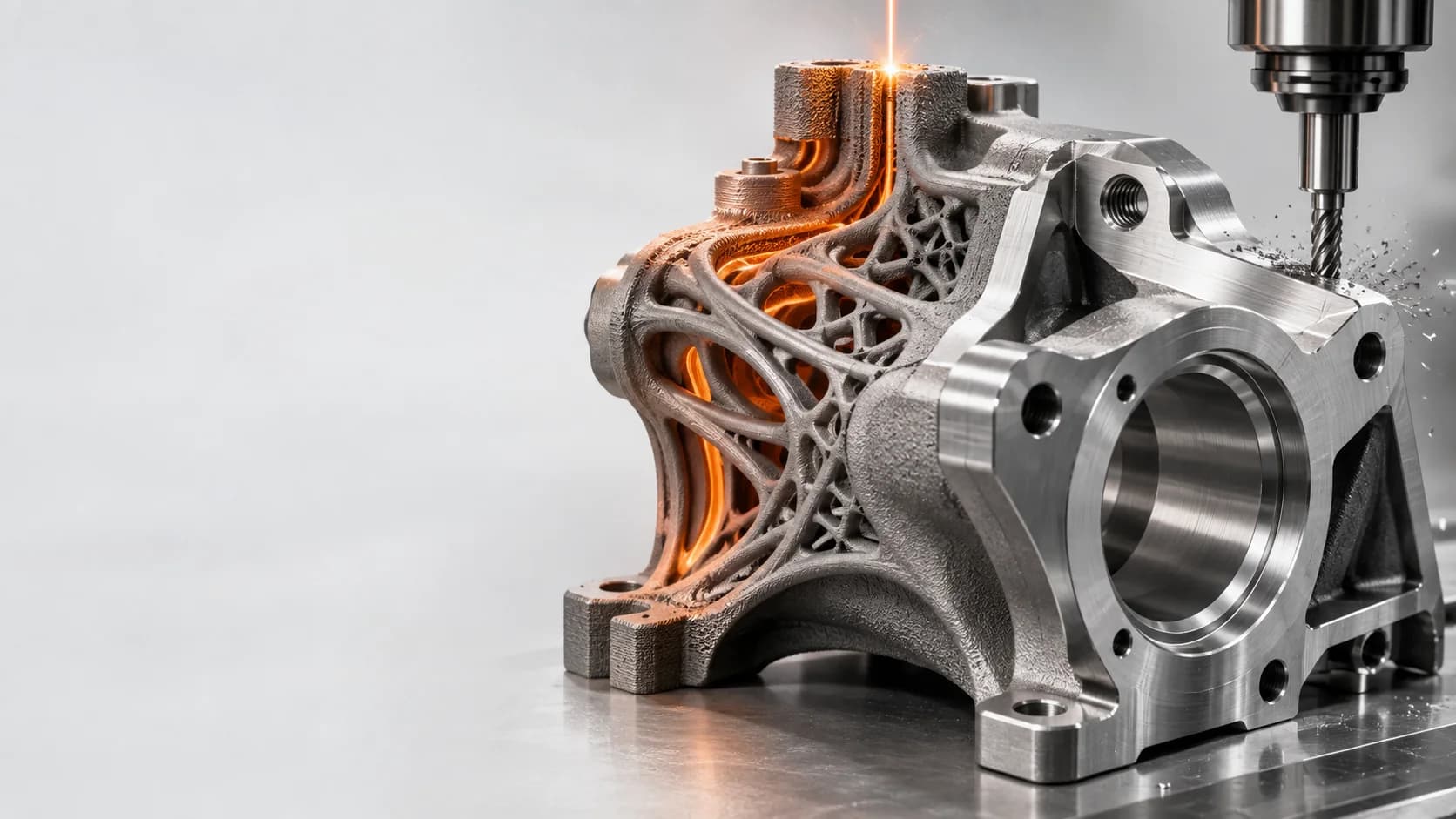
A lightweight aerospace bracket, a turbine component and a mould insert can all be made with metal additive manufacturing. Their material requirements, though, are very different. One may prioritise low mass, another has to hold its properties at high temperature, while the mould insert may need hardness, wear resistance and efficient heat removal.
That is why selecting metal 3D printing materials starts with the job the finished part has to do. Alloy chemistry matters, but so do the AM process, feedstock form, build parameters, thermal history and post-processing route. Together these decide whether a material becomes a reliable engineering part.
This guide looks at the main material families used in metal AM, where they are useful, what makes them difficult to process, and how to move from an alloy name to a qualified material and process window.
What Metals Can You 3D Print?
Metal additive manufacturing can process a wide range of steels, titanium alloys, nickel-based superalloys, aluminium alloys, cobalt alloys, copper alloys and research materials. The exact options depend on the AM process and the form in which the feedstock is supplied.
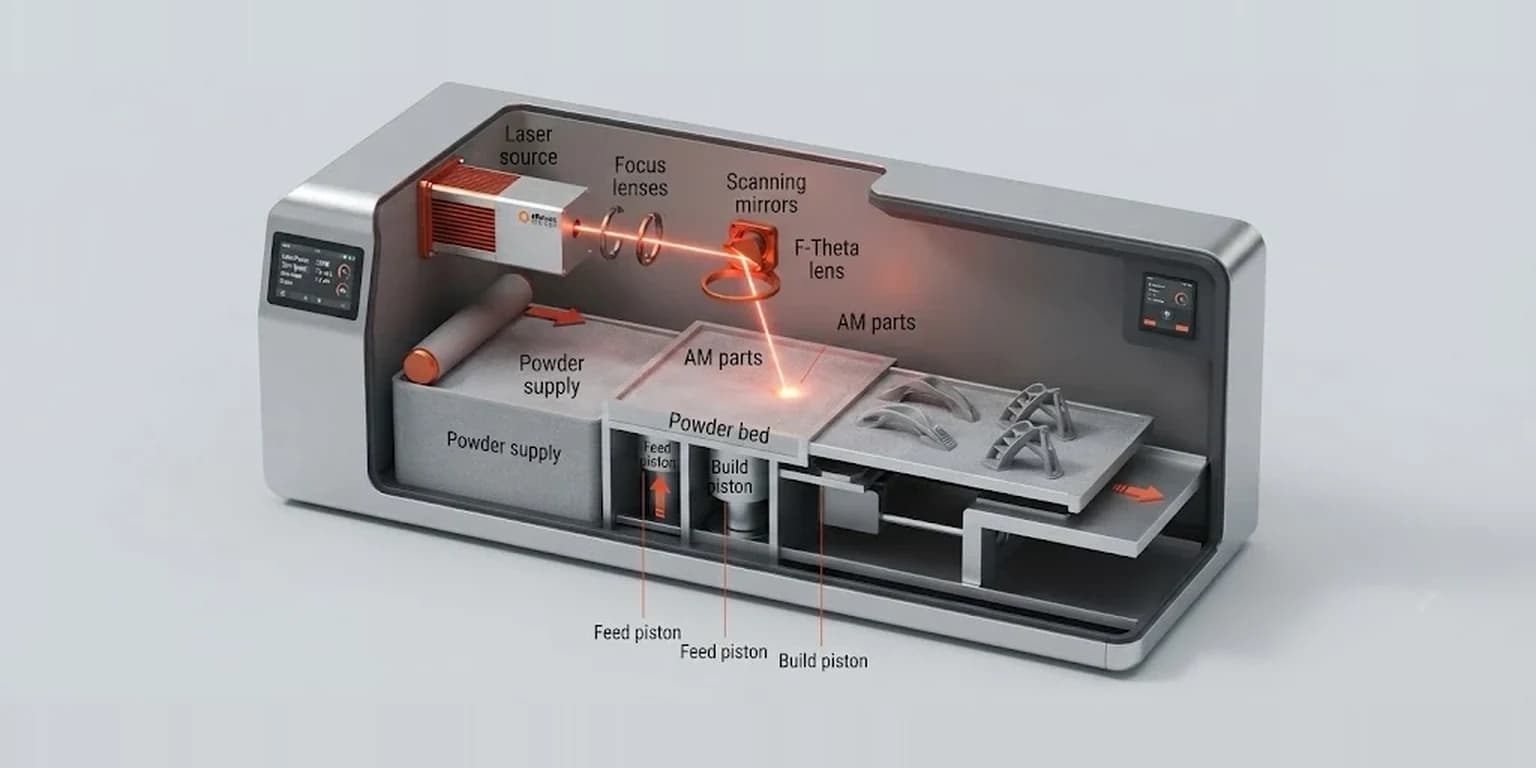
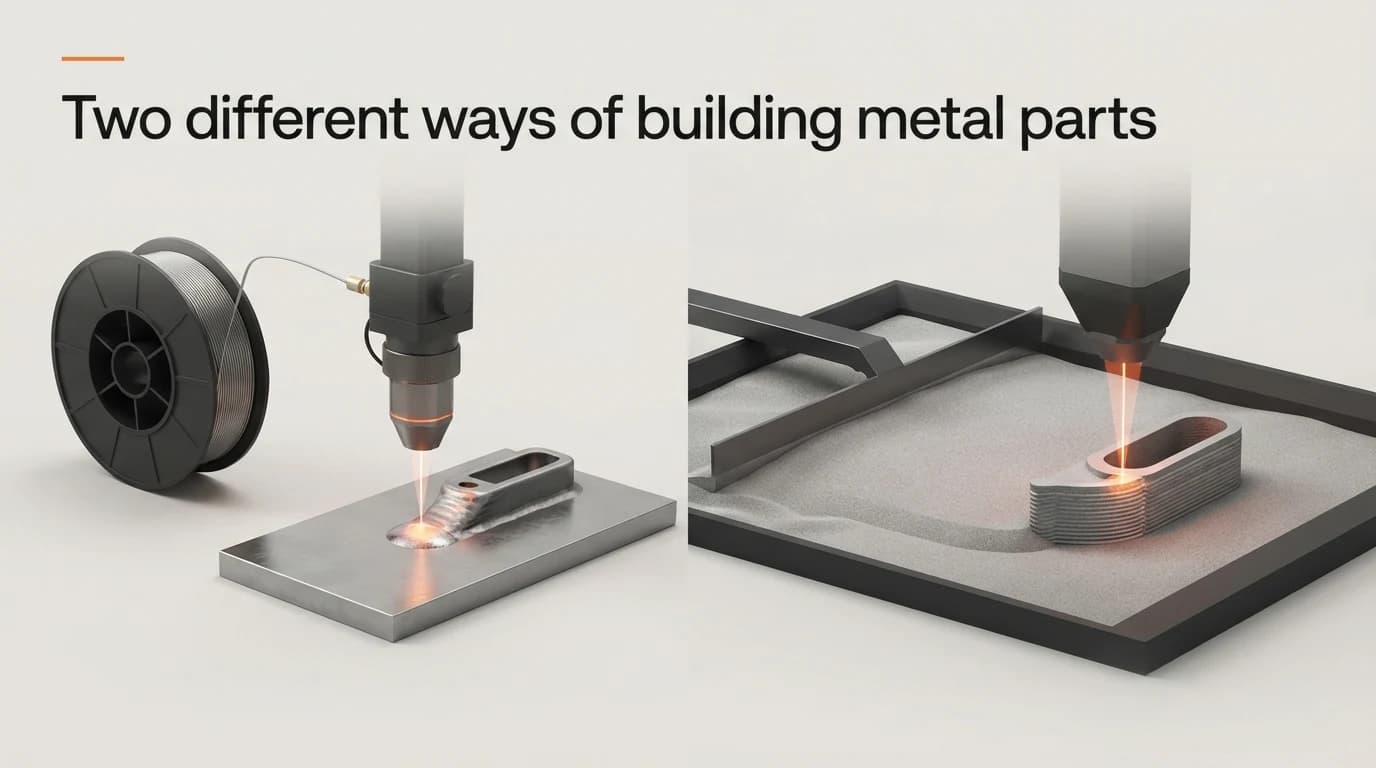
Laser Powder Bed Fusion (L-PBF) spreads thin layers of metal powder and selectively melts each layer with a laser inside a controlled atmosphere. It is widely used where fine features, internal channels, lattices and detailed geometry matter.
Directed Energy Deposition (DED) feeds material into a melt pool while the deposition head or the part moves along a programmed path. Wire-fed DED suits deposition studies, repair, cladding, prototyping and material-development work.
Other routes include electron-beam powder bed fusion, powder-fed DED and binder-based processes followed by debinding and sintering. This guide focuses on L-PBF and wire-fed DED because they represent two very different ways of processing metal feedstock. TWI publishes a useful technical overview of laser powder bed fusion, and our own summary of both processes sits on the technologies page.
How to Choose the Best Metal for 3D Printing
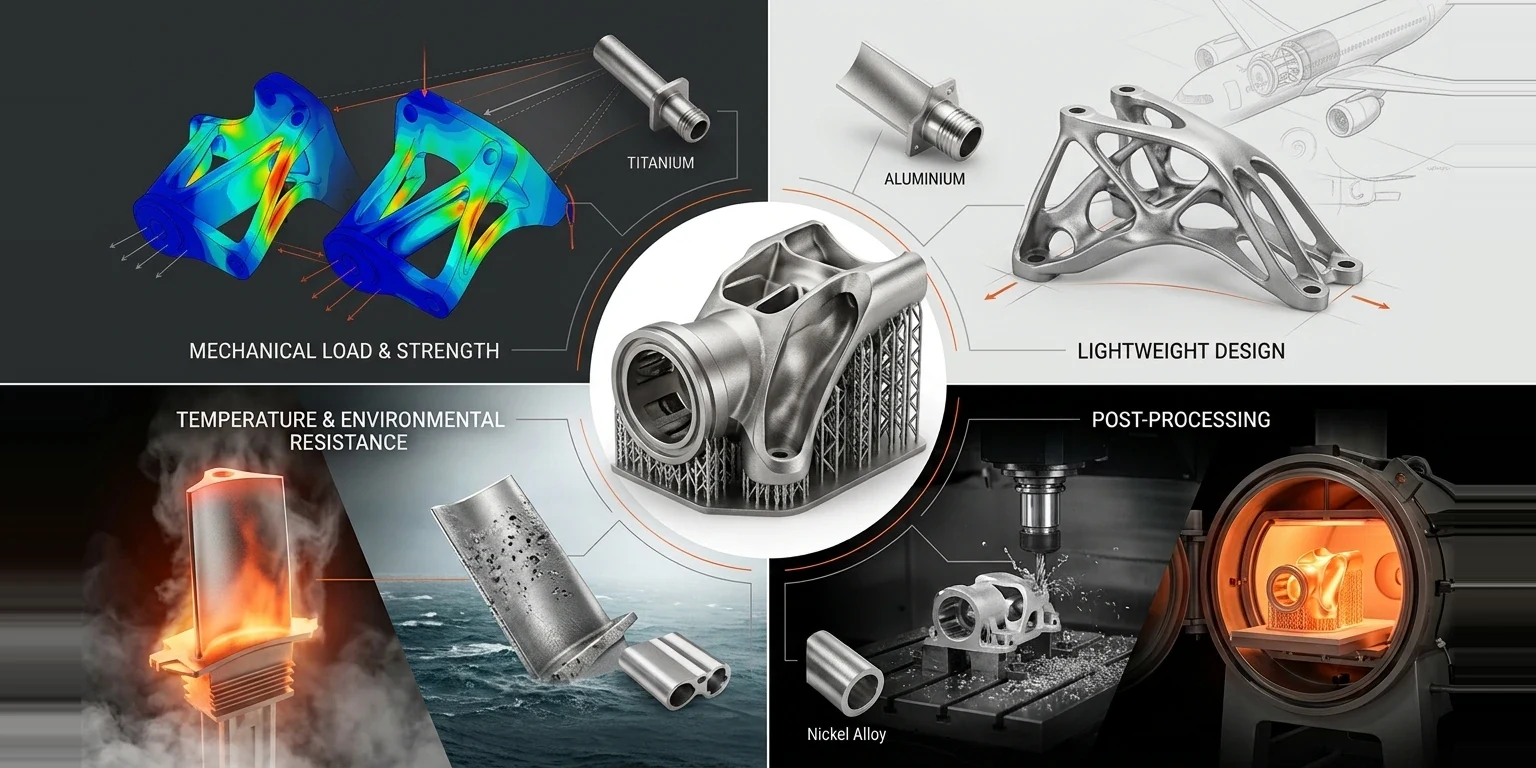
There is no universal best metal for 3D printing. A useful shortlist comes from the service requirements of the part and the manufacturing route needed to meet them. Four questions usually narrow the field quickly.
1. What loads will the part experience?
Consider static load, repeated load, impact, wear and fatigue. A high tensile strength on a datasheet does not describe the complete behaviour of a printed component: build orientation, defects, surface condition and post-processing all affect performance.
2. Does mass matter?
Titanium and aluminium become attractive when reducing mass has real value. In aerospace, robotics or high-speed moving systems, weight savings may justify a more demanding material route. For a stationary fixture, density may matter far less than cost, wear resistance or ease of machining.
3. What environment will the part see?
Temperature, corrosion, oxidation and chemical exposure can remove otherwise promising materials from the shortlist. Nickel-based superalloys are widely used in demanding hot environments, while stainless steels are common where corrosion resistance and general engineering performance matter.
4. What happens after the build?
Heat treatment, machining, surface finishing, inspection and, for some applications, hot isostatic pressing can all be part of the route. These steps influence final properties, dimensional accuracy and cost, so they belong in the material decision rather than after it.
Common Metal 3D Printing Materials
Stainless steel
Stainless steels are among the most practical metal AM materials because they combine useful mechanical properties with corrosion resistance and established engineering experience. 316L is common in both L-PBF and DED because it is tough, corrosion resistant and weldable. Precipitation-hardening grades such as 17-4PH are used where higher strength and hardness are required.
Printed steels can carry residual stress, porosity and a microstructure that differs from conventionally processed material, so stress relief, solution treatment or ageing may form part of the route to final properties.
Titanium
Ti-6Al-4V is the best known titanium alloy in additive manufacturing. A density of about 4.4 g/cm³, high specific strength and corrosion resistance make it important in aerospace, motorsport and medical applications. Extra-low-interstitial grades are also used for implants where the relevant material and regulatory requirements are met.
Printing titanium requires careful atmosphere control, because hot titanium has a strong affinity for oxygen, nitrogen and hydrogen. Powder handling, chamber condition and shielding are therefore part of process quality. Fine titanium powder is also combustible, so risk assessment, housekeeping and fire controls are essential in powder-based environments.
Titanium creates the most value when the design uses its low density and the design freedom of AM together: lightweight brackets, lattices and consolidated components are good examples.
Nickel superalloys
Nickel-based superalloys are used where elevated-temperature strength, oxidation resistance and corrosion resistance matter. Alloy 625 and alloy 718 are established examples in metal AM and appear in aerospace, energy and heat-exchanger applications.
Printability varies significantly across the family. Alloy 625 and alloy 718 have substantial AM experience behind them, while high-gamma-prime alloys such as CM247LC can be far more crack-sensitive. Rapid heating and cooling contribute to solidification, liquation and solid-state cracking in susceptible compositions, so parameter development, thermal management and post-processing may all be needed.
Aluminium alloys
Aluminium alloys are useful where low mass, thermal performance and efficient material use matter. AlSi10Mg is one of the most familiar L-PBF aluminium alloys, used for lightweight structures, housings, prototypes and thermal components.
Aluminium brings specific laser-processing challenges: high thermal conductivity moves heat away from the melt zone quickly, and the oxide film on the powder affects melting behaviour. Stable processing depends on a suitable powder, machine configuration and parameter window.
Tool and maraging steels
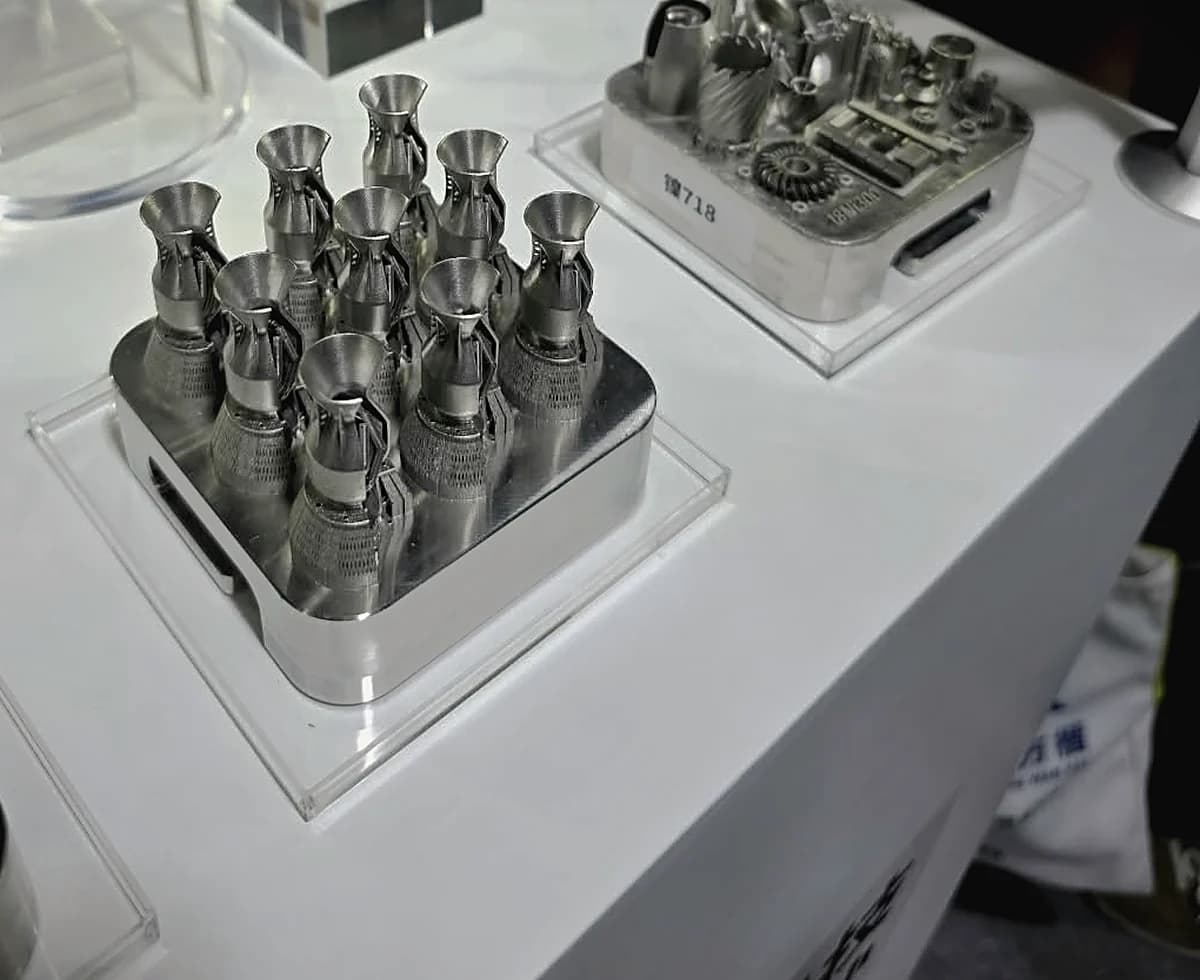
Tooling is an area where additive manufacturing can create value through geometry as well as material properties. H13 tool steel appears in AM research and industrial tooling, while maraging steels such as 18Ni300 (1.2709) are well established in powder-bed applications.
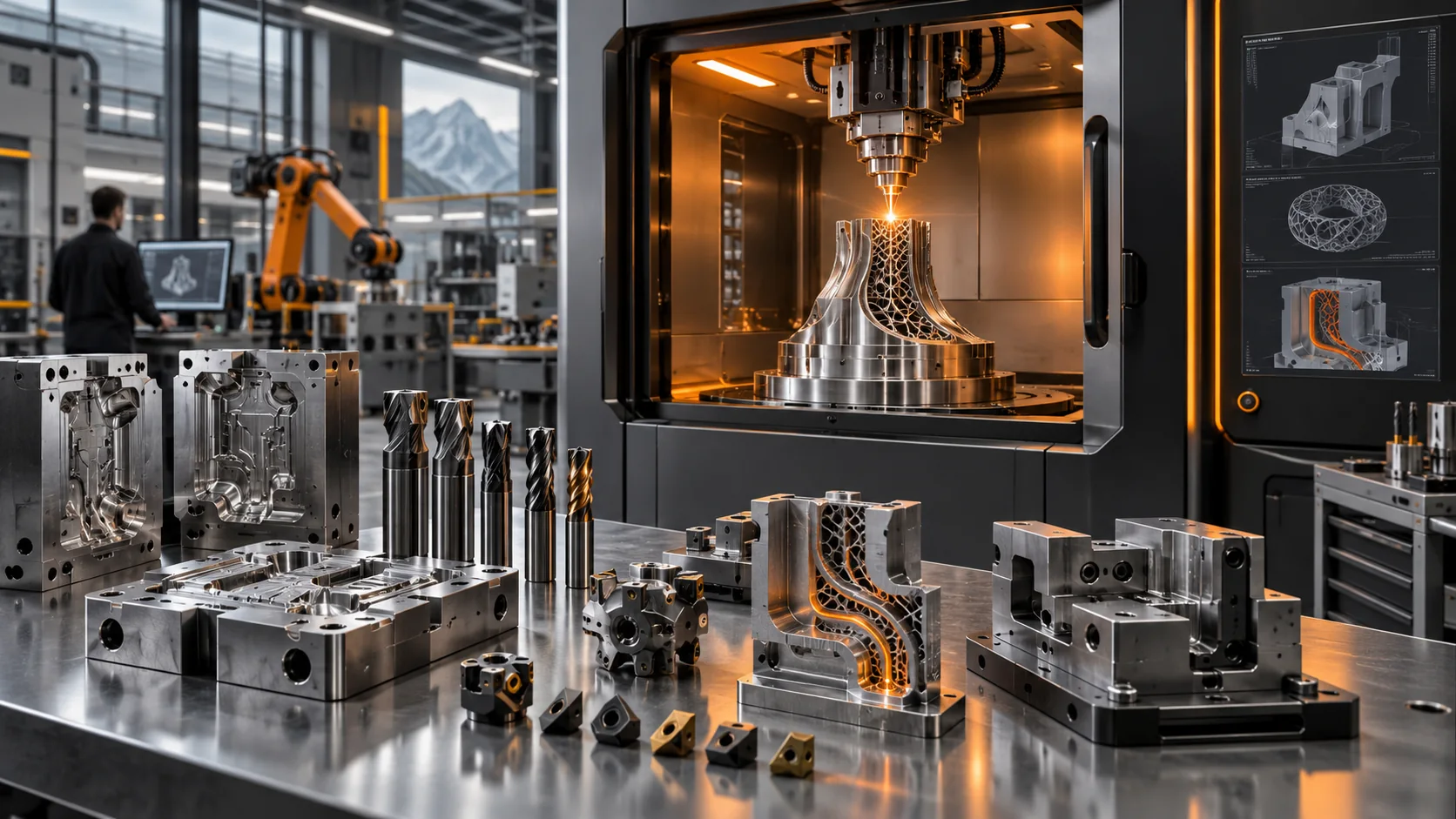
Maraging steel gains very high strength through an ageing heat treatment, which suits mould inserts, dies and high-strength functional parts. AM can also create conformal cooling channels that follow the shape of a mould cavity, giving cooling paths that are difficult to drill conventionally. Final performance depends strongly on the heat-treatment condition: as-built and aged are very different material states.
Copper and copper alloys
Copper is attractive for heat exchangers, thermal management and electrical applications because of its high thermal and electrical conductivity. Those same properties make laser processing more demanding: heat is carried away from the melt zone quickly and the material can couple less efficiently with common infrared laser wavelengths.
Depending on the alloy and system, successful processing may need carefully developed parameters, higher available laser power, modified absorptivity or alternative wavelengths such as green or blue. Treat copper as a specialised AM material with its own development needs.
Cobalt-chrome
Cobalt-chrome alloys combine wear resistance, corrosion resistance and useful high-temperature behaviour. They are used in medical and dental work as well as specialist engineering components, and final properties depend on the exact composition, build route and post-processing condition.
High-entropy alloys
High-entropy alloys, or HEAs, are built from several principal elements, often in comparable proportions. They open a very large composition space and have become an active research area for new combinations of strength, ductility, corrosion behaviour and temperature performance.
AM is a useful way to study how composition, rapid solidification and process parameters interact. HEAs can be single-phase or multiphase, and the label alone does not guarantee superior properties: each composition still has to be characterised and qualified. For universities and materials-development teams, open parameter access supports studies of laser power, scan speed, layer thickness, hatch spacing and thermal history.
How Metal Properties Change After 3D Printing
Two laboratories can print the same nominal alloy and end up with different microstructures and properties. Powder size distribution, chemistry, oxygen content, machine architecture, laser parameters, scan strategy, layer thickness, build orientation and thermal history all influence the result.
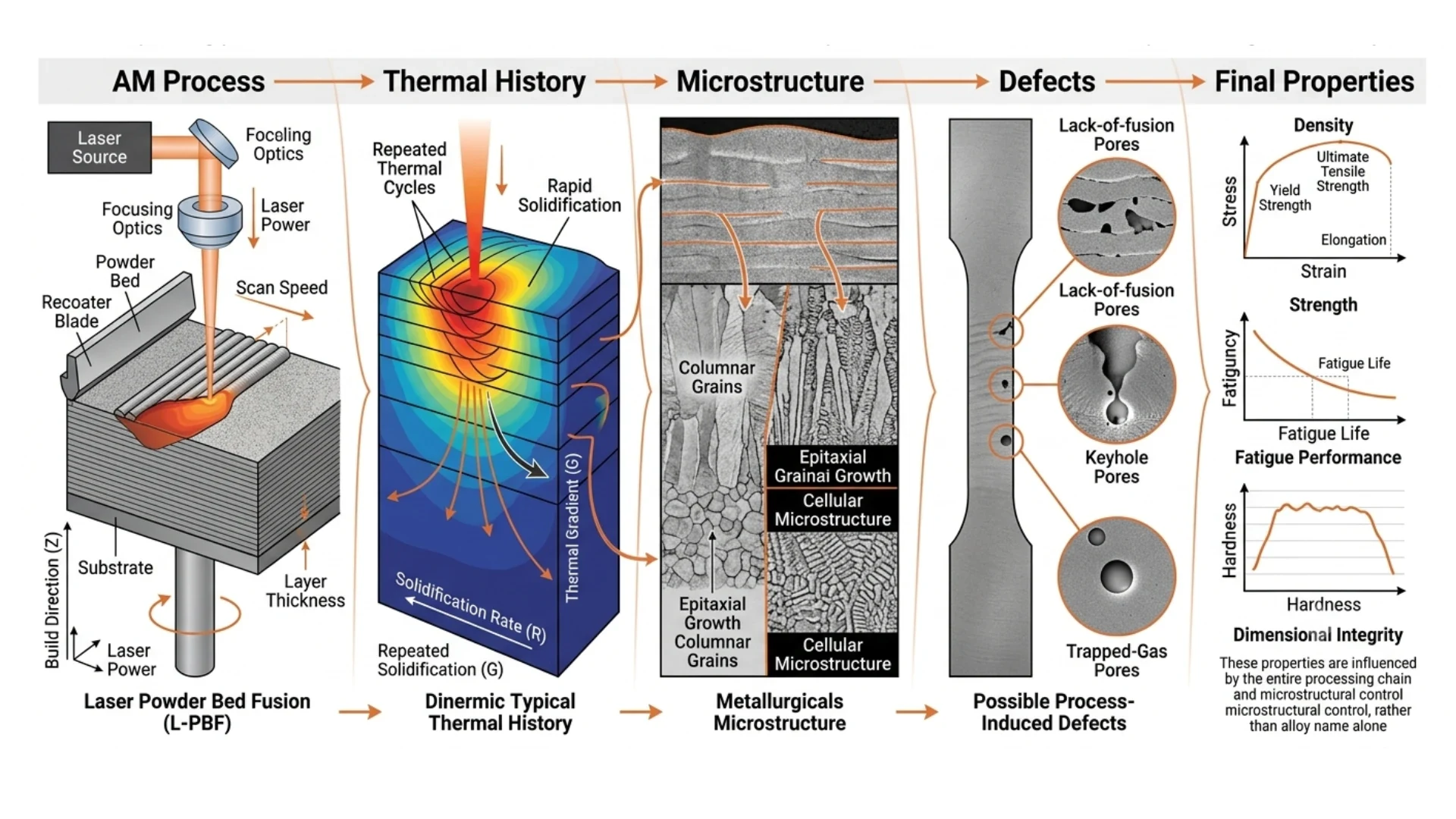
Metal AM is usually described through a process-structure-property relationship. The process creates a thermal history; that thermal history shapes the microstructure and the defect population; those features drive the properties measured later. Qualification connects the whole chain to the requirements of the part.
Porosity and process defects
Lack-of-fusion pores, keyhole pores and trapped-gas pores are process defects, and they are normally unwanted when a dense structural material is required. They can reduce fatigue performance and often indicate that the process window or the feedstock condition needs attention.
A lattice, trabecular structure or deliberately porous surface is a different matter: there, void space is part of the designed geometry. Biomedical structures are one example where controlled porosity is intentional, so it is worth separating unwanted process defects from engineered open space.
How heat treatment changes printed metal properties
The as-built condition is only one possible state of an AM material. Heat treatment can relieve residual stress, alter phase distribution, change hardness and modify strength or ductility. Precipitation-hardening materials such as maraging steel and alloy 718 are clear examples where post-build thermal treatment is central to the required properties.
Hot isostatic pressing (HIP) is also used for suitable components: heat and isostatic gas pressure can close internal, isolated pores and improve density. Surface-connected defects stay connected to the surrounding gas and do not respond the same way, so HIP should be specified with the actual defect type and qualification need in mind.
Can You Develop Parameters for a New Metal?
Yes, provided the machine gives suitable control and the work is approached systematically. Producing a shape from a new material is an early milestone. Qualification needs evidence that the process repeatedly delivers the required density, microstructure, dimensions and mechanical performance.
A practical development loop may include feedstock characterisation, starting parameter selection, test coupons, density measurement, metallography, mechanical testing and repeated refinement. Depending on the process, the variables include laser power, scan or travel speed, hatch spacing, layer height, wire-feed rate, shielding conditions and scan strategy.
A parameter that increases density can also affect residual stress, surface condition or microstructure. Parameter development is usually a window-finding exercise followed by validation across the intended build and application conditions.
Metal 3D Printing Materials Comparison
The figures below are approximate room-temperature densities for representative alloys. They are useful for first-pass selection; exact values and final properties should come from the specific material specification and the qualified process route.
| Material family | Approx. density | Main engineering reason to consider it | Important AM consideration |
|---|---|---|---|
| Aluminium alloys, e.g. AlSi10Mg | ~2.7 g/cm³ | Low mass and useful thermal behaviour | High thermal conductivity, oxide formation and laser interaction affect processing |
| Titanium alloys, e.g. Ti-6Al-4V | ~4.4-4.5 g/cm³ | High specific strength and corrosion resistance | Reactive at high temperature; atmosphere control and powder safety matter |
| Stainless steels, e.g. 316L, 17-4PH | ~7.7-8.0 g/cm³ | Corrosion resistance and broad engineering use | Final properties depend on alloy, build condition and post-processing |
| Tool and maraging steels, e.g. H13, 18Ni300 | ~7.8-8.1 g/cm³ | Strength, hardness and tooling performance | Heat treatment or ageing can strongly influence final properties |
| Nickel superalloys, e.g. alloy 625, alloy 718 | ~8.2-8.5 g/cm³ | Elevated-temperature and corrosion performance | Printability differs significantly by alloy; some compositions are crack-sensitive |
| Cobalt-chrome, e.g. CoCrMo | ~8.3-8.6 g/cm³ | Wear and corrosion resistance | Process parameters and post-processing must match the application |
| Copper and copper alloys | ~8.9 g/cm³ | Thermal and electrical conductivity | High conductivity and laser reflectivity can make processing demanding |
| High-entropy alloys | Varies | Research into new combinations of properties | Composition-specific parameter development and characterisation are essential |
Printed parts may differ slightly from fully dense wrought material depending on porosity and processing condition.
Where Lasefinity Fits
For material-development and precision powder-bed work, FusionX uses L-PBF with open process control. We currently list 316L stainless steel, Ti-6Al-4V, pure titanium, alloy 625, alloy 718, maraging steel, cobalt-chrome and high-entropy alloys among the supported powders, with custom alloys on request. The full list, with the form each material takes, is on the materials page.
Explore the FusionX L-PBF metal 3D printer
Wire-fed work follows a different route. WireX uses Directed Energy Deposition and is positioned for research, education, prototyping, repair and cladding with wire feedstock, with carbon steel, stainless steel and titanium among the supported wire categories.
Explore the WireX wire-fed DED printer
Final Thoughts
Choosing the right material for metal 3D printing comes down to how the alloy, the process and the final application work together. Density, strength, corrosion resistance and temperature performance matter, but so do printability, post-processing and qualification.
For engineers and researchers, the value comes from understanding how a material behaves through the complete AM process, from feedstock and parameter development to heat treatment and final testing.
As metal AM continues to support both established alloys and newer materials such as high-entropy alloys, better material decisions will come from combining good design choices with reliable process control and a clear understanding of what the finished part has to do.

Additive Manufacturing and Structural Integrity at Lasefinity
Connect on LinkedIn