

WireX
WireX: Desktop Wire-Fed Directed Energy Deposition (DED) Metal 3D Printing
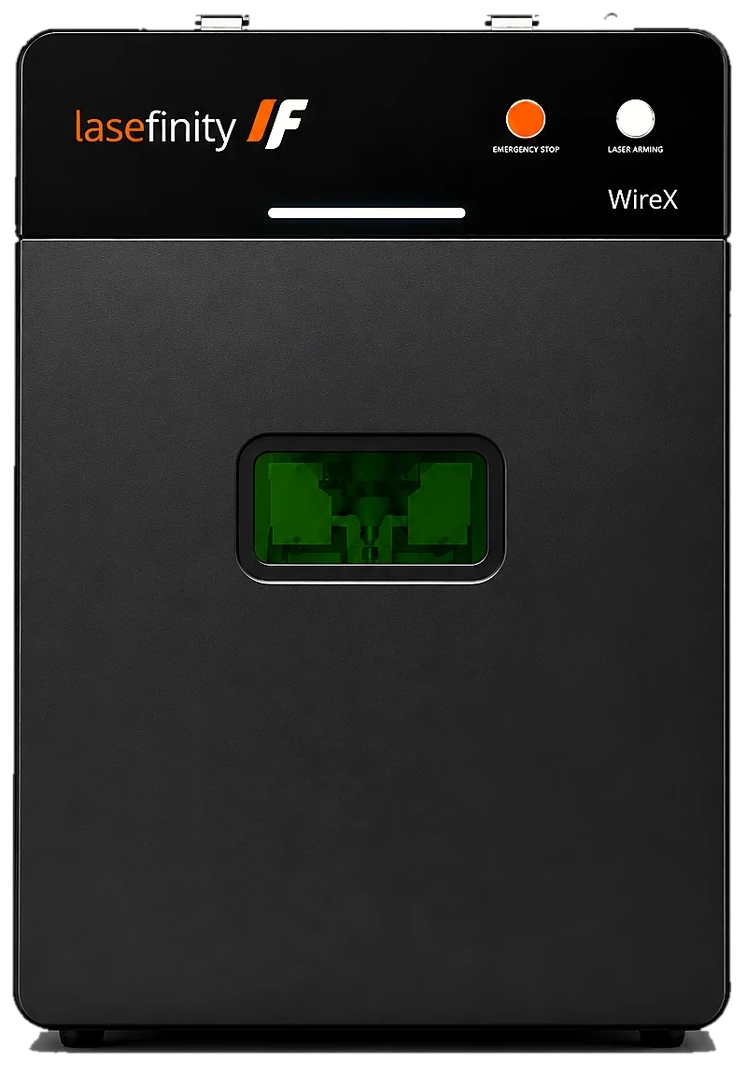
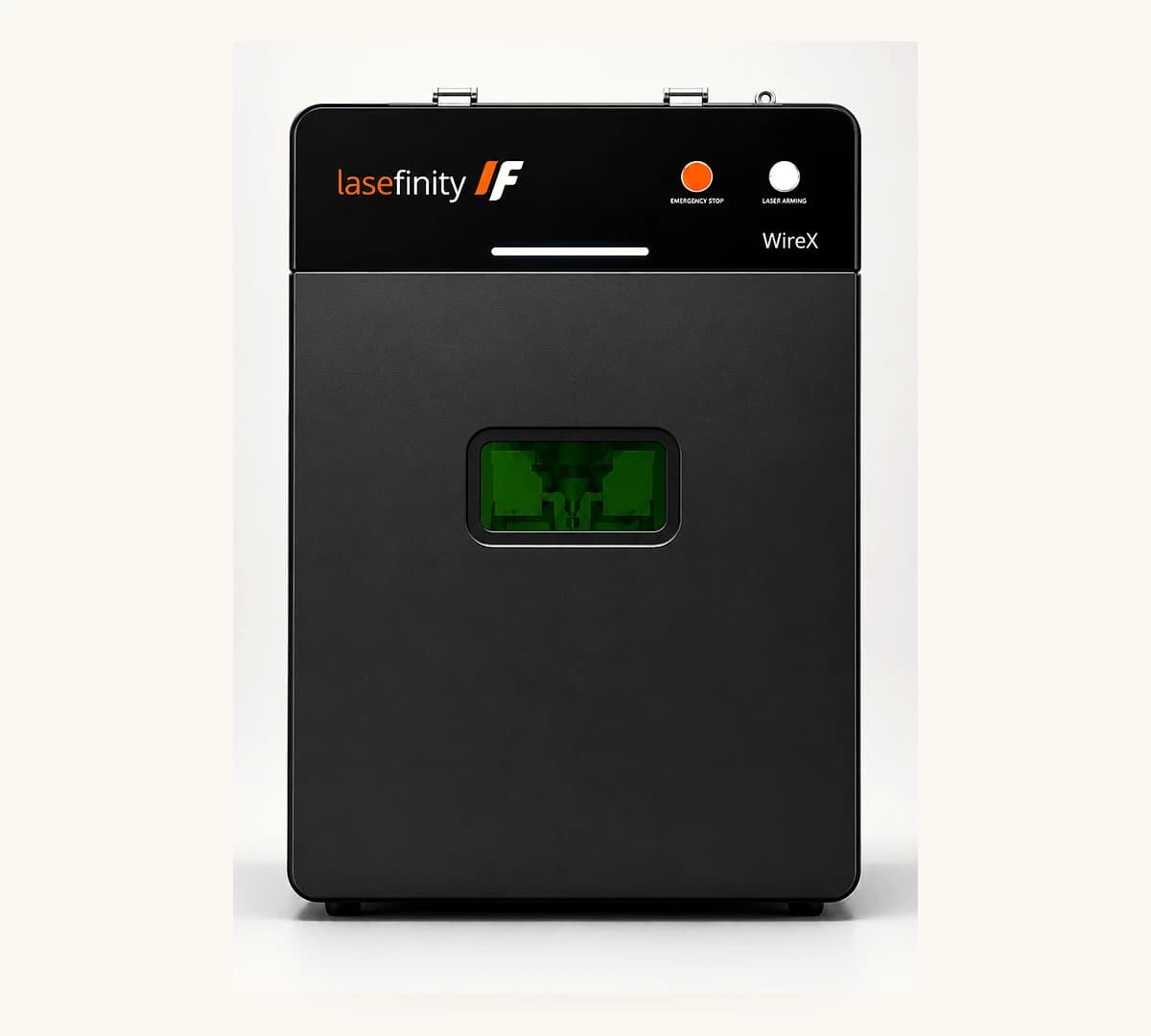
WireX is a compact desktop metal 3D printer built around Directed Energy Deposition (DED) technology. Instead of loose powder, WireX uses metal wire, giving researchers, universities and engineers a practical way to explore metal additive manufacturing, develop prototypes and work with different engineering materials.
With up to 3000 W of fibre laser power, a 150 × 150 × 150 mm build volume and integrated melt pool monitoring, WireX brings controlled metal deposition into a compact platform designed for research and technical environments.
What Is the WireX Desktop Metal 3D Printer?
WireX is a wire fed metal 3D printer designed for research, education, prototyping and applied metal additive manufacturing. It uses Directed Energy Deposition to melt metal wire as it is fed into a controlled laser-generated melt pool, depositing material along a programmed path. Unlike powder-based metal 3D printing systems, WireX works with wire feedstock, making material handling simpler for shared laboratories, classrooms and research environments.
The compact design also means you don't need a large industrial floor space to start working with DED technology.
At a glance
- Up to 3000 W fibre laser power
- 150 × 150 × 150 mm build volume
- 0.4-0.8 mm wire diameter
- 3 + 1 synchronised axes
- 100 kg machine weight
- £24,999 starting price
Why WireX?
Compact Enough for the Lab
With dimensions of 630 × 730 × 830 mm and a weight of 100 kg, WireX fits into research laboratories, teaching spaces and workshops without requiring a large factory-floor footprint.
Designed for Fast Setup
WireX is designed as an integrated platform that can be prepared for operation within one working day, making it practical for research and teaching environments where setup time matters.
Up to 3000 W Laser System
A multi-laser fibre platform delivers a combined output of up to 3000 W for controlled wire-fed metal deposition. For applications requiring a standalone industrial fibre laser source, explore LaseX1, our 500W industrial fibre laser source.
Real-Time Melt Pool Monitoring
An integrated back-reflection melt pool camera provides visibility into the deposition process, allowing researchers and operators to monitor melt pool behaviour during a build.
Gas-Shielded Titanium Printing
Advanced gas-shielding protects the melt pool from oxidation, enabling safe and repeatable printing with titanium alloys alongside carbon steel and stainless steel.
Four-Axis Synchronous Motion
Three motion axes work together with an independent wire-feed axis, giving WireX four synchronised axes for controlled deposition paths and multi-pass work.
Flexible File and Data Support
WireX supports STL, STEP, IGS and CATIA file formats, with USB, Ethernet and RS485 interfaces for integration with existing engineering workflows.
Multiple Material Options
Work with carbon steel, stainless steel, titanium alloys and other wire-available metals, giving researchers and engineers more flexibility when developing and testing different applications.
How Does Wire-Fed DED Work?
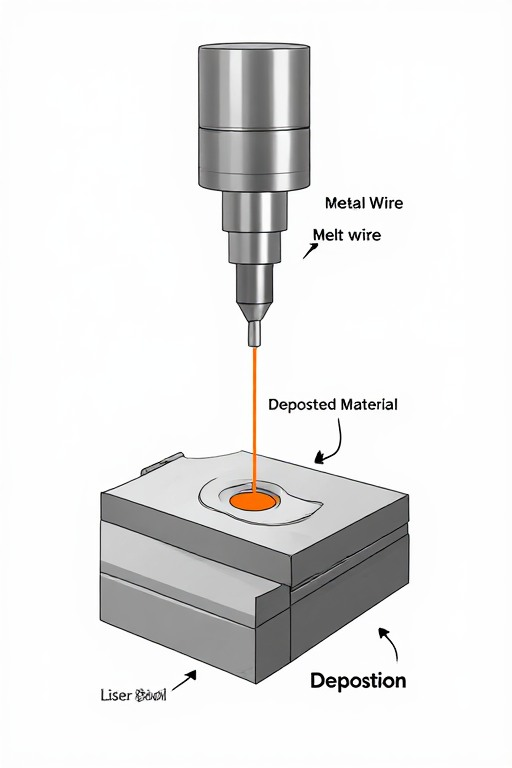
Directed Energy Deposition (DED) builds metal components by depositing material exactly where it is needed. In WireX, metal wire is fed into the laser-generated melt pool, where it melts and bonds with the material below as the deposition head follows the programmed path.
This makes DED useful for more than simply creating a part from scratch. The same approach can be used for prototyping, material research, repair, surface cladding and other deposition-based applications.
Why Choose a Wire-Fed Metal 3D Printer?
Working with metal powder is not the only way to approach additive manufacturing. Wire-fed metal 3D printing uses wire as the feedstock, removing the need to handle loose metal powder during the printing process. For universities, teaching environments and shared laboratories, this can make the workflow easier to manage.
Simpler Material Handling
Wire feedstock is straightforward to load and handle compared with loose metal powders, helping simplify day-to-day operation.
No Loose Powder Feedstock
It avoids the powder-handling concerns associated with powder-based metal 3D printing systems.
A Practical Platform for Research
Experiment with materials, deposition strategies and process parameters without investing in a large industrial system.
More Than Part Production
Use WireX for prototyping, repair, cladding and research into metal deposition processes.
WireX or L-PBF: Which Metal 3D Printing Technology Is Right for You?
DED and Laser Powder Bed Fusion (L-PBF) use different approaches to metal 3D printing, and each is suited to different applications.
WireX deposits metal wire directly onto a surface, making it suitable for deposition, repair, cladding, prototyping and research. L-PBF, on the other hand, selectively fuses metal powder layer by layer and is better suited to producing highly detailed and complex components.
If your priority is precision metal 3D printing with Laser Powder Bed Fusion explore the FusionX L-PBF system.
If you need a compact platform for wire-fed metal deposition, WireX provides a different approach.
Full Technical Specifications
One Machine. Five Capabilities.
Research Platform
Dedicated infrastructure for novel DED research and material characterisation experiments.
Teaching & Training
Give students hands-on experience with a real desktop metal 3D printer and introduce them to metal deposition, process monitoring and additive manufacturing.
Rapid Prototyping
Fast design-to-part workflow for engineering departments needing functional metal prototypes without outsourcing.
Repair & Cladding
Material deposition on existing parts for repair, surface cladding, and hybrid additive-subtractive workflows.
Process Monitoring
Integrated melt pool camera with back-reflection feedback for real-time process analytics and quality assurance.
WireX starts at £24,999, providing an accessible entry point to wire-fed DED metal 3D printing for research, education and engineering applications.
The system includes:
- Commissioning and installation support
- Operator training
- 12-month component warranty
- AM Twin Laser Platform software licence
- Dedicated technical support
- System documentation
Frequently Asked Questions
How much does the WireX desktop metal 3D printer cost?
WireX starts at £24,999, making it an accessible option for research, teaching and prototyping with wire-fed metal 3D printing.
What is a wire-fed metal 3D printer?
A wire-fed metal 3D printer uses metal wire as its feedstock instead of loose powder. WireX uses laser-based Directed Energy Deposition (DED) to melt and deposit the wire layer by layer.
What is Directed Energy Deposition (DED)?
DED uses a focused laser to melt metal wire as it is deposited onto a surface. This allows WireX to build, repair or add material to metal components.
How is DED different from L-PBF metal 3D printing?
DED deposits metal wire directly, while L-PBF uses a bed of metal powder to build parts layer by layer. WireX is suited to deposition, prototyping, repair and research, while L-PBF is better suited to highly detailed complex parts.
What metals can the WireX desktop metal 3D printer process?
WireX supports carbon steel, stainless steel, titanium alloys and other wire-available metals, giving researchers and engineers flexibility across different applications.
Is WireX suitable for universities and research labs?
Yes. WireX is designed for research, teaching and prototyping, with a compact desktop footprint that makes it suitable for university laboratories, classrooms and shared engineering spaces.
What is included with the WireX DED metal 3D printer?
WireX includes commissioning and installation support, operator training, a 12-month component warranty, software licensing and dedicated technical support.
Compare our products
FusionX
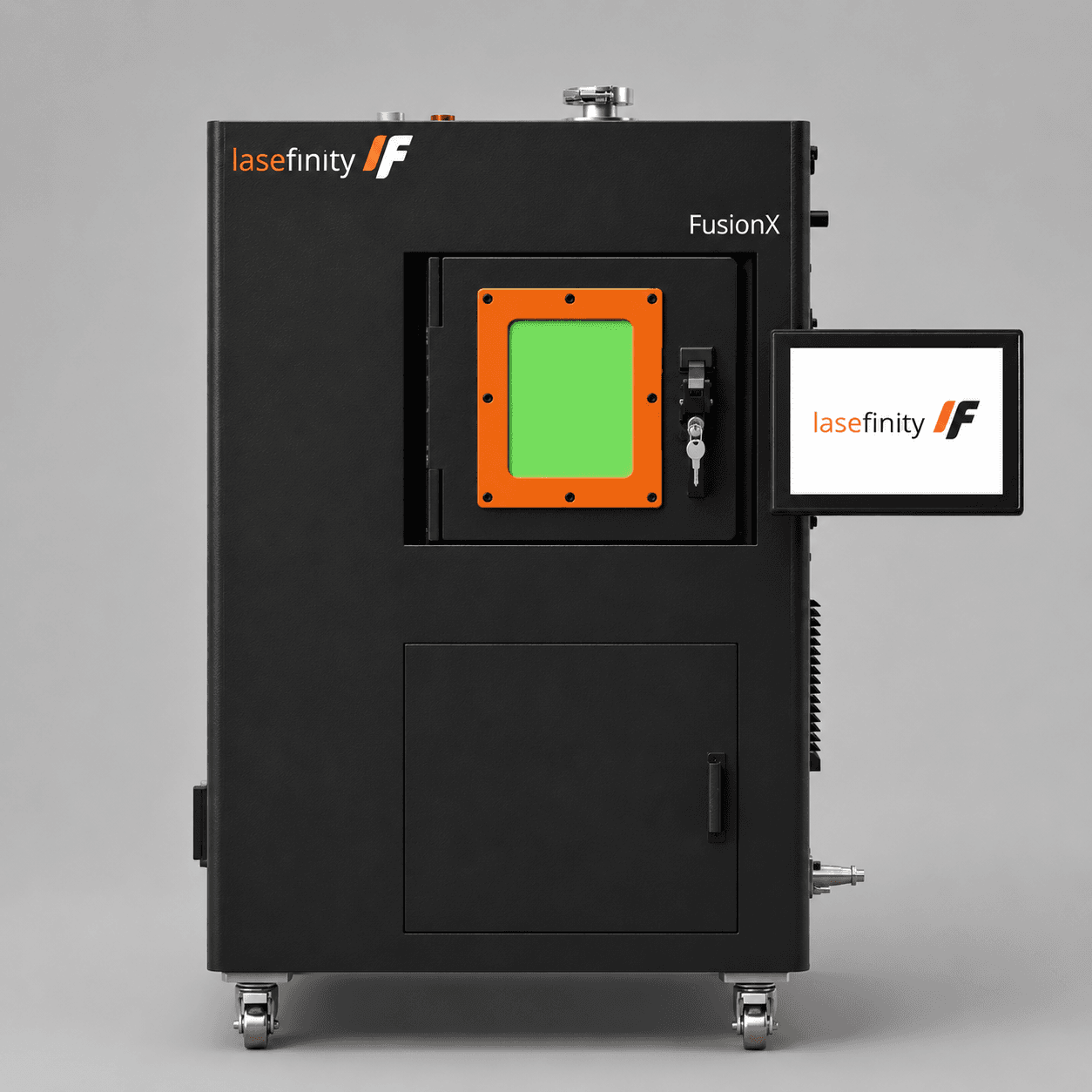
A precision laser powder bed fusion system for metal 3D printing, offering control over energy delivery for fine-detail builds and advanced material development across stainless steel, titanium, superalloys and high-entropy alloys.
Explore FusionX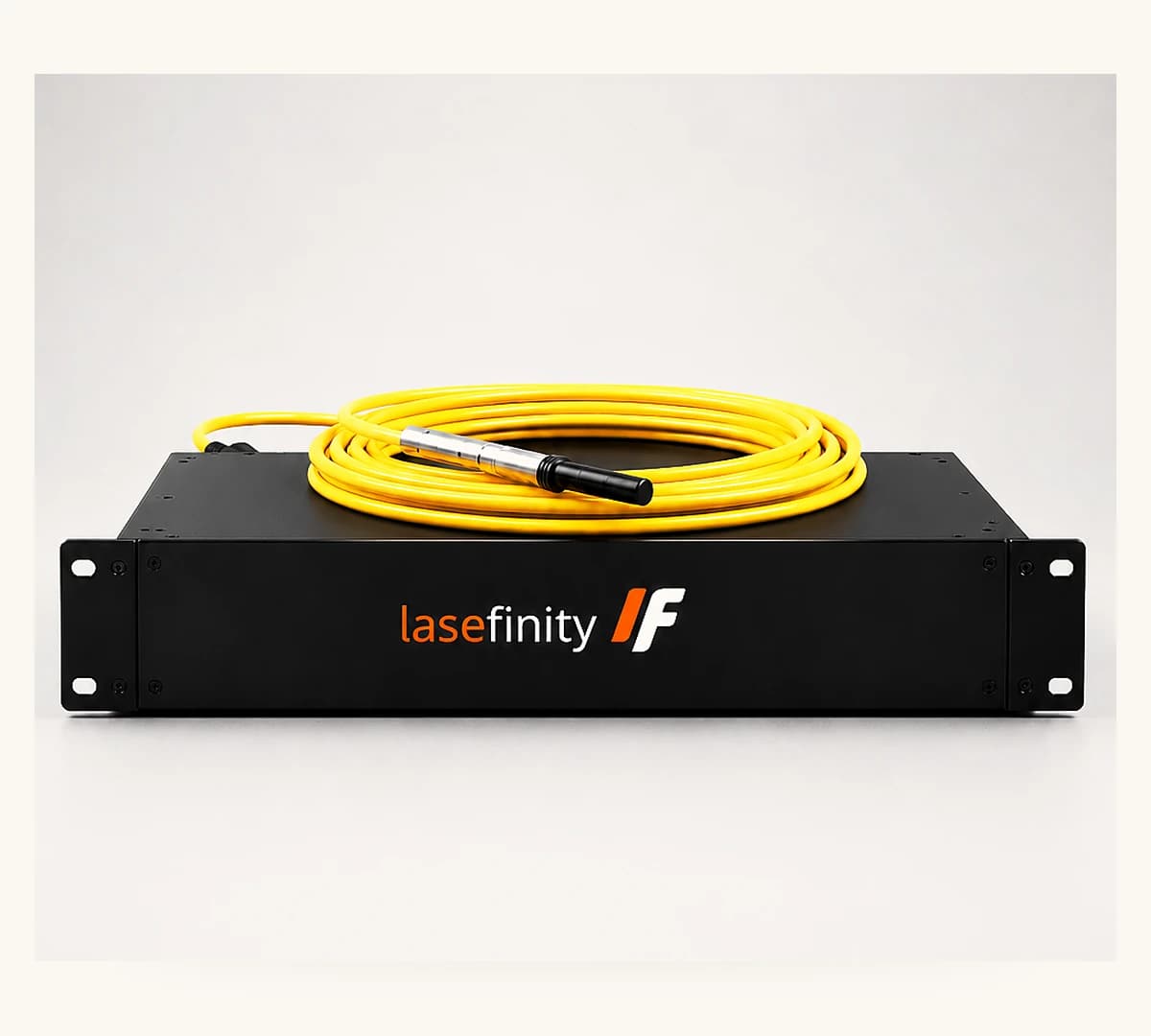
LaseX1
A high-performance 500W fibre laser source designed for industrial material processing, additive manufacturing and OEM integration. With stable power delivery from 10-100%, flexible control and a compact 14.5 kg design, it is built for integration into laser systems, CNC equipment and custom automation platforms.
Explore LaseX1Request a quotation
Send us the material, the part geometry and the tolerances you are working to. We will recommend the right process and system configuration, including telling you when the answer is not one of ours.