
FusionX
Industrial-Grade Laser Powder Bed Fusion (L-PBF) Metal 3D Printing
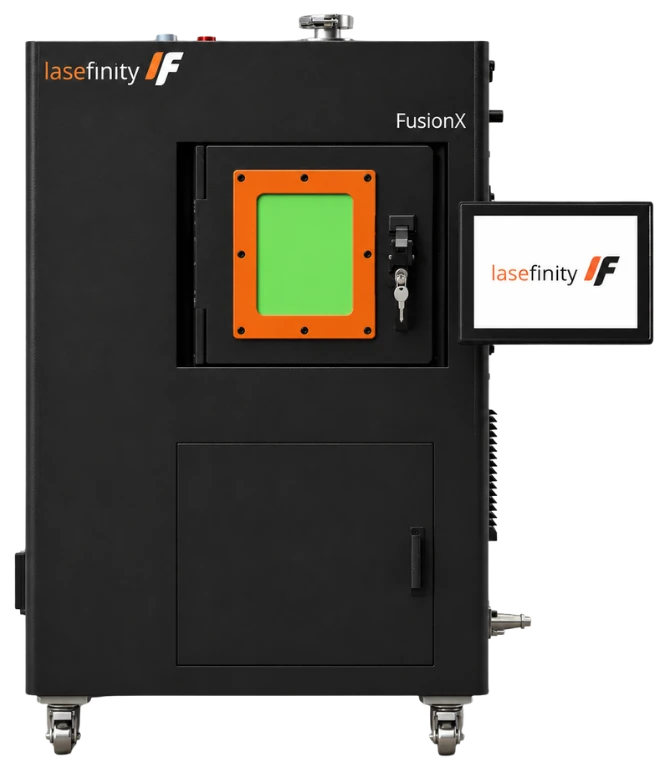
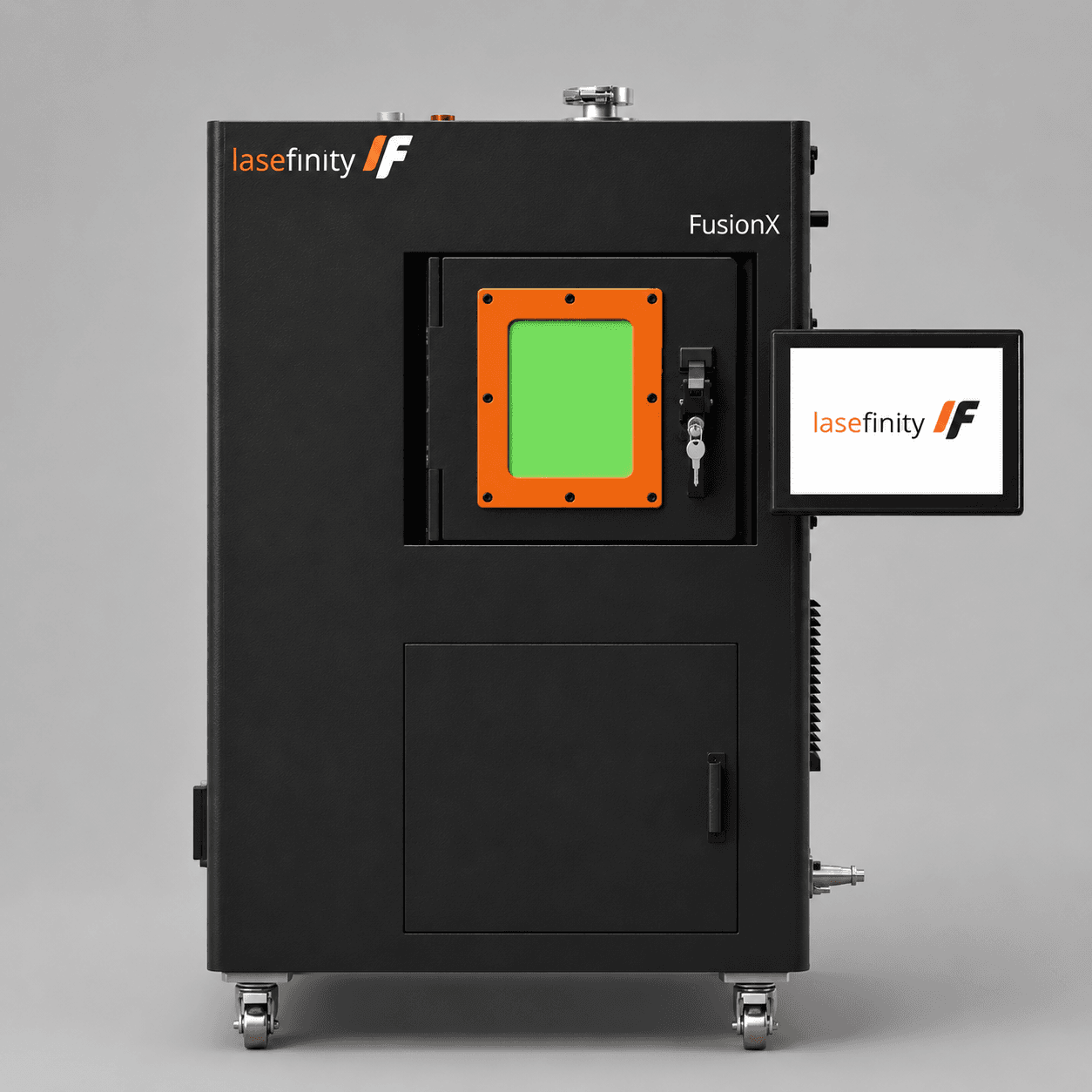
The FusionX is an industrial metal 3D printer designed for precision manufacturing, research and product development. Using advanced Laser Powder Bed Fusion (L-PBF) technology, it produces complex metal parts with exceptional accuracy, repeatability and lower material waste across a wide range of engineering applications.
Precision L-PBF. Built for Industrial Manufacturing
The FusionX is Lasefinity's flagship Laser Powder Bed Fusion (L-PBF) system, developed to make industrial metal 3D printing more accessible without compromising performance. Whether you're producing functional prototypes, validating new designs or manufacturing end-use components, FusionX delivers the precision and consistency required for demanding applications.
Powered by a 500 W fibre laser with an adjustable beam size from 50-200 μm, the system gives engineers greater control over energy input, allowing both intricate detail and efficient production builds. Compatible with stainless steel, titanium, superalloys and high-entropy alloys, FusionX supports a wide range of metal additive manufacturing applications from a single platform.
Highlights
- Inert nitrogen or argon build chamber
- Soft blade recoater for consistent powder layers
- Permanent filtration system with 30,000+ hour service life
- Lasefinity Layer Slicing software
- Designed for research, prototyping and industrial manufacturing
What Makes FusionX Different
Advanced Laser System
A powerful 500 W fibre laser with an adjustable 50-200 μm beam size provides the flexibility to manufacture everything from intricate metal components to production-ready parts. Precise energy control helps improve surface quality, dimensional accuracy and overall build consistency. For applications requiring a standalone industrial fibre laser source, see LaseX1
Controlled Build Environment
FusionX maintains a sealed nitrogen or argon atmosphere with oxygen levels below 500 ppm, creating the stable conditions required for reliable metal 3D printing. This controlled environment helps reduce oxidation and supports consistent part quality across every build.
Smart Process Monitoring
Integrated process monitoring provides layer-by-layer oversight during the build, giving engineers greater visibility into the printing process and helping identify issues during production.
Permanent Filtration
Unlike conventional systems that require regular filter replacements, FusionX features a permanent filtration system with a service life of more than 30,000 hours. This significantly reduces maintenance requirements, minimises downtime and lowers the overall cost of ownership.
Soft Blade Recoater
The precision soft blade recoater applies uniform powder layers with minimal disturbance to previously fused material. This improves layer consistency and supports reliable printing of fine powders and reactive materials.
Lasefinity Layer Slicing Software
From importing STL and STEP files to preparing builds and managing process parameters, Lasefinity Layer Slicing software simplifies the entire workflow. Its intuitive interface helps engineers optimise print settings, monitor builds and move efficiently from design to production.
How Laser Powder Bed Fusion Works
Laser Powder Bed Fusion (L-PBF) builds metal components layer by layer from fine metal powder. A thin layer of powder is spread across the build area, and a laser selectively melts the material according to the digital design. The process is repeated layer by layer until the component is complete.
This layer-by-layer approach allows engineers to create complex geometries, internal features and lightweight structures that can be difficult or costly to manufacture using conventional methods.
Materials for Advanced Metal Additive Manufacturing
FusionX supports a range of engineering materials, including stainless steels, titanium alloys, pure titanium, superalloys and high-entropy alloys. Material selection and process parameters can be adapted to suit the requirements of the application and development process.
Full Technical Specifications
The FusionX FX-500 combines industrial performance with a compact footprint, making it suitable for research laboratories, universities and manufacturing environments. Custom configurations are available to meet specific application requirements.
Built for Demanding Applications
The FusionX FX-500 supports a wide range of metal additive manufacturing applications where precision, repeatability and material performance are essential.
Aerospace
Produce lightweight titanium and superalloy components with complex internal geometries that reduce weight while maintaining structural strength.
Medical & Dental
Manufacture patient-specific implants, surgical instruments and dental components with the accuracy required for healthcare applications.
Research & Academia
Support alloy development, material research and process optimisation with a flexible industrial metal 3D printer designed for experimentation and innovation. For applications that require a more compact research platform, explore our desktop metal 3D printer: WireX
Advanced Manufacturing
Produce tooling, mould inserts with conformal cooling channels and functional metal components that are difficult to manufacture using conventional methods.
Prints What Others Can't
Whether you're looking to buy an L-PBF system, expand your research capabilities or introduce metal 3D printing into your manufacturing workflow, our engineering team is here to help.
Every FusionX FX-500 includes:
- Commissioning and installation support
- Operator training
- 12-month warranty
- Lasefinity Layer Slicing software licence
- Dedicated technical support
Frequently Asked Questions
How much does the FusionX FX-500 cost?
The FusionX FX-500 starts at £24,999, offering an accessible entry point for industrial laser powder bed fusion and metal 3D printing.
What is Laser Powder Bed Fusion (L-PBF)?
L-PBF uses a laser to selectively melt thin layers of metal powder to build a component layer by layer. The FusionX FX-500 is an L-PBF machine designed for precision metal 3D printing.
Is L-PBF the same as SLM and DMLS?
SLM and DMLS are commonly used terms for laser-based powder bed metal 3D printing. This means searches for an SLM machine for sale or DMLS machine for sale can refer to similar technology, although terminology varies between manufacturers.
What metals can the FusionX FX-500 print?
The FusionX FX-500 supports stainless steels, titanium alloys, pure titanium, superalloys and high-entropy alloys, with material options depending on the system configuration and application.
What are the main benefits of the FusionX FX-500?
FusionX combines a 500 W adjustable fibre laser, controlled build environment, process monitoring and low-maintenance filtration to support precise, repeatable metal 3D printing across research and manufacturing applications.
How is the FusionX different from other L-PBF machines?
FusionX combines industrial-grade L-PBF capability with a 30,000+ hour filtration system, flexible process control and a lower entry price. This makes it an option for buyers looking for a cost-effective laser powder bed fusion machine for sale.
How can I buy the FusionX FX-500?
You can request a quotation or enquire to order the FusionX FX-500 directly from Lasefinity. Our team can discuss your application, materials and requirements before recommending the right L-PBF system.
Compare our products
WireX
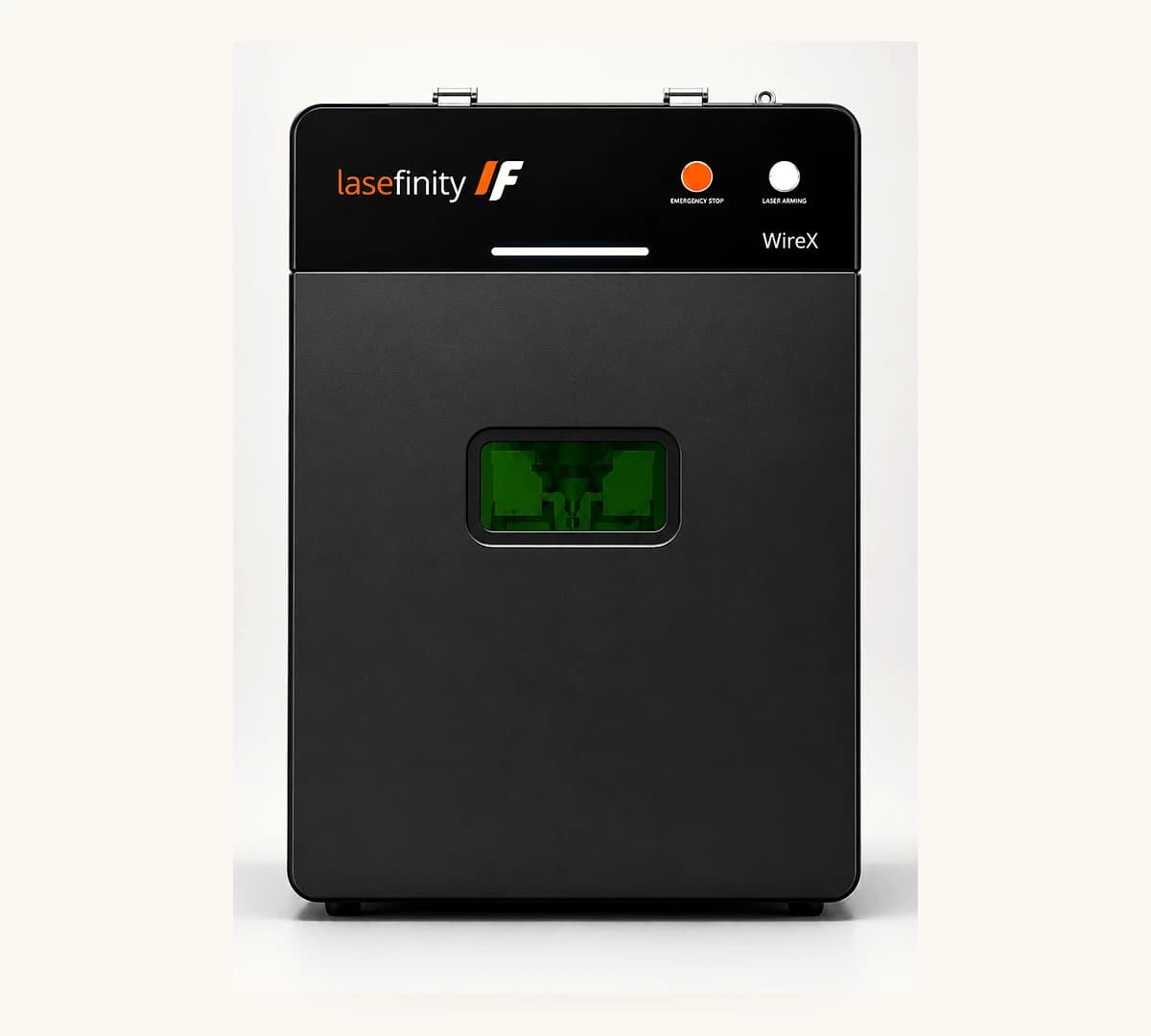
A compact wire-fed DED metal 3D printer designed for research, education and prototyping. By using metal wire instead of powder, WireX avoids the powder-handling concerns associated with conventional powder-bed systems, making it well suited to shared research and educational environments.
Explore WireX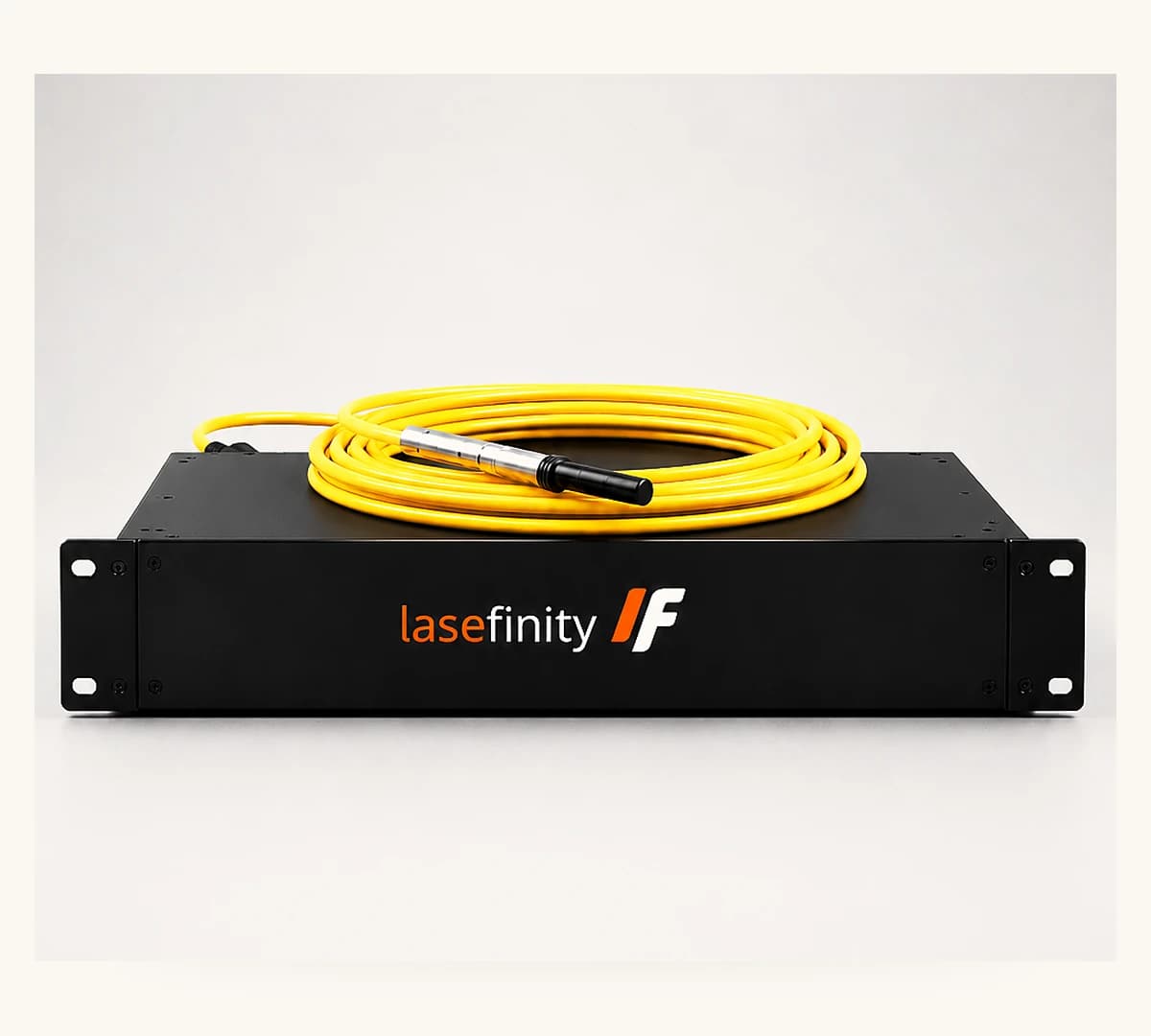
LaseX1
A high-performance 500W fibre laser source designed for industrial material processing, additive manufacturing and OEM integration. With stable power delivery from 10-100%, flexible control and a compact 14.5 kg design, it is built for integration into laser systems, CNC equipment and custom automation platforms.
Explore LaseX1Request a quotation
Send us the material, the part geometry and the tolerances you are working to. We will recommend the right process and system configuration, including telling you when the answer is not one of ours.