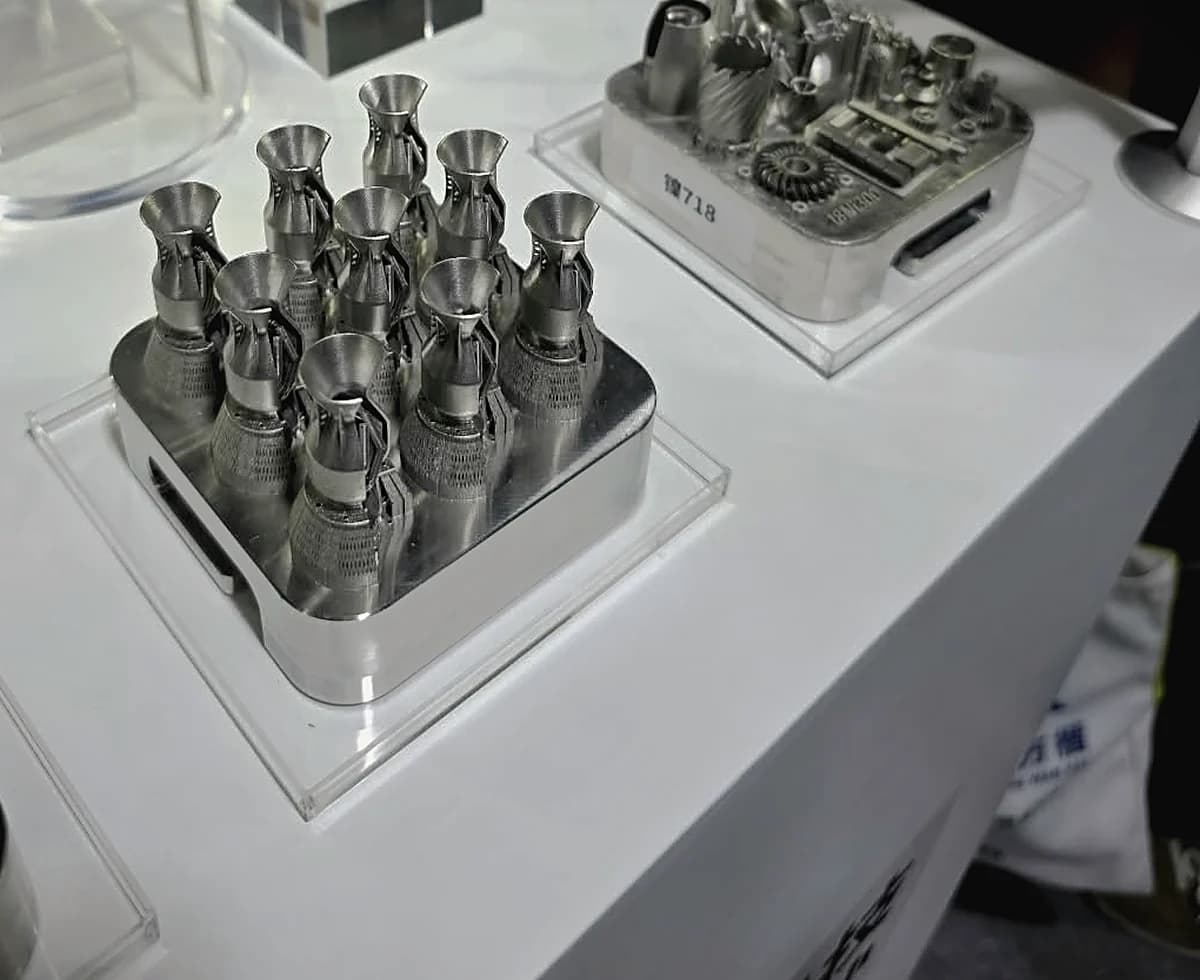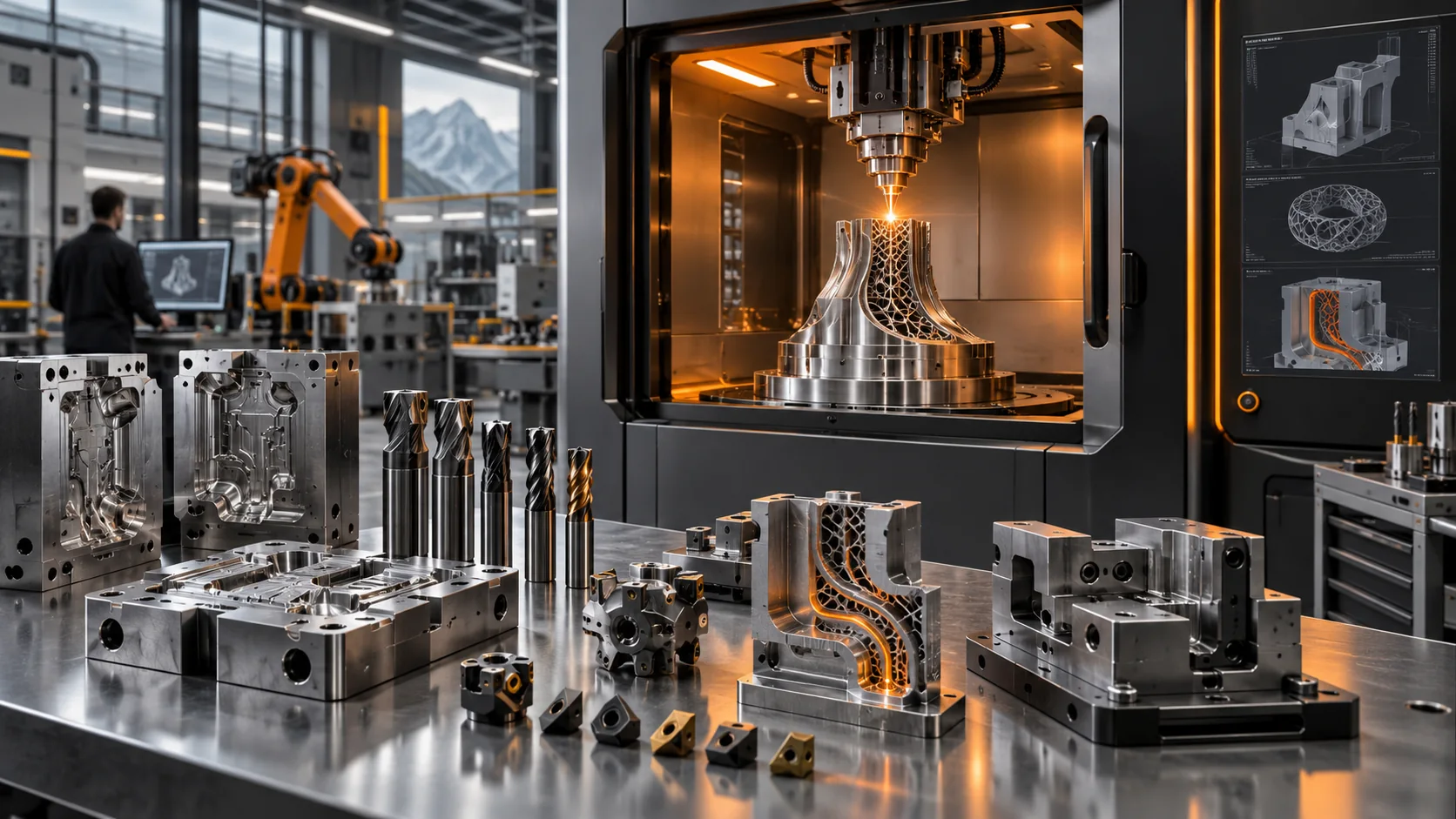
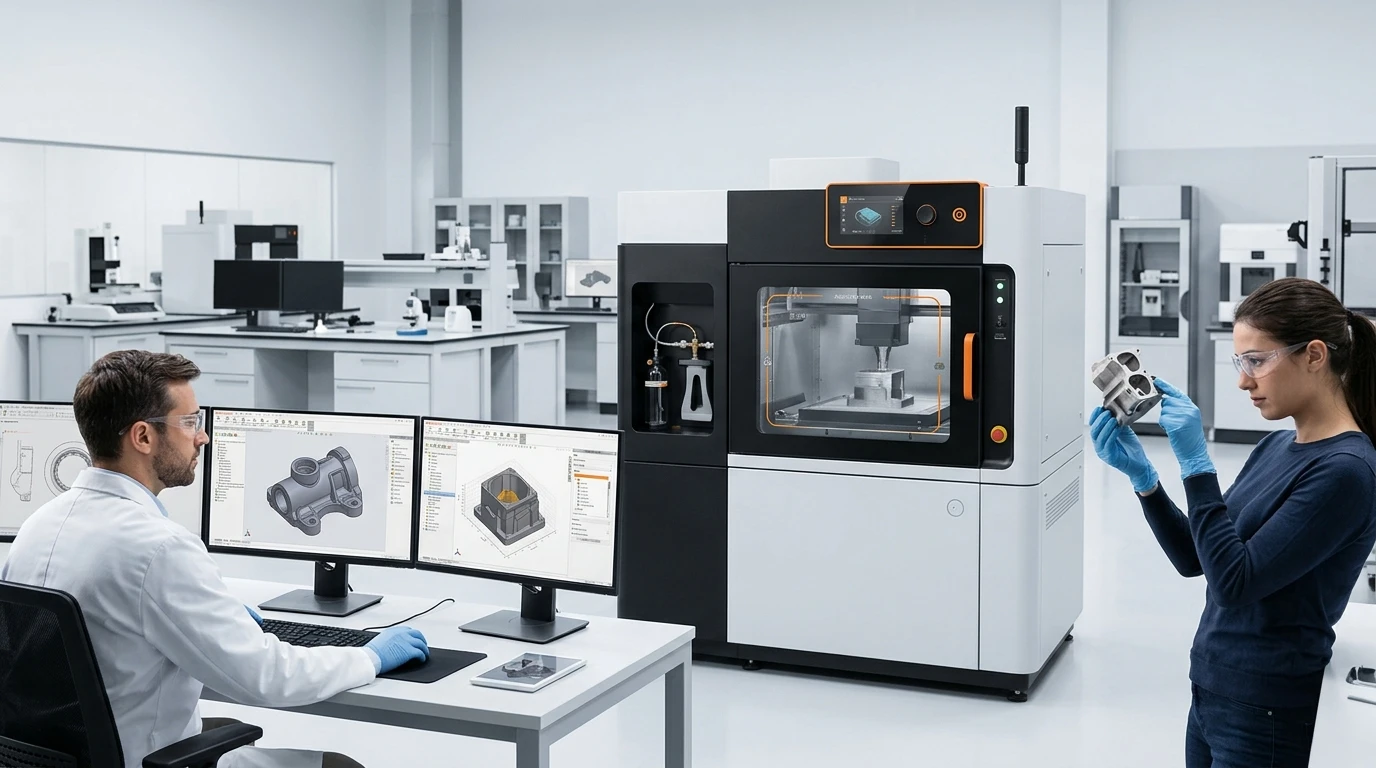
Metal 3D printing in education gives students hands-on experience with the full manufacturing journey, from design and build preparation to printing, post-processing and inspection. For universities and colleges, a useful lab also needs to be safe, manageable and flexible enough to support research as students progress.
Picture two people using the same lab. A final-year engineering student is printing a metal component for the first time and wants to understand how a CAD model becomes a real component. A PhD researcher at the next workstation wants to change process parameters, test a material or investigate why one build behaves differently from another. The machine may be the same, but the learning goal, level of access and supervision are not.
That is what makes a teaching lab different from simply owning a metal 3D printer. The equipment has to fit the people using it, the work they need to do and the way the department expects the lab to grow.
Why Use Metal 3D Printing in Education?
Metal 3D printing helps students connect engineering theory with real manufacturing decisions. A part that looks perfect in CAD still needs the right orientation, material, support or deposition strategy, process settings and finishing plan before it becomes a usable component.
For additive manufacturing teaching, that is the real value. Students can see how one decision affects the next instead of treating printing as a single button press.
The same idea applies to vocational 3D printing training, where practical skills such as safe machine operation, process control, inspection and basic maintenance may be more important than advanced research.
In the UK, additive manufacturing is already included within Skills England’s engineering and manufacturing foundation apprenticeship alongside machining, CNC operations and other production skills.
What Should Students Learn About Metal Additive Manufacturing?
A useful programme should cover more than how to start a print. Students should understand the decisions before the build, what happens during it and how the finished part is evaluated.
Design for Additive Manufacturing
Start with a familiar component. Give students a conventional bracket and ask them to redesign it around weight, build orientation, supports or part consolidation. The important part is not producing the most impressive shape. It is explaining why each design change was made.
That turns DfAM from a definition into an engineering decision.
Machine Setup and Process Parameters
Students do not need unrestricted parameter access on day one, but they should understand what the settings mean. Depending on the process, that may include laser power, scan speed, wire-feed rate, layer thickness or deposition speed.
A simple experiment can make this more useful. Within an approved operating range, change one parameter while keeping the others fixed, then compare the result. Students can see the effect instead of only reading that process parameters matter.
Materials and Part Quality
Metal AM also gives materials science a practical context. Porosity, surface condition, residual stress and microstructure are easier to discuss when students can connect them with the way a real part was produced.
Even a basic dimensional exercise can add value. Measure a feature in CAD, measure it again after printing and ask why the values differ. The discussion moves naturally into process capability, distortion, finishing and inspection.
Post-Processing
The lesson should not end when the build finishes. Support removal, heat treatment where required, machining, surface finishing and dimensional inspection can all be part of the manufacturing route.
This matters because students should leave the lab understanding that the printer is one part of the process, not the whole process.
How Do You Set Up a Safe Metal 3D Printing Lab?
A safe 3D printing lab needs trained users, controlled access, suitable equipment and procedures matched to the process and material.
For powder-based systems, material handling deserves particular attention. The UK Health and Safety Executive has studied exposure to metal powders in additive manufacturing and identified activities such as powder transfer, powder testing and manual cleaning as points where exposure can occur.
That is why containment, ventilation, housekeeping and cleaning procedures need to be considered when the lab is planned.
The risk assessment should also consider fire and explosion hazards associated with some fine metal powders, as well as laser hazards and gases used by the system. Argon and nitrogen, for example, can displace oxygen if released into an inadequately ventilated space. The exact controls should be based on the material, machine design and activities carried out in the lab.
Think Beyond PPE
Gloves and eye protection matter, but PPE should not be the whole safety plan. Machine enclosure, suitable extraction or ventilation where required, safe storage, housekeeping, documented procedures, training and restricted access can all play a role.
A simple access model can also help:
- Level 1: observation and supervised learning
- Level 2: trained operation using approved settings
- Level 3: advanced parameter access for research users
This lets students gain responsibility as their competence grows, rather than giving every user the same level of control from the start.
Powder or Wire: Which Is Easier to Manage From a Feedstock Perspective?
Both powder-based and wire-based metal additive manufacturing can work in education, but the day-to-day lab routine is different.
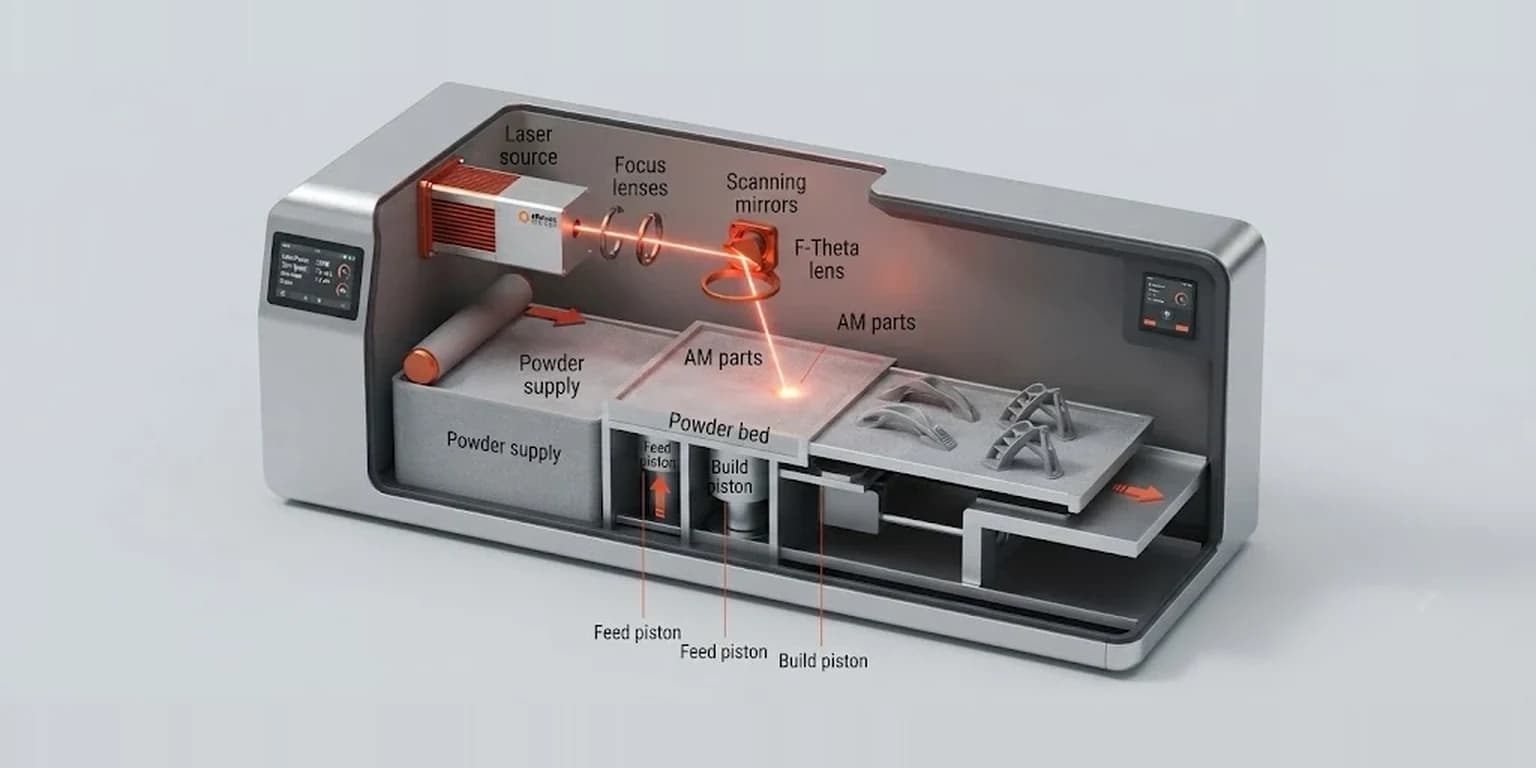
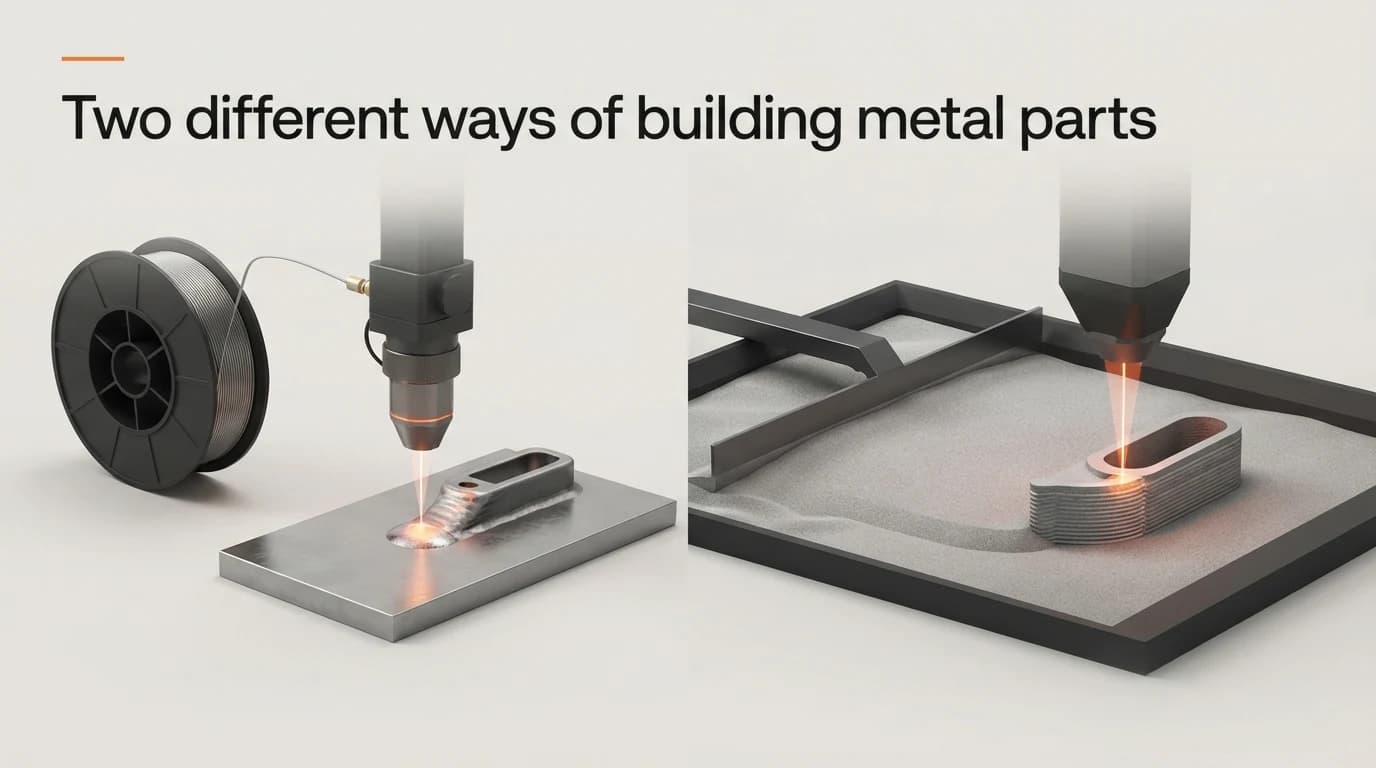
Laser Powder Bed Fusion uses fine metal powder spread across a build area. It is useful when students or researchers need to study powder-bed processing, fine features, complex geometries or material development.
Wire-fed Directed Energy Deposition uses metal wire that is fed into a melt pool and deposited along a programmed path. In a shared teaching environment, wire feedstock can simplify one part of material handling because students are not routinely transferring loose metal powder between steps.
That does not make wire-fed DED hazard-free. High-power lasers, hot metal and spatter, metal fumes or particulates, shielding-gas oxygen displacement and moving equipment still require suitable controls.
A Simple Teaching Example
One student group could print the same small feature in several orientations using L-PBF and compare which version holds its geometry best. Another group could deposit three stainless-steel beads at different travel speeds using DED, then compare their width and consistency.
Neither exercise needs to be complicated. The value comes from changing something, observing the result and asking why it happened.
What Should Universities Look for in a Metal 3D Printer?
A metal 3D printer for universities should match the department’s teaching goals, research plans, available space and level of technical support.
Process Access
Can lecturers limit which settings beginners can change? Can advanced researchers access deeper process parameters later? A production-focused machine may be simple to operate but restrictive for research, while a more open platform may require stronger training and operating procedures.
Monitoring and Data
For teaching, being able to observe the process can be as useful as seeing the finished part. For a research metal 3D printer, access to process data becomes more important when researchers are studying parameters, materials or melt behaviour.
Materials and Supporting Equipment
Check which materials are supported and what the process needs around the printer. Gas supply, extraction, material storage, post-processing and inspection equipment can affect both the space required and the overall budget.
Running Costs
The purchase price is only part of the teaching-lab budget. Feedstock, gas, filters or other consumables, PPE, build plates, maintenance and post-processing can all add to the cost.
For a university, cost per student exercise can be a useful planning figure. It encourages the department to think about how often the machine will be used, how much material each exercise consumes and what support each session needs.
Training and Support
Ask what happens after installation. Operator training, documentation, commissioning support and technical assistance matter when new students and researchers will use the system every year. A machine that only one person knows how to operate quickly becomes difficult to use as a teaching resource.
Can the Same Metal 3D Printer Be Used for Teaching and Research?
Yes. One system can support both teaching and research if it offers structured operation for students and enough flexibility for advanced work.
| Teaching use | Research use | Why it matters |
|---|---|---|
| Approved settings | Flexible parameters | Beginners need repeatability; researchers need experimental control. |
| Guided access | Advanced access | Access can increase as users gain competence. |
| Basic monitoring | Detailed process data | Teaching explains the process; research needs evidence. |
| Repeatable exercises | Experimental builds | The same platform can support different learning goals. |
It is worth thinking beyond the first course that will use the machine. A system bought for an undergraduate module may later support a postgraduate project, another engineering department or an industry collaboration.
Before Comparing Machines, Answer These Five Questions
| Question | Why it matters |
|---|---|
| Who will use the lab? | Undergraduates, technicians and PhD researchers may need different access levels. |
| What should students learn? | Learning outcomes determine how much process control and monitoring are useful. |
| What materials will be used? | Feedstock affects storage, handling, safety, consumables and cost. |
| What happens after printing? | Parts may still need cleaning, support removal, heat treatment, machining or inspection. |
| Will the lab support research later? | A machine bought for teaching today may become a research platform later. |
This five-question check adds useful context to machine specifications. It can help a department choose a capable system and avoid purchasing one that does not fit how the lab will actually be used.
How Can Metal 3D Printing Fit Into an Engineering Curriculum?
Metal 3D printing in education works well when students gain responsibility gradually. A simple progression can look like this:
| Stage | What it covers |
|---|---|
| 1. Understand the process | Learn how the technology works and complete safety training. |
| 2. Design a part | Redesign a conventional component using DfAM principles. |
| 3. Prepare the build | Choose orientation, material and suitable process settings. |
| 4. Manufacture the component | Observe or operate the machine at the appropriate level of supervision. |
| 5. Inspect the result | Measure the component, study its surface and compare it with the original CAD model. |
| 6. Explain what happened | Connect the final result with the decisions made earlier in the workflow. |
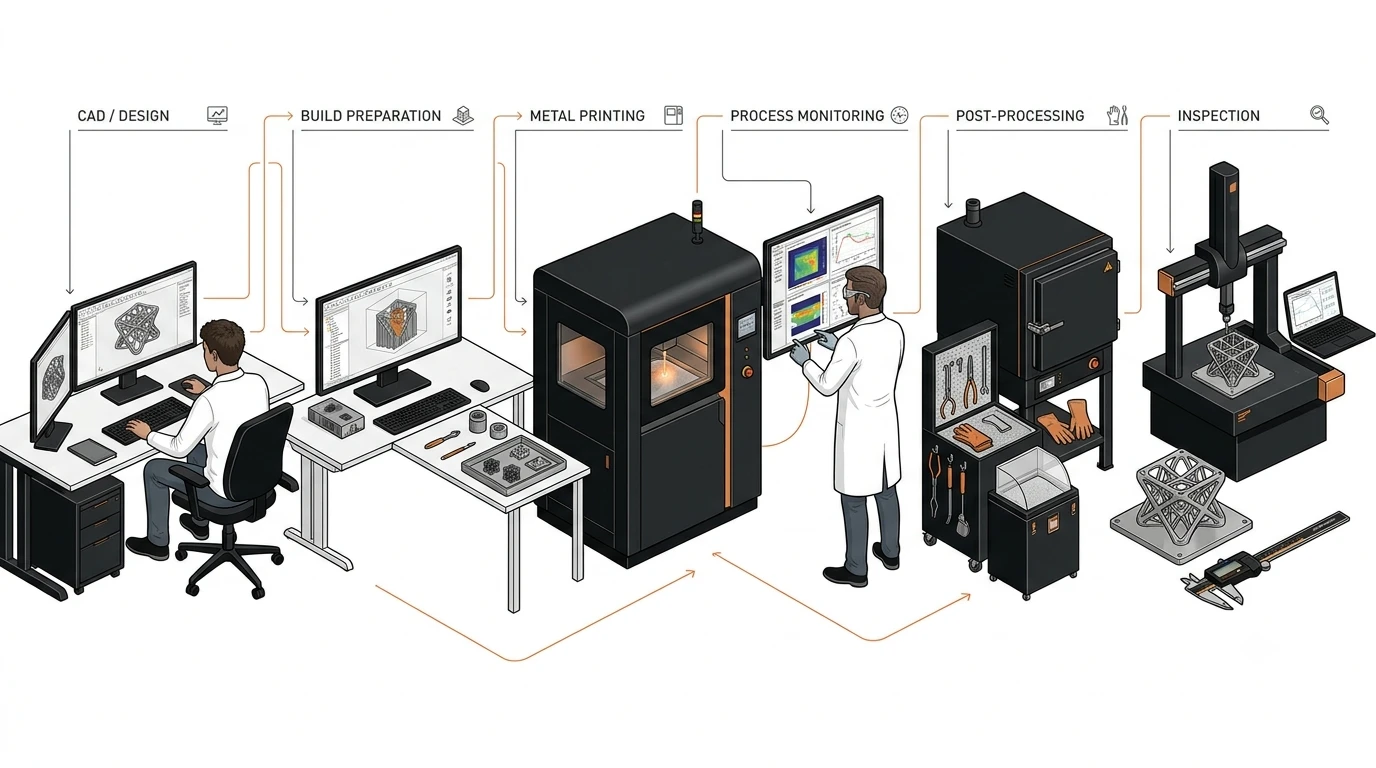
The final stage is especially useful. A successful print shows that the workflow worked, but a dimensional error, rough surface or failed feature gives students something to investigate. Explaining the result is where the manufacturing lesson often becomes clear.
The same progression can be adapted for undergraduate modules, postgraduate research and vocational programmes by increasing machine access as users gain competence.
What Does a University Metal AM Lab Actually Need?
The printer is only one part of the setup. A practical planning checklist can look like this:
| Area | Question to ask |
|---|---|
| Learning goals | What should students be able to do after using the lab? |
| Process | Does the course need L-PBF, DED or another technology? |
| Safety | What hazards come from the material, process and supporting equipment? |
| Space | Is there room for the printer, material handling and safe working zones? |
| Post-processing | How will parts be cleaned, removed, finished or heat treated? |
| Inspection | How will students evaluate the finished component? |
| Support | Who trains users and who helps when something goes wrong? |
| Research | Can the platform support more advanced work later? |
The research question is easy to overlook. A teaching machine may remain in the department for years while courses, projects and users change around it. Flexibility can extend the useful life of the investment.
Where Can Lasefinity Fit Into a University Metal AM Lab?
Once the learning goals, process and safety requirements are clear, the machine choice becomes easier.
For departments exploring wire-fed DED, WireX is a compact platform positioned for research, education and prototyping. It uses wire feedstock rather than loose powder and includes process monitoring, giving students and researchers a way to study deposition behaviour and process parameters.
For programmes focused on L-PBF, fine-feature metal printing or material and process development, FusionX provides a compact powder-bed route with adjustable laser control and process monitoring.
The two systems support different kinds of learning. The practical starting point is the experiment, course or research question the department wants the machine to support.
Final Thoughts
Metal 3D printing in education is most useful when students do more than watch a machine print. They should understand the decisions made before the build, see what happens during manufacturing and investigate the part afterwards.
Start with the learning outcomes and the people who will use the lab. Then define the process, safety controls, materials, access levels and supporting equipment needed to make that learning possible. Once those points are clear, machine specifications become much easier to judge.
Compare Lasefinity’s metal 3D printing systems