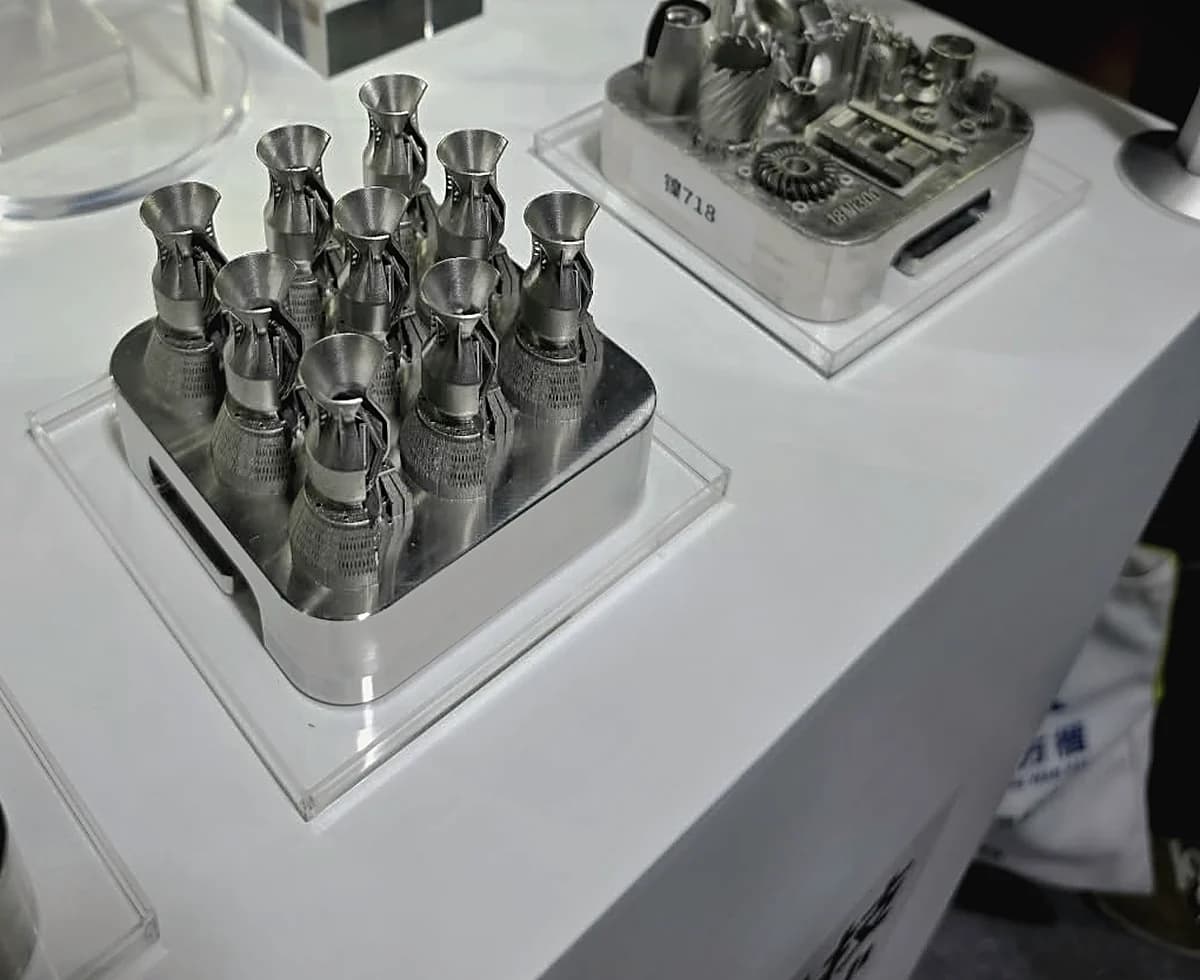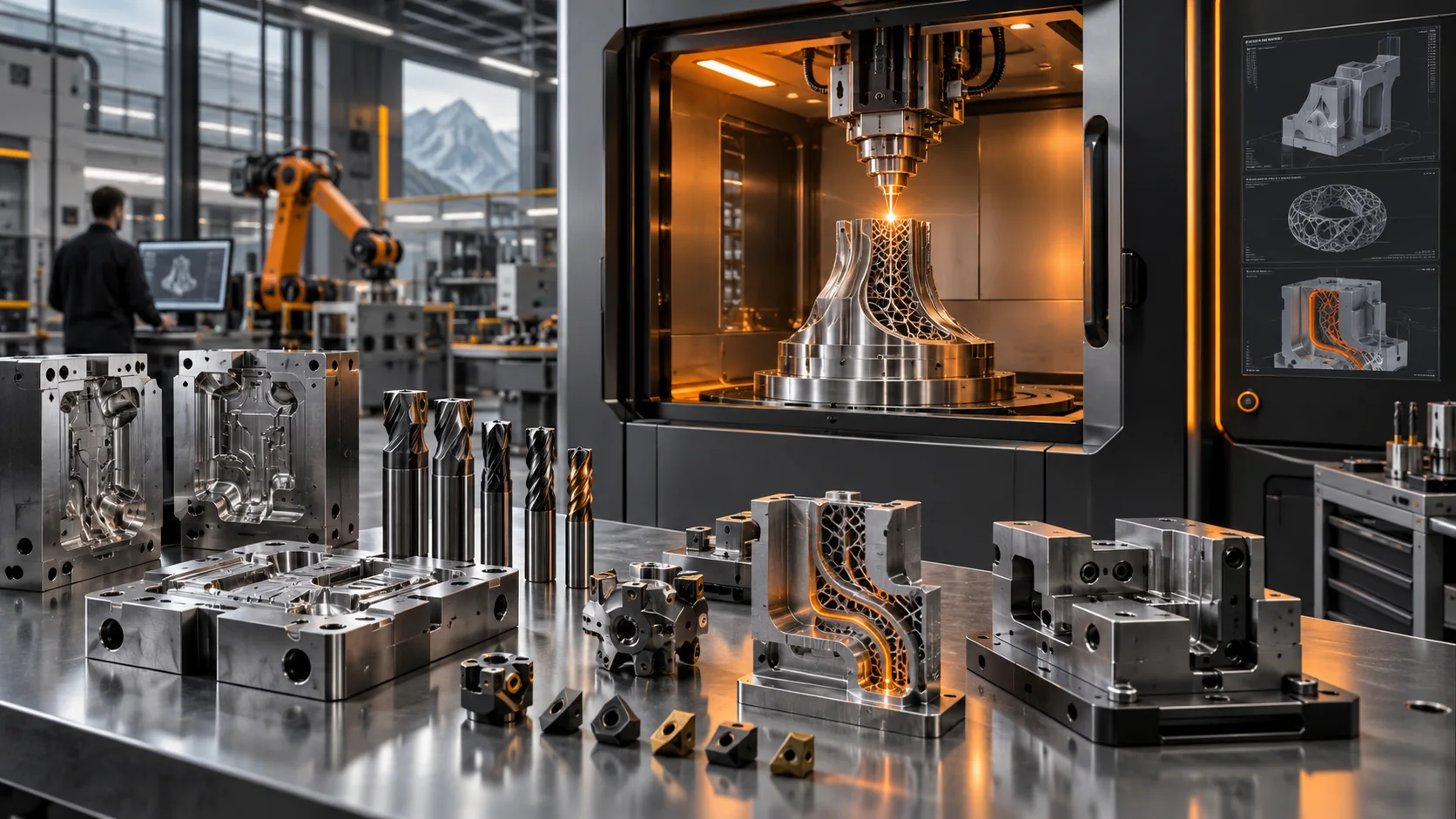
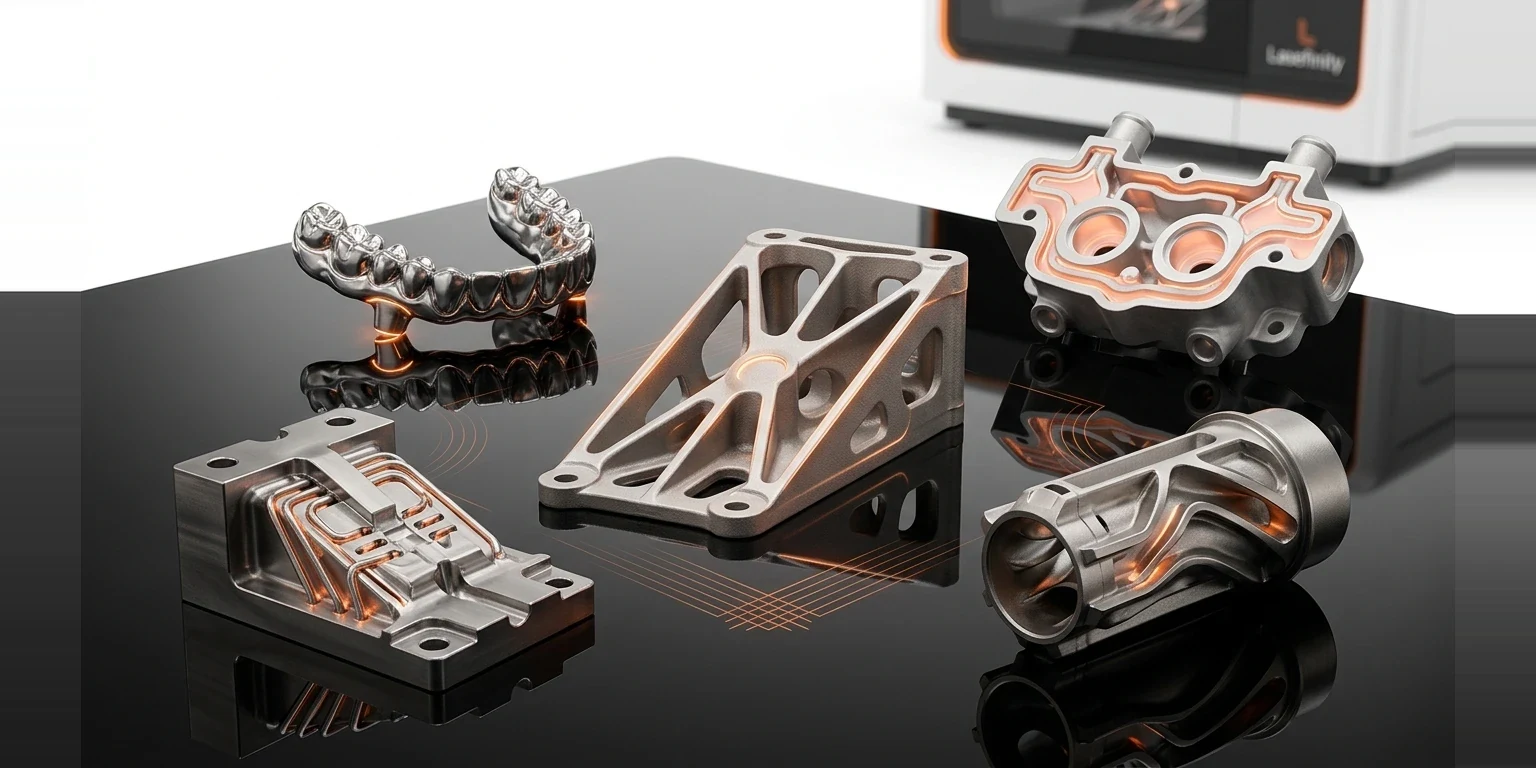
Metal 3D printing applications now extend far beyond prototypes. The technology is used for aerospace components, medical implants, dental restorations, manufacturing tools, rocket-engine hardware, research samples and selected end-use parts.
But companies do not use metal additive manufacturing simply because a part can be printed. There is usually a specific engineering reason behind the decision. An aircraft component may need fewer joined parts. A mould insert may need cooling channels that follow a curved surface. A medical device may need carefully controlled geometry. A research laboratory may want to understand how changing a process parameter affects the deposited metal.
One of the best-known examples is GE’s additively manufactured LEAP fuel nozzle tip, which showed how changing the manufacturing route could simplify an assembly rather than reproduce an existing design a different way.
This guide looks at the main metal 3D printing applications, the industries using them and the practical reasons behind real-world use cases.
What Is Metal 3D Printing?
Metal 3D printing, or metal additive manufacturing, creates components from digital designs by adding material progressively rather than removing it from a larger block. The exact route depends on the process.
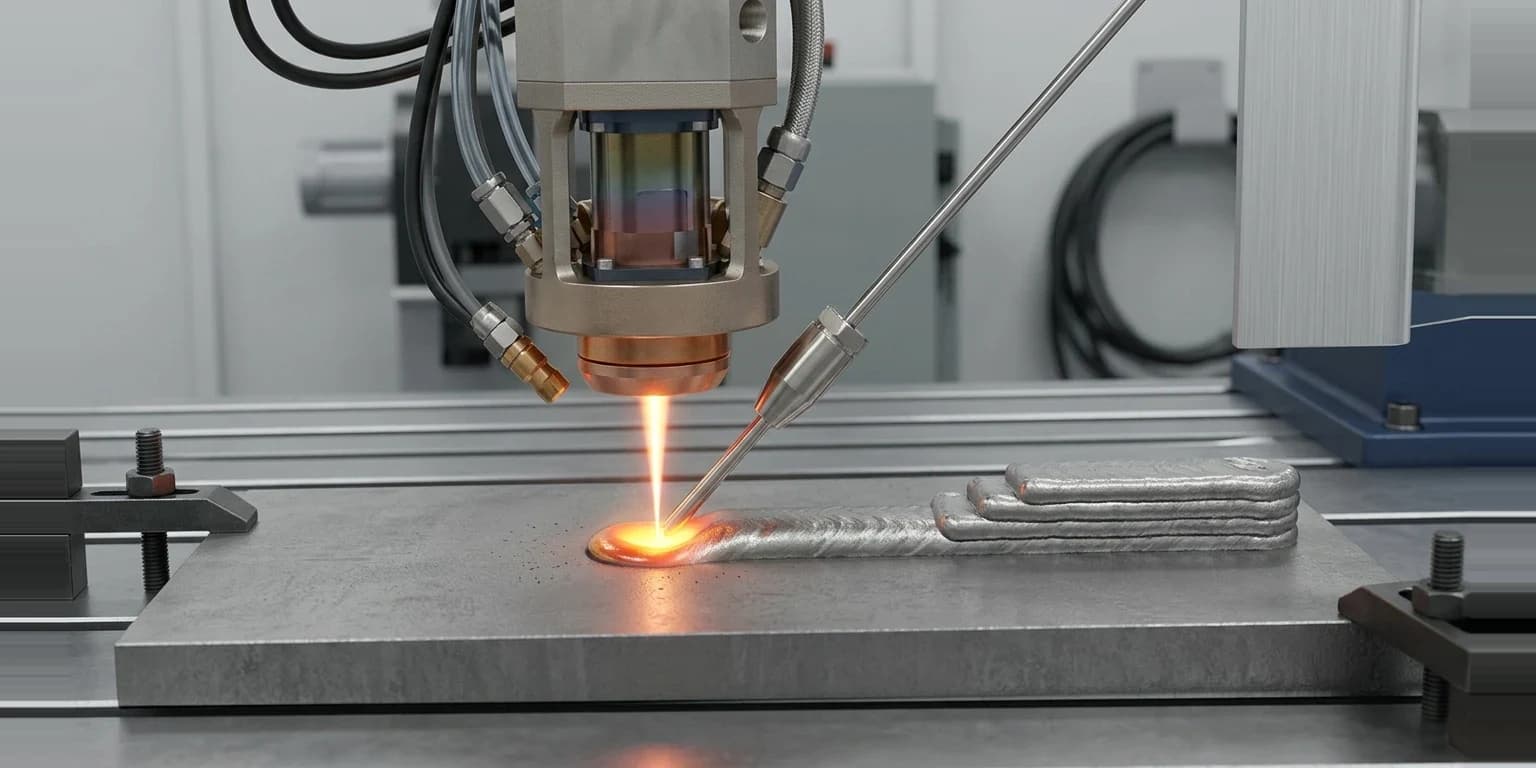
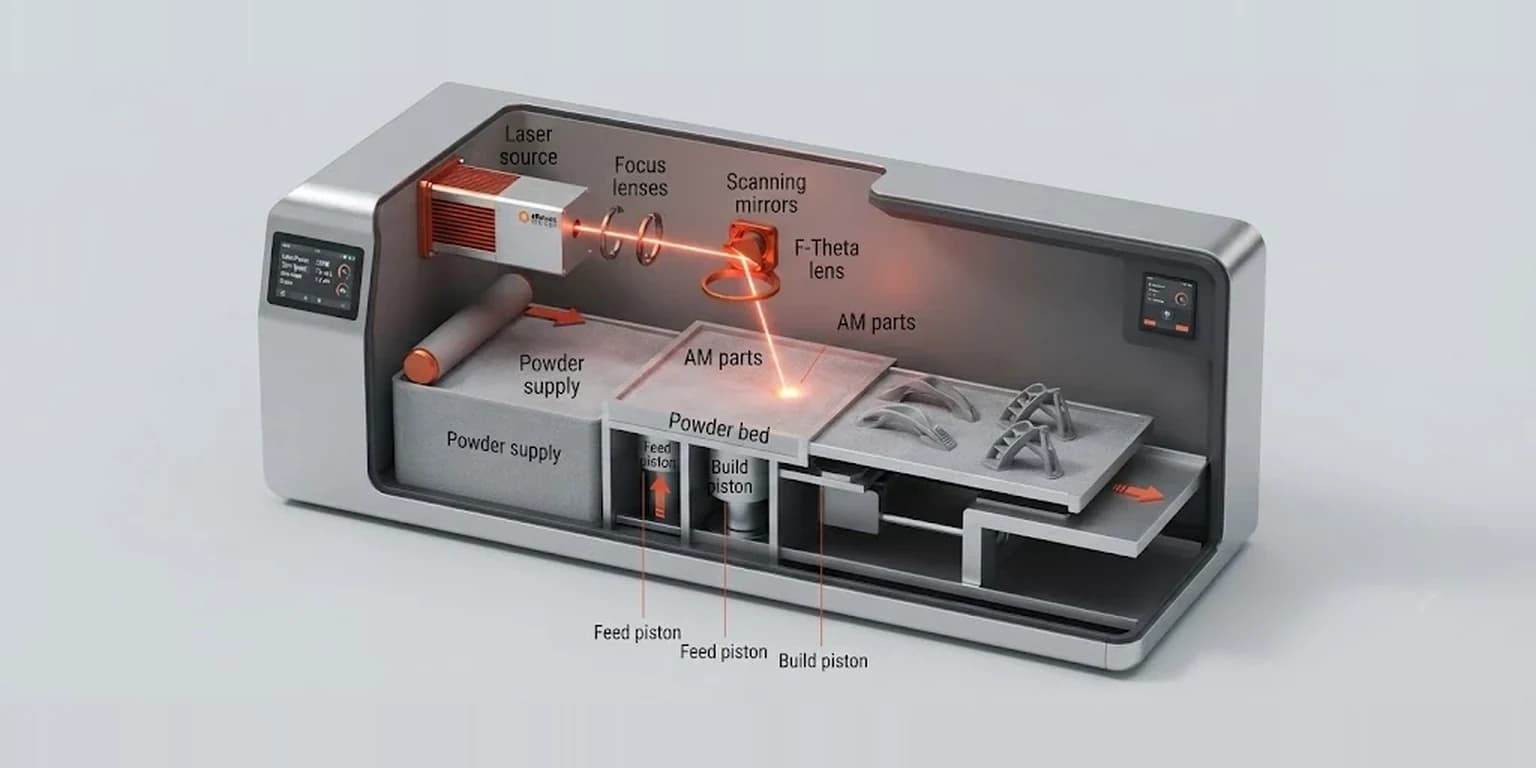
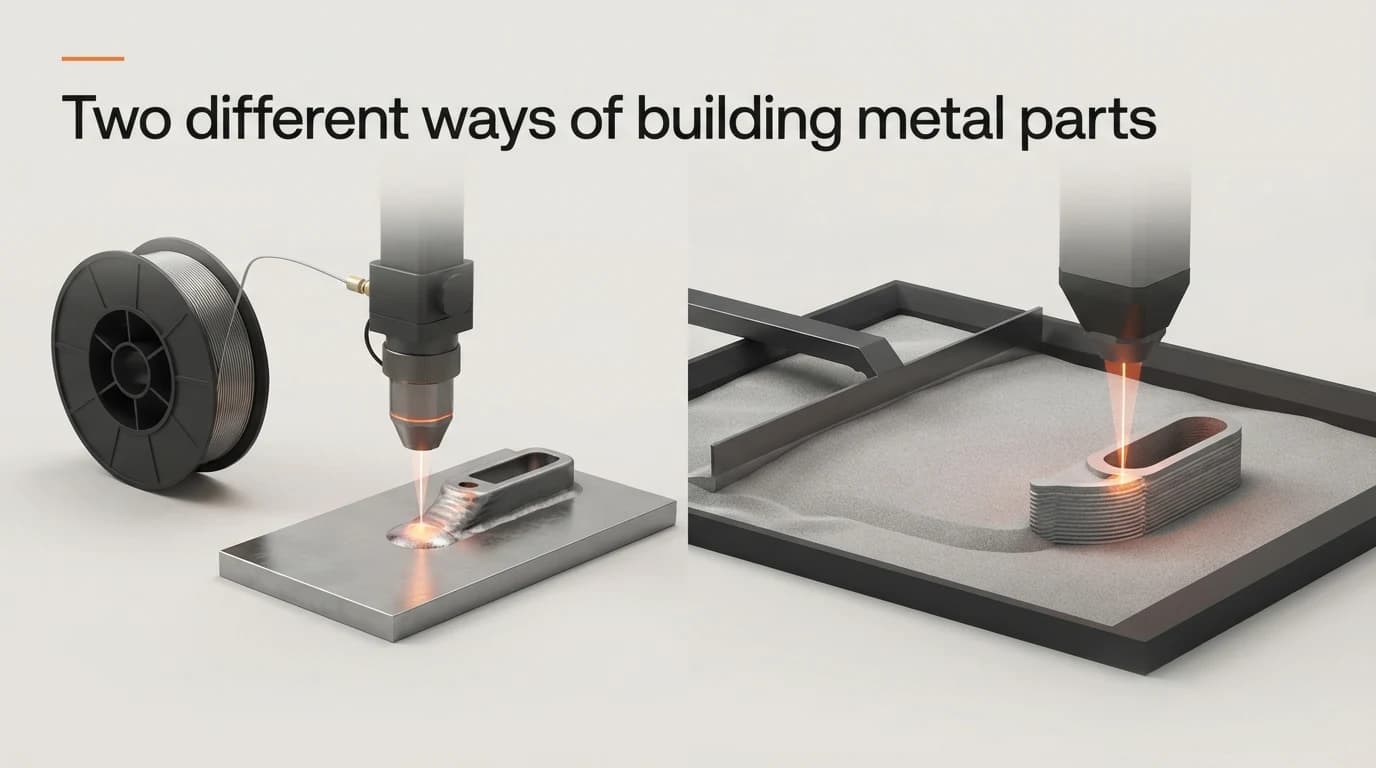
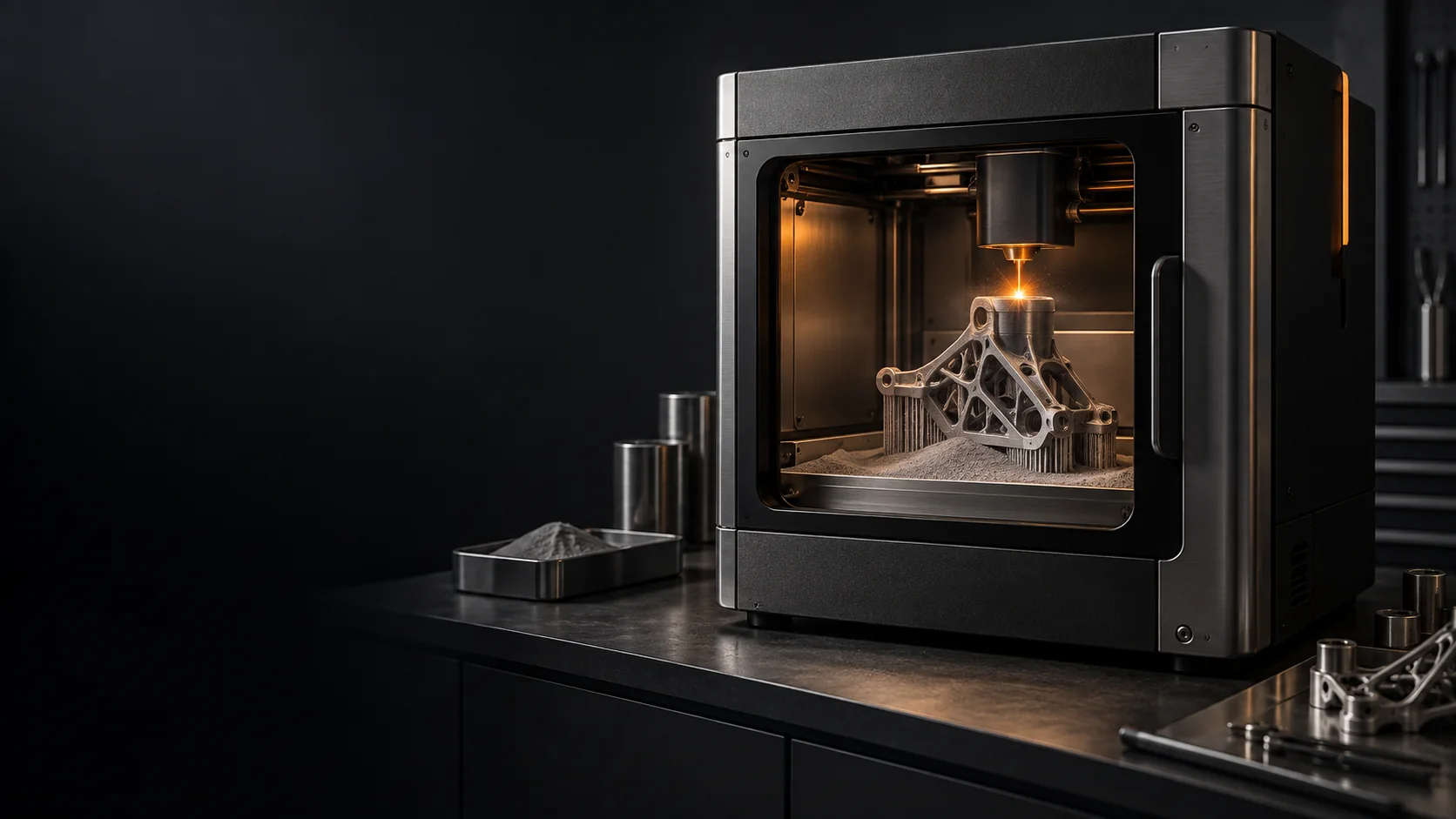
In Laser Powder Bed Fusion (L-PBF), a thin layer of metal powder is spread across a build area and a laser selectively melts the areas required for each cross-section. In Directed Energy Deposition (DED), wire or powder is fed into a melt pool generated by a laser, electron beam or electric arc. Other approaches include electron-beam powder bed fusion and binder-based printing, where a powder-and-binder part is produced first and then debound and sintered, with significant shrinkage to design around.
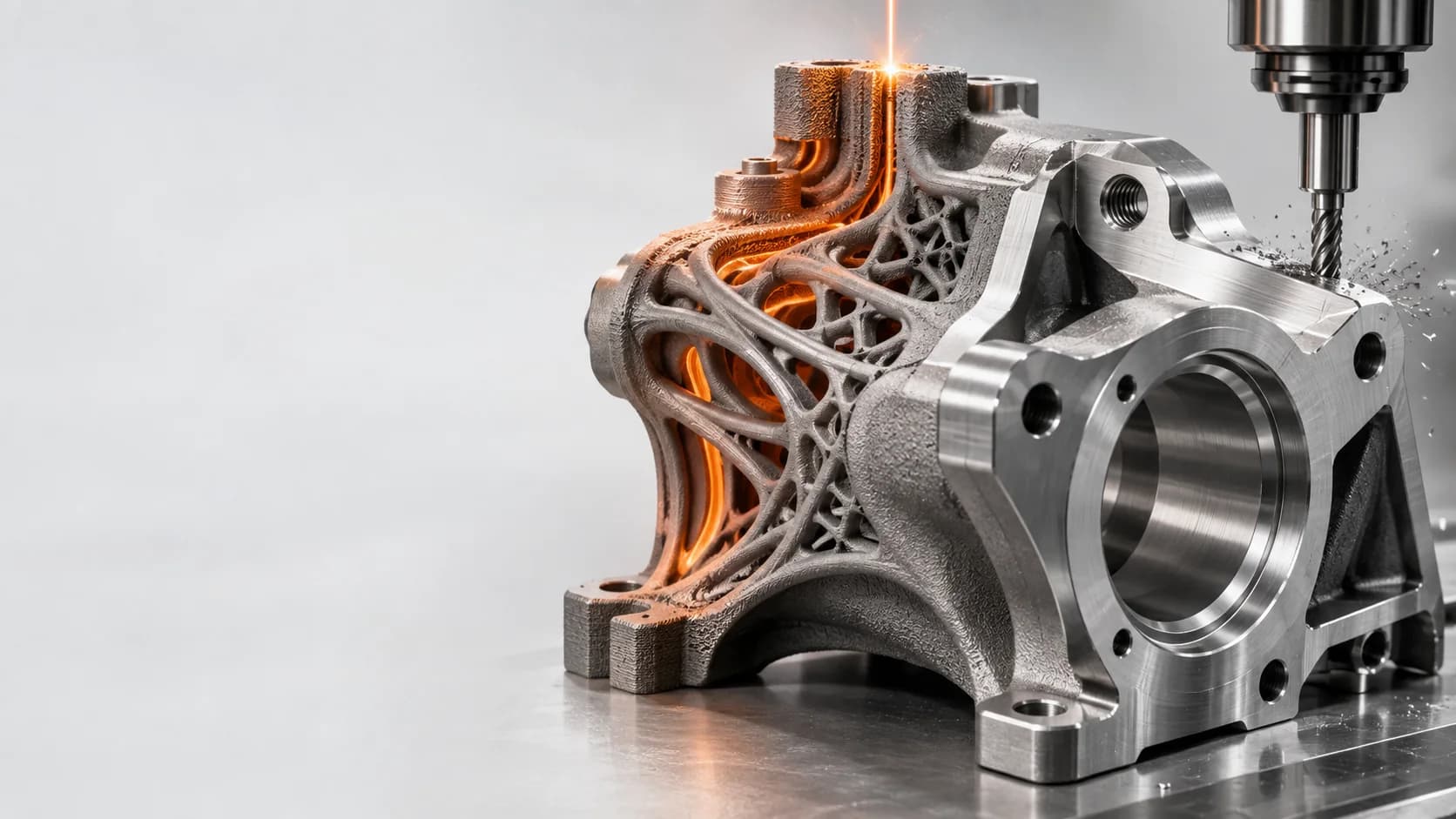
Each route has different strengths. L-PBF suits compact components with fine features or complex internal geometry. DED suits larger near-net deposits that still need finish machining, adding material to an existing component, repair and deposition research. Complex internal geometry also has to be practical after printing: enclosed channels may need powder-escape openings, suitable dimensions, cleaning access and an inspection method.
For more detail on process selection, see our guides to laser powder bed fusion, directed energy deposition and wire vs powder metal 3D printing.
Why Are Industries Using Metal 3D Printing?
The strongest applications solve a clear engineering or manufacturing problem. Printing becomes worth investigating when it can improve a component, reduce assembly, support low-volume production, shorten development or help restore an expensive part.
Complex geometry and internal channels
Traditional methods depend heavily on tool access. A drill normally produces a straight hole, a cutting tool has to reach the surface it machines, and complex internal flow paths may need several separately manufactured components that are later joined. Metal AM removes some of those restrictions.
- Curved internal channels
- Compact manifolds
- Lattice structures
- Internal cooling passages
- Geometries that are difficult to machine from solid material
A mould insert is a good example: instead of relying only on straight drilled cooling channels, AM can create conformal cooling channels that follow the working surface more closely. The design still has to consider supports, trapped powder, cleaning, inspection, thermal distortion and post-processing. A channel that looks impressive in CAD is not useful if powder cannot be removed or the finished feature cannot be checked.
Lightweighting and part consolidation
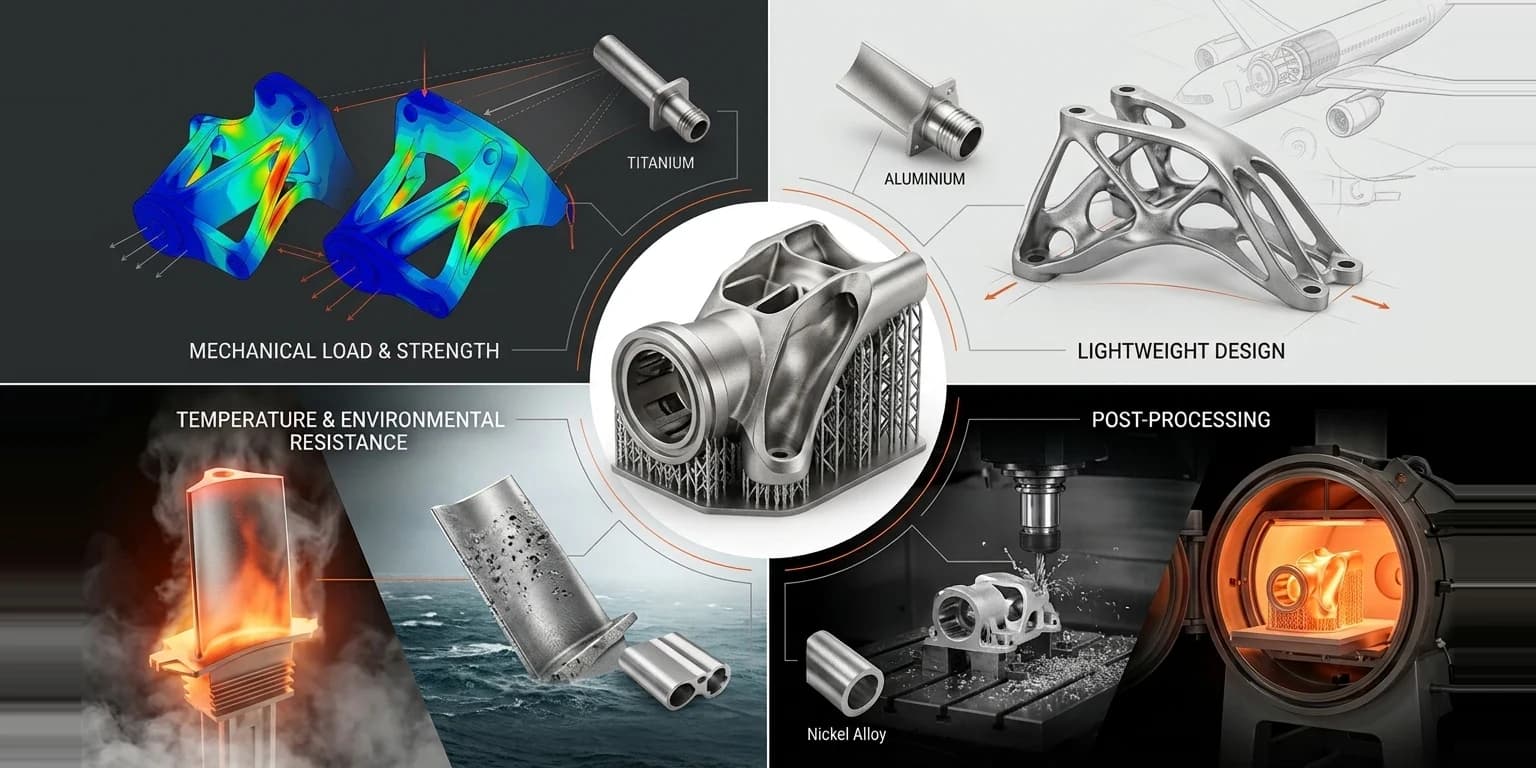
Weight matters where components move, especially in aerospace, space and motorsport, where unnecessary mass affects payload, energy use or vehicle performance. Topology optimisation, lattice structures, hollow regions and load-path-based redesign can reduce mass while keeping the required stiffness and strength, provided the design also accounts for fatigue, minimum feature size, buckling, surface condition, manufacturing limits and inspection.
Part consolidation is the other half of this. An assembly of several components that must be machined, aligned, welded, sealed and inspected may be redesigned into one printable geometry, cutting the number of separate parts and joining operations. Consolidation should still consider maintenance and repair: combining components only creates value when the new design works throughout its service life.
Low-volume production and design development
Conventional manufacturing is extremely efficient at high volumes. A casting tool may need significant initial investment but becomes economical across thousands of identical parts. At low quantities the picture changes, and metal printing can support development components, low-volume specialised parts, customised geometry, experimental hardware and frequent design revisions.
Lead time should still include more than the print itself: build preparation, heat treatment, support removal, machining, finishing and inspection all influence when the component is actually ready.
Repair and extending component life
Metal AM is not limited to building complete components from scratch. DED can deposit new material onto an existing one. If an expensive tool or industrial part has worn in a local area while the rest remains serviceable, a suitable DED process can rebuild the damaged region before machining it back to size. The route still needs material compatibility, surface preparation, controlled heat input and inspection.
Metal 3D Printing Applications by Industry
A quick view of where metal AM is being used, and why.
| Industry | Typical applications | Main engineering purpose | Important consideration |
|---|---|---|---|
| Aerospace | Fuel nozzle tips, brackets, ducts, engine components | Part consolidation, internal passages, lightweighting | Fatigue, surface condition, qualification |
| Space | Combustion chambers, nozzles, propulsion hardware | Cooling integration, complex geometry, development | Pressure, temperature, testing |
| Medical and dental | Implants, frameworks, crown copings | Application-specific geometry, porous structures | Biocompatibility, cleaning, regulation |
| Automotive and motorsport | Brackets, housings, prototypes, thermal parts | Lightweighting, packaging, development | Cost, durability, finishing |
| Tooling | Mould inserts, forming tools, specialist fixtures | Cooling, working geometry, repair | Hardness, tool life, surface finish |
| Energy | Burner components, turbine-related parts, repair deposits | Consolidation, thermal design, restoration | Temperature, material behaviour, inspection |
| Research and education | Test coupons, lattices, deposition experiments | Material development, teaching, process research | Repeatability, safety, useful process data |
| Defence and maritime | Replacement-part development, repair, structural research | Maintenance and supply resilience | Traceability, configuration control, qualification |
Aerospace: Fuel Nozzles, Lightweight Parts and Complex Flow Paths
Aerospace combines several conditions that make additive manufacturing attractive: high-value components, relatively low production quantities, expensive materials, strong pressure to reduce weight and parts with difficult internal geometry.
The GE LEAP fuel nozzle tip
GE reported that the redesigned nozzle tip reduced an assembly of roughly 20 separate pieces to one additively manufactured component, with a weight reduction of about 25% and substantially improved durability compared with the previous design.
The important part is not simply that the nozzle tip was printed. The manufacturing process allowed the design and assembly route to change: fewer separate pieces meant fewer joining operations, and AM supported the internal geometry the component needed. That is where metal AM becomes more than an alternative way of making the same shape.
Lightweight brackets and structural parts
Aerospace brackets look simple but carry demanding weight, fatigue and structural requirements. Instead of starting from a block-like geometry, engineers can place material around the load paths the component has to carry, so the shape follows function rather than cutting-tool access. For flight hardware, design freedom is only part of the challenge: approved materials and process routes, repeatability, traceability, inspection, fatigue performance and qualification all decide whether a printed component can enter service.
Ducts and fluid-handling components
AM can also integrate complex pathways for air, fuel or other fluids into a single part, potentially reducing joints and assembly operations. Internal passages need a plan for powder removal where applicable, cleaning and inspection.
Space: Rocket Hardware and Integrated Cooling
Space hardware combines demanding geometry with high pressure and severe thermal conditions. Rocket nozzles and combustion components are particularly interesting because thermal management forms part of the component geometry.
NASA’s RAMFIRE programme developed aluminium-alloy rocket nozzles using laser powder directed energy deposition, with integrated cooling channels. NASA reported that two nozzles accumulated 22 starts and approximately 579 seconds of hot-fire operation during the test programme.
That is an important development milestone for large-scale metal AM, not a result that transfers to every aluminium alloy, DED platform or nozzle. The project depended on a developed alloy system, appropriate equipment, controlled parameters and testing, and hot-fire performance is not the same as complete flight qualification or demonstrated mission life.
Medical and Dental: Geometry with a Clinical Purpose
Metal AM in medical devices, including selected implants and patient-matched components, usually depends on geometry with a specific mechanical or anatomical purpose. Examples include titanium orthopaedic and spinal implants, cobalt-chrome dental frameworks, crown copings and selected patient-matched devices.
Implants and porous structures
Metal AM can produce deliberately designed porous or lattice-like regions, which in an implant may control stiffness or provide a structure intended to encourage bone interaction. Designed porosity should not be confused with uncontrolled manufacturing porosity: one is part of the intended geometry, the other may be a defect.
Clinical production requires more than creating the required shape. Material traceability, validated cleaning and sterilisation where applicable, dimensional and mechanical verification and the relevant medical-device or dental requirements all have to be considered.
Dental applications
Dental manufacturing fits naturally into digital workflows because patient geometry differs case by case, and metal AM is used for selected frameworks and restorations. Not every 3D printed dental product is metallic, though: polymers and ceramics play important roles, so the material and route should always be stated clearly. Research into a new geometry or material is also different from producing a validated device for clinical use.
Automotive and Motorsport: Weight, Packaging and Development Speed
High-volume automotive manufacturing still depends on casting, forging, machining and stamping, because those processes are highly efficient at scale. Metal AM becomes interesting where a specific advantage justifies it: lower development-tooling requirements, complex thermal-management geometry, reduced assembly count, limited production volume, motorsport performance, or premium and customised components.
Bugatti’s titanium brake calliper
Bugatti reported that its printed titanium calliper weighed 2.9 kg against 4.9 kg for the aluminium component used at the time, a reduction of roughly 40%. The project was presented as development and validation work rather than evidence that printed titanium callipers had become standard production hardware.
It still shows how material selection and design freedom work together: the reduction did not come from swapping aluminium for titanium, but from redesigning the geometry around its structural requirements and manufacturing route.
Motorsport and specialist vehicles
Motorsport is a very different production environment: volumes are low, development cycles are short, and a performance improvement can justify a more expensive route. Applications include brackets, housings, exhaust-related parts, fluid-management components and thermal hardware.
Tooling and Manufacturing: Conformal Cooling and Repair
Some of the most practical applications sit inside factories rather than in the products customers buy.
Conformal cooling in mould inserts
Traditional mould cooling passages are drilled, and drilling normally produces straight channels that cannot follow the working surface closely. Metal AM can create conformal channels that do. In one Innomia customer case published by EOS, the company reported a 17% reduction in injection-moulding cycle time after introducing an additively manufactured tool with conformal cooling: a result from that specific application rather than a universal figure.
Conformal cooling brings its own design responsibilities. Channel wall thickness, cleaning, corrosion, blockage, leakage and inspection all need consideration, and the printed insert may still need heat treatment, machining and polishing before production.
Jigs, fixtures and specialist tools
Metal AM can support specialist fixtures and manufacturing tools, but printing in metal should solve an actual requirement. A lightly loaded positioning tool may be cheaper in polymer or conventional fabrication; a high-temperature or heavily loaded application may justify metal.
Repairing tooling
Rather than replacing an entire mould, die or tool because one area has degraded, DED can deposit material onto the selected region before machining it back to geometry. This is a good example of additive manufacturing complementing conventional manufacturing rather than replacing it.
Energy: Burners, High-Temperature Components and Repair
Energy applications involve high temperatures, long operating periods and demanding material conditions.
The Siemens gas turbine burner
A Siemens and E.ON project is a useful example of consolidation in operating equipment. Siemens reported that the additively manufactured burner head replaced a design previously made from 13 individual parts and 18 welds with a one-piece component, and in its 2018 announcement reported more than 8,000 operating hours without reported issues at E.ON’s combined-cycle plant in Philippsthal, Germany.
Those figures describe the operating record reported at that time. The wider value of the example is the ability to change both the internal design and the manufacturing route while reducing the number of separate joints.
Repair and cladding
DED is also relevant because material can be added directly to existing components: restoring worn regions, adding working surfaces or depositing a different material where particular properties are needed. For critical repair work, engineers may need to evaluate dilution, metallurgical bonding, the heat-affected region, residual stress and the inspection route, so it has to be treated as a complete repair method rather than a way to add metal.
Research and Education: Turning Process Parameters into Evidence
Universities and research laboratories often use metal AM differently from production factories. The objective may be to understand the manufacturing process rather than produce a finished component.
Material research
Researchers can investigate how an alloy behaves during melting and solidification, whether cracking occurs, how heat treatment changes the microstructure, whether build orientation influences properties, and how processing conditions affect density or geometry. Small coupons are valuable when the experiment has a clearly defined question.
Process research
In laser wire DED, researchers may vary laser power, wire feed speed, travel speed, shielding conditions and deposition strategy, then compare bead geometry, microstructure or mechanical behaviour. Useful experiments need repeatability: material or wire lot, shielding, sample position, build orientation, thermal history and measurement method all influence the result, and repeating selected conditions helps separate a real trend from normal variation.
Teaching
Metal AM connects several engineering subjects within one practical workflow, so students see how design decisions affect manufacturing rather than learning each stage separately.
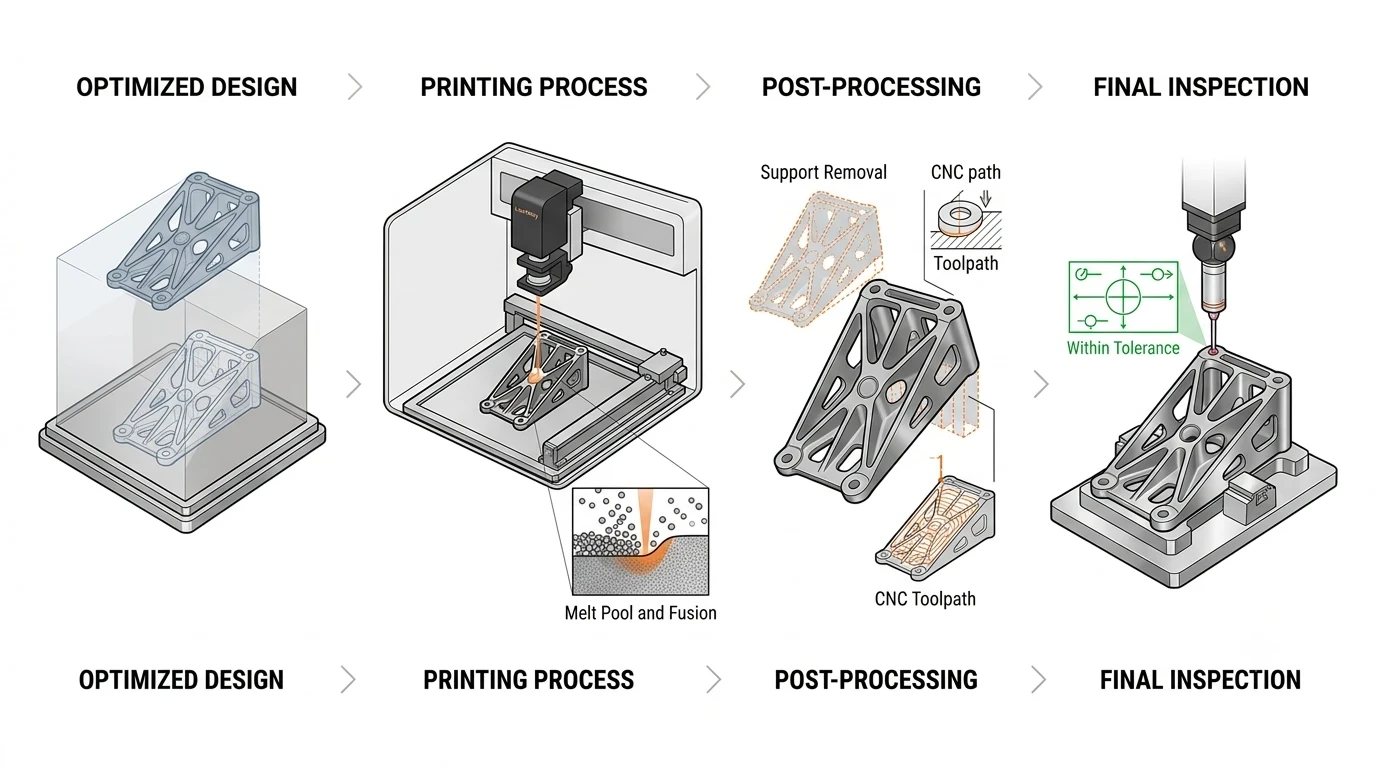
Our guide to metal 3D printing in education covers teaching goals and laboratory requirements in more detail.
Defence and Maritime: Maintenance and Replacement Parts
Defence and maritime equipment can stay in service for decades, and replacement components become difficult to source when the original supplier no longer exists, tooling has been lost or annual demand is very low. Metal AM offers another route for replacement-part development and repair research.
Keeping a CAD model does not automatically create a qualified digital spare part. A reliable route still needs controlled material, machine conditions, process parameters, revision history, post-processing and inspection. Digital inventory also raises configuration-control questions: the manufacturing team has to know that the correct, approved version of a file is in use and that unauthorised changes have not entered the workflow.
Prototypes vs End-Use Production
Metal AM is still widely used for prototypes, but its role is no longer limited to development parts. The difference usually lies in what has to be demonstrated before the part can be used.
| Requirement | Development prototype | End-use production part |
|---|---|---|
| Main purpose | Answer a design or test question | Perform a defined function in service |
| Design changes | May be frequent | Usually controlled |
| Material evidence | Based on development needs | Based on service requirements |
| Inspection | Focused on the experiment | Defined around critical features |
| Process records | Help interpret results | Support repeatability and traceability |
| Post-processing | Based on test needs | Controlled as part of the manufacturing route |
| Qualification | Depends on prototype purpose | Can be extensive |
A prototype bracket used only to check fit may need little more than dimensional confirmation. A component intended for an aircraft engine is very different: material properties, internal condition, build history, heat treatment and dimensions may all have to be controlled and documented. The real question is not only whether the machine can print the geometry, but whether the complete manufacturing route can repeatedly meet the specification.
Which Process Fits Which Application?
Process selection should begin with what the part needs to do.
| Application need | Process often considered | Main advantage | Main limitation |
|---|---|---|---|
| Fine features and compact complex geometry | L-PBF | High geometric freedom and relatively fine feature capability | Powder removal, supports, build volume and post-processing |
| Internal cooling channels | L-PBF | Allows complex internal flow paths | Powder evacuation, minimum feature size and inspection access |
| Repair or local feature addition | DED | Material can be deposited onto an existing component | Rougher finish, heat input and machining requirements |
| Large near-net preforms | Laser or wire DED | Scalable direct deposition | Final machining is commonly required |
| Wire-deposition research | Laser wire DED | Separate control of wire delivery and laser energy | Geometry and process window need careful development |
| Very large, high-rate wire deposition | DED-arc / WAAM | High deposition rates and large working envelopes | Coarser geometry, greater heat input, distortion and machining |
These are starting points rather than fixed rules. Actual selection also depends on material compatibility, build volume, feature size, tolerances, surface finish, production quantity, heat treatment, machining, inspection, qualification and overall manufacturing cost. Two parts from the same industry can need completely different additive processes.
When Should You Use Metal 3D Printing?
Metal AM should solve a real problem. Before selecting it, ask a few practical questions.
- Is the geometry difficult to manufacture conventionally? Complex internal channels, part consolidation and certain lightweight structures may justify AM; a simple block with a few machined holes probably does not.
- Does reducing part count add value? Combining components can remove joints, fasteners and separate operations, but consider the maintenance implications.
- Does weight matter? Removing mass from an aircraft, spacecraft or moving vehicle has real value; the same saving may mean little in a stationary component.
- Is the production volume suitable? Casting, forging and machining become very economical at high quantities, while AM suits specialised, low-volume or highly customised parts.
- Is customisation important? Medical, research and specialised industrial work benefits from changing geometry without new dedicated tooling.
- Can an existing component be repaired? If wear is localised and the rest of the component still has value, a DED repair route deserves investigation.
Where Lasefinity Fits
The examples above come from different manufacturers, machine sizes and developed industrial processes. Our systems are compact platforms for exploring metal AM in research, education, product development and selected manufacturing work.
FusionX uses Laser Powder Bed Fusion with a 100 × 100 × 80 mm build volume and a 500 W fibre laser. It supports compact components, test coupons, lattice samples, material development and studies of L-PBF geometry and process parameters, including internal-channel demonstrators where the geometry allows powder evacuation and cleaning.
Explore the FusionX L-PBF metal 3D printer
WireX uses wire-fed Directed Energy Deposition with a 150 × 150 × 150 mm build volume, and supports research into wire-fed deposition, bead geometry, wall construction, process parameters and selected repair or cladding concepts.
Explore the WireX wire-fed DED printer
Repairing or cladding an industrial service component is a separate qualification problem that may require application-specific material development, process validation, machining and inspection. The larger industrial examples in this article show what the wider metal AM field can achieve, rather than claiming every result can be reproduced on a compact system.
Final Thoughts
The most useful metal 3D printing applications are not successful simply because a component was printed. They work because additive manufacturing solved a particular engineering problem: reducing the number of separate pieces in GE’s fuel nozzle tip, building integrated cooling into NASA’s RAMFIRE nozzles, exploring conformal cooling in a toolroom, or using simple samples to understand how materials and parameters behave.
Start with the component rather than the printer. Look at the geometry, material, production quantity, required properties, finishing and inspection, then decide whether additive manufacturing offers an advantage over machining, casting, forging or another established route. If fine features and complex internal geometry matter, L-PBF is worth evaluating. If the requirement involves direct deposition, repair, feature addition or wire-based process research, DED is the better starting point.