
The case for printed tooling
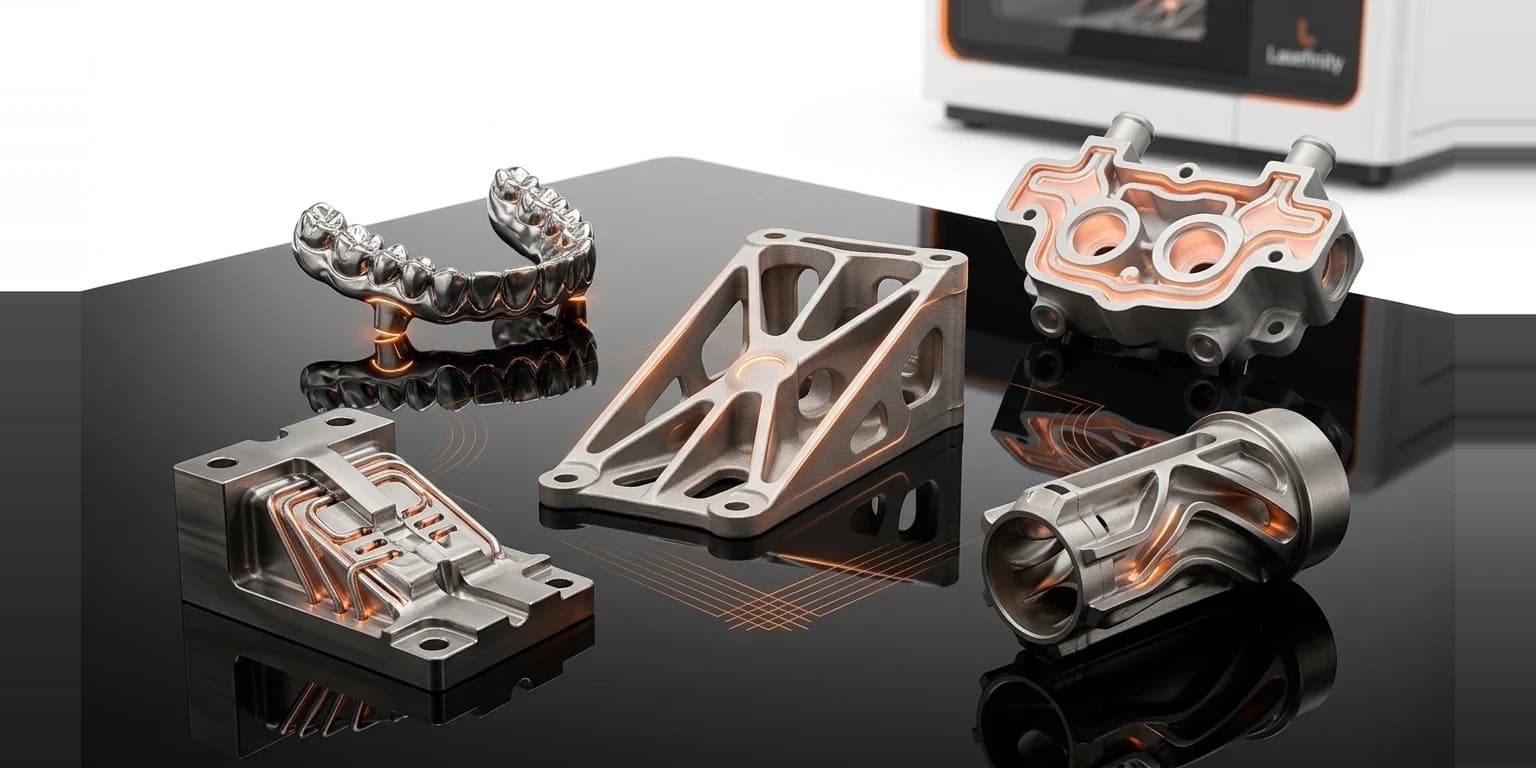
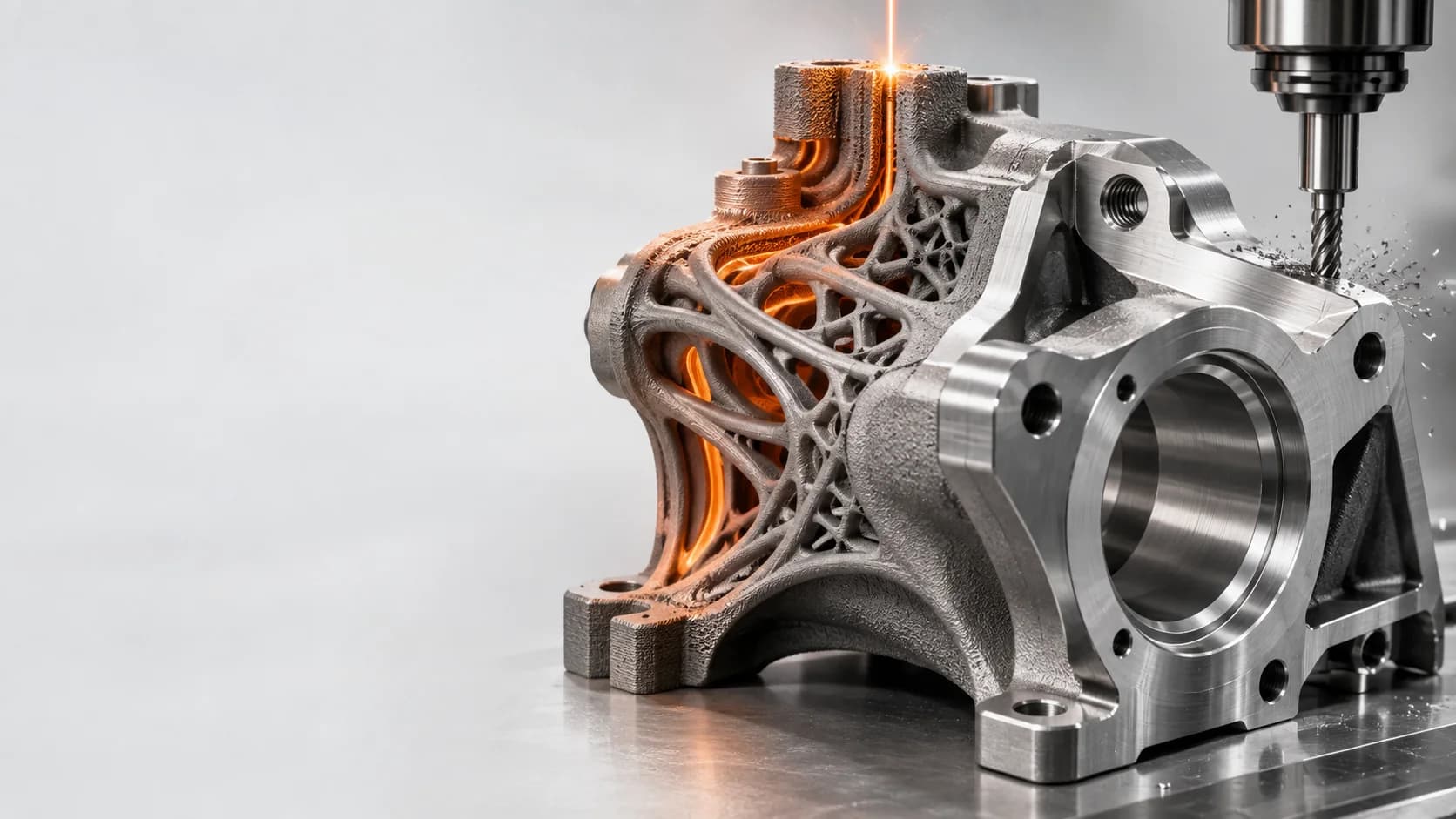
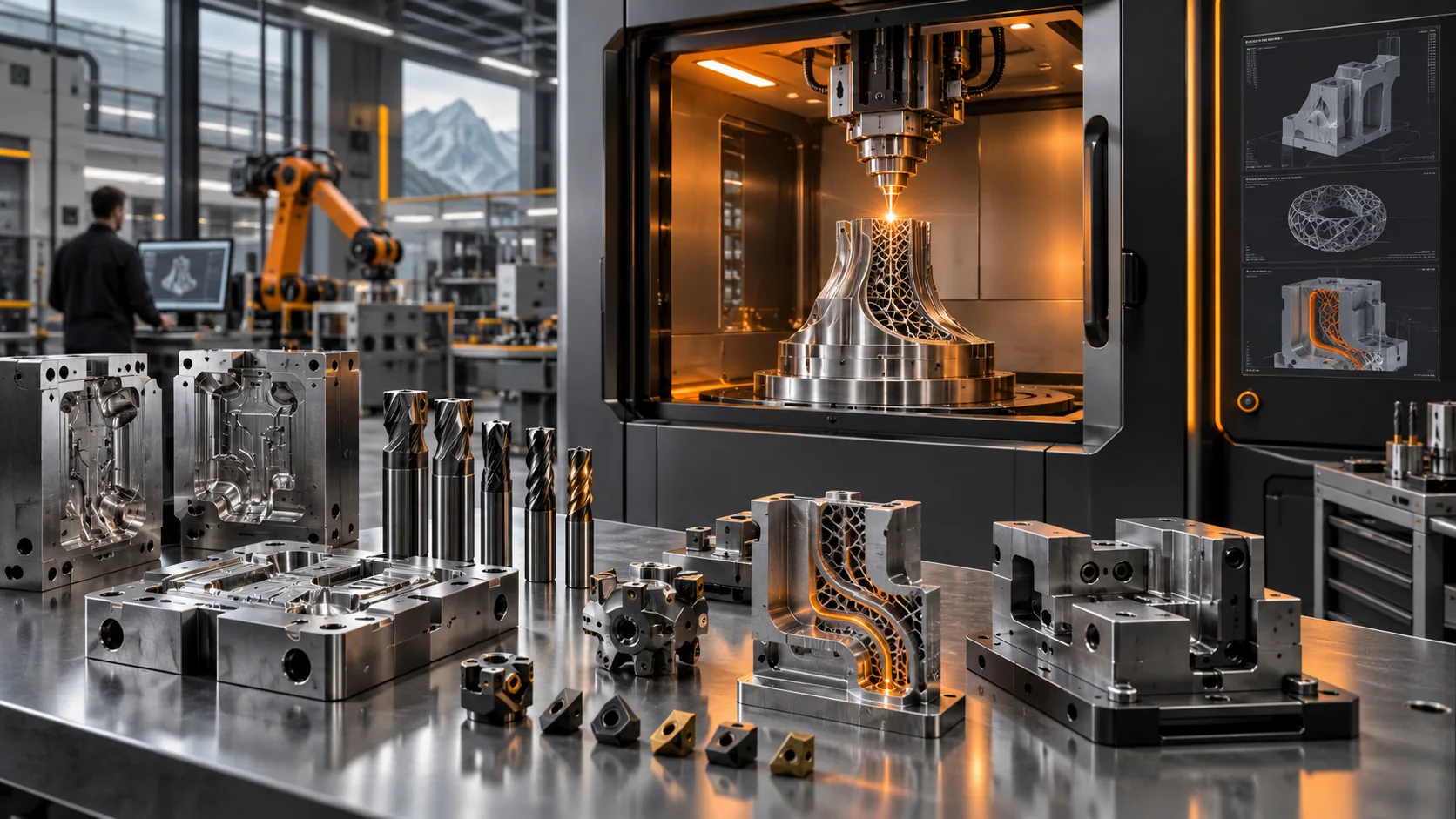
Cooling channels that follow the moulding surface instead of being drilled in straight lines shorten cycle times and reduce warp. For a high-volume tool, a few seconds per cycle is a serious commercial number, and it is the clearest justification for additive in a toolroom.
The three failure modes
Tool steels are difficult to process by L-PBF for reasons that have nothing to do with geometry.
- Porosity. Lack-of-fusion defects act as crack initiation sites under cyclic thermal and mechanical load. Parameter development for each specific alloy and layer height is not optional.
- Residual stress. Steep thermal gradients build in stress that distorts the part or cracks it during or after the build. Stress relief before removal from the plate is standard practice for a reason.
- Cracking in high-carbon grades. Some conventional tool steels simply do not tolerate the process. The answer is often a different alloy rather than different parameters.
Post-processing is part of the process
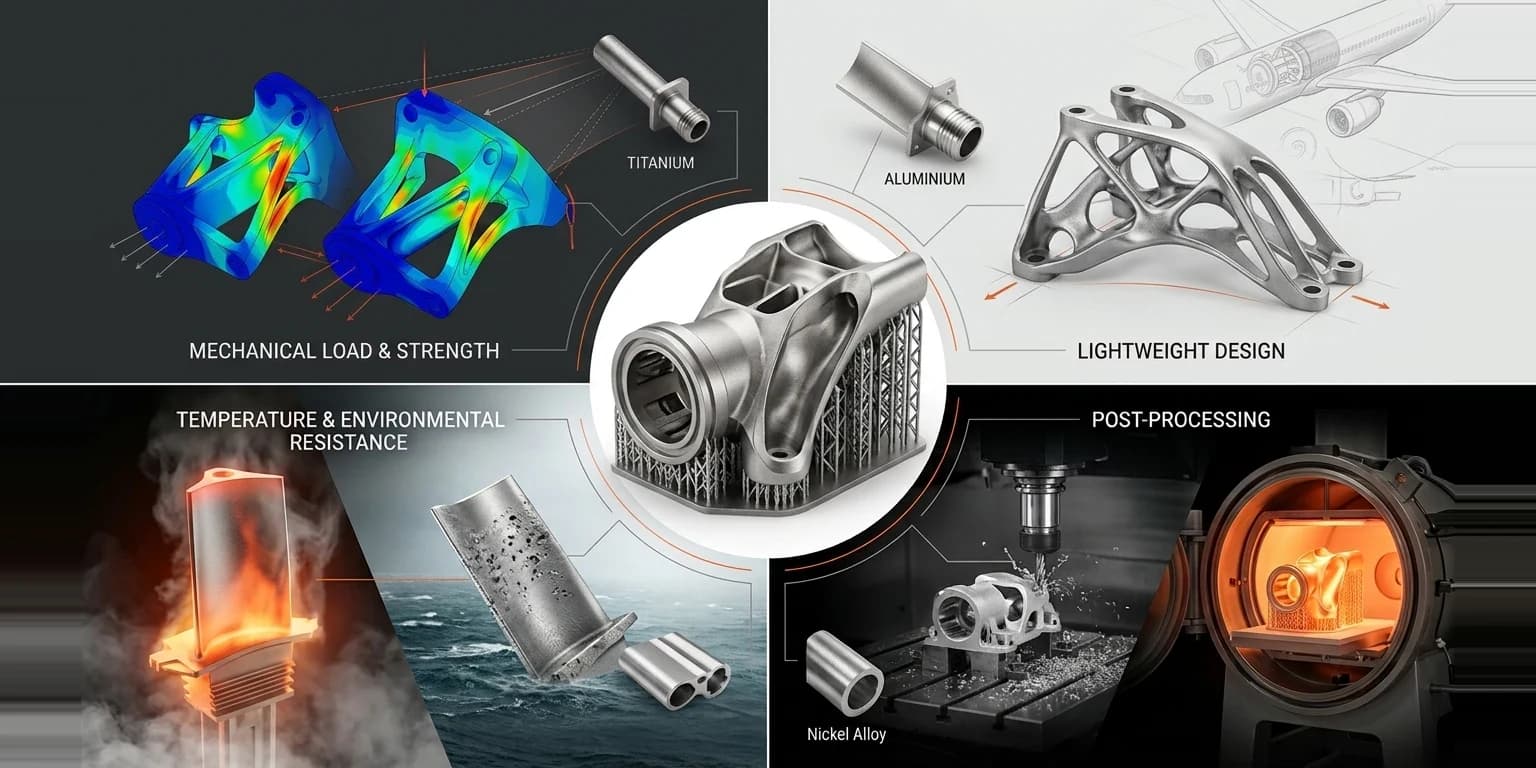
Stress relief, hot isostatic pressing where the application justifies it, heat treatment to specification, then machining of the working surfaces. A printed tool that skips these steps is not a cheaper tool; it is a tool that fails earlier and takes production time with it.
Where this leaves you
Printed tooling makes sense when the cooling geometry is genuinely impossible to drill and the cycle-time gain is measurable. It makes much less sense as a straight substitute for a tool that machines perfectly well today. That judgement is worth making per tool, with a real number attached.