
L-PBF Is Pushing the Limits of Complex, Compact Heat Sink Design
Laser Powder Bed Fusion enables TPMS lattice heat sinks with surface areas and geometric complexity impossible to achieve through conventional manufacturing — opening new frontiers in thermal management for aerospace and electronics.
As electronic and power devices become smaller and more powerful, the demand for compact, lightweight, and efficient heat sinks continues to grow. Traditional pin-fin or rectangular-fin heat sinks are effective, but their geometry limits the amount of surface area that can be achieved within a small volume.
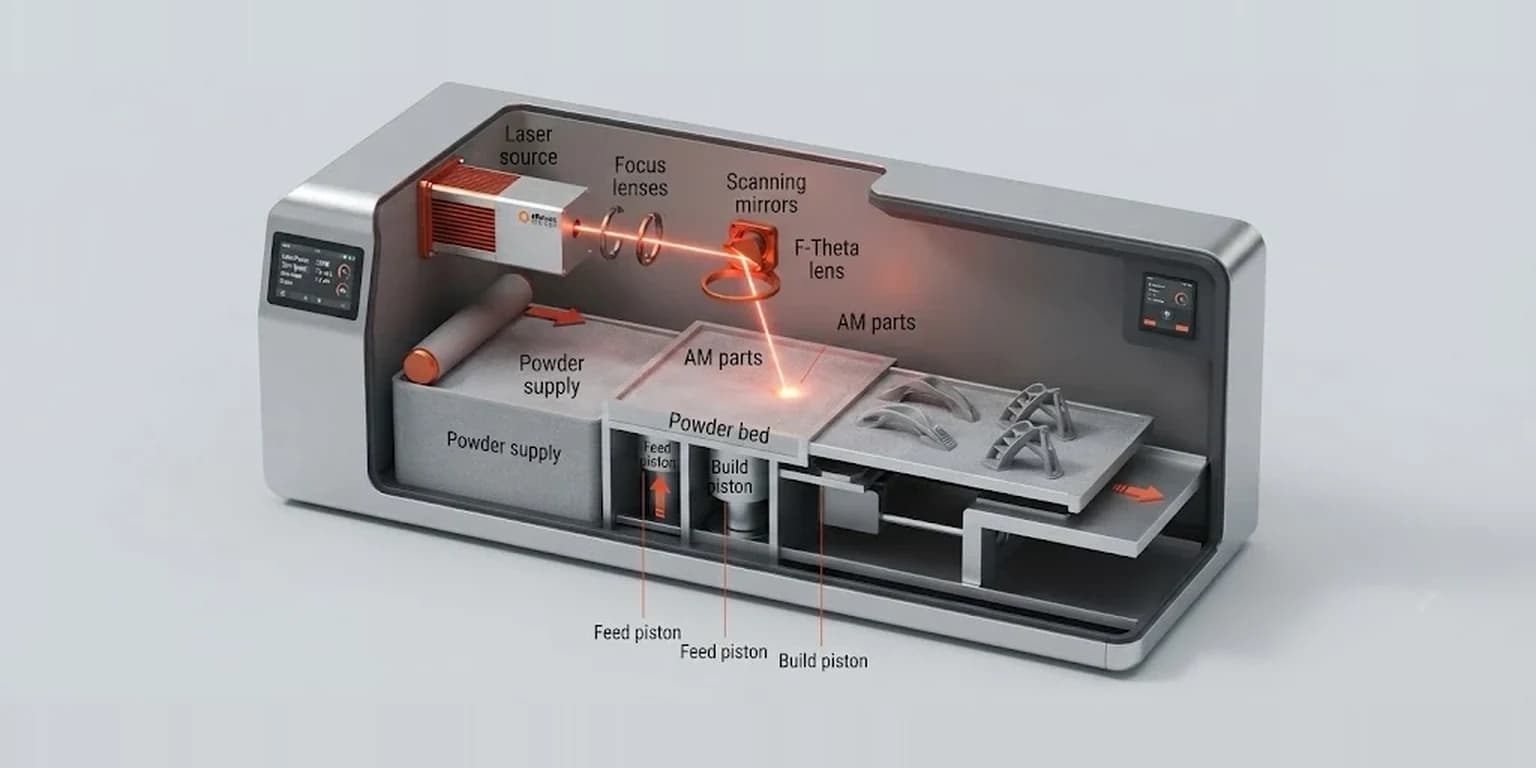
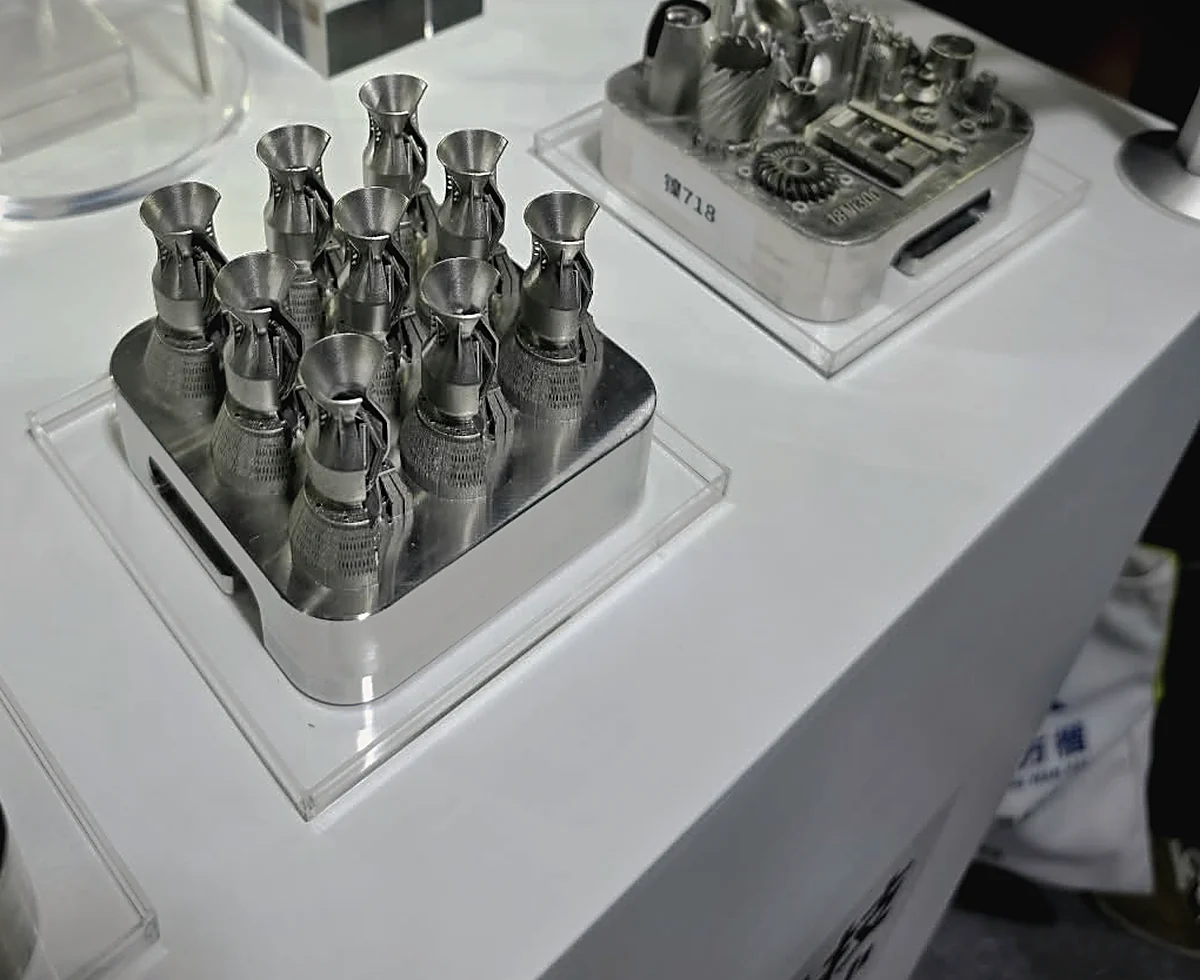
Laser Powder Bed Fusion (L-PBF) additive manufacturing offers a new way to overcome this limitation. It enables the production of complex TPMS lattice structures that are difficult, or nearly impossible, to manufacture using conventional methods. This study explored five TPMS lattice heat sink designs: Gyroid, Diamond, Lidinoid, Schwarz P, and Split P. These structures were manufactured using A20X aluminium to assess their manufacturability and potential for thermal management applications.
Why TPMS Lattices Are Important
TPMS lattice structures provide high surface area, lightweight geometry, and self-supporting features. For heat sinks, this is especially valuable because higher surface area improves heat dissipation. Compared with a traditional pin-fin heat sink of the same size, the TPMS-based additively manufactured heat sink offers a larger surface area, making it more suitable for compact heat transfer devices.
Only additive manufacturing can create this level of complexity in such a compact structure. L-PBF allows intricate internal channels, curved surfaces, and lattice geometries to be produced as a single metallic component with a relative density above 99.5%.
Surface Quality and Manufacturability
The manufacturability of the TPMS heat sinks was evaluated using high-resolution 3D surface topography through an optical profile meter and surface morphology analysis using scanning electron microscopy.
The results showed that smaller unit cells generally increased surface roughness. Common L-PBF-related irregularities included partially melted particles, dimensional inaccuracies, staircase effects, voids, powder adhesion, and balling. More irregularities were observed around external hanging surfaces and boundary walls. However, TPMS lattices are naturally self-supporting, reducing the need for additional support structures during printing.
Among the designs studied, the Diamond lattice with a 10 mm unit cell showed minimal roughness, while the Gyroid lattice demonstrated moderate roughness across all unit cell sizes, supporting cleaner and more reliable printing.
Future Potential
L-PBF-printed TPMS heat sinks show strong potential for advanced thermal management in electronics, aerospace, power devices, and compact heat exchangers. Their combination of high surface area, lightweight structure, and manufacturability makes them a promising alternative to conventional heat sink designs.
Further research should focus on thermal performance testing, design mapping of individual unit cells, and understanding how L-PBF defects influence heat transfer behaviour.
Conclusion
L-PBF additive manufacturing is proving to be a powerful method for producing compact and complex TPMS lattice heat sinks. By enabling geometries that conventional manufacturing cannot easily achieve, L-PBF allows engineers to design heat sinks with higher surface area, improved heat dissipation potential, and lightweight self-supporting structures.
This study shows that A20X aluminium TPMS heat sinks can be manufactured with high relative density, promising surface quality, and strong structural complexity. Among the investigated designs, Gyroid and Diamond lattices demonstrated especially promising manufacturability.
As research continues, L-PBF-manufactured TPMS lattice structures could play an important role in the future of compact heat exchangers, aerospace cooling systems, and high-performance electronic thermal management.