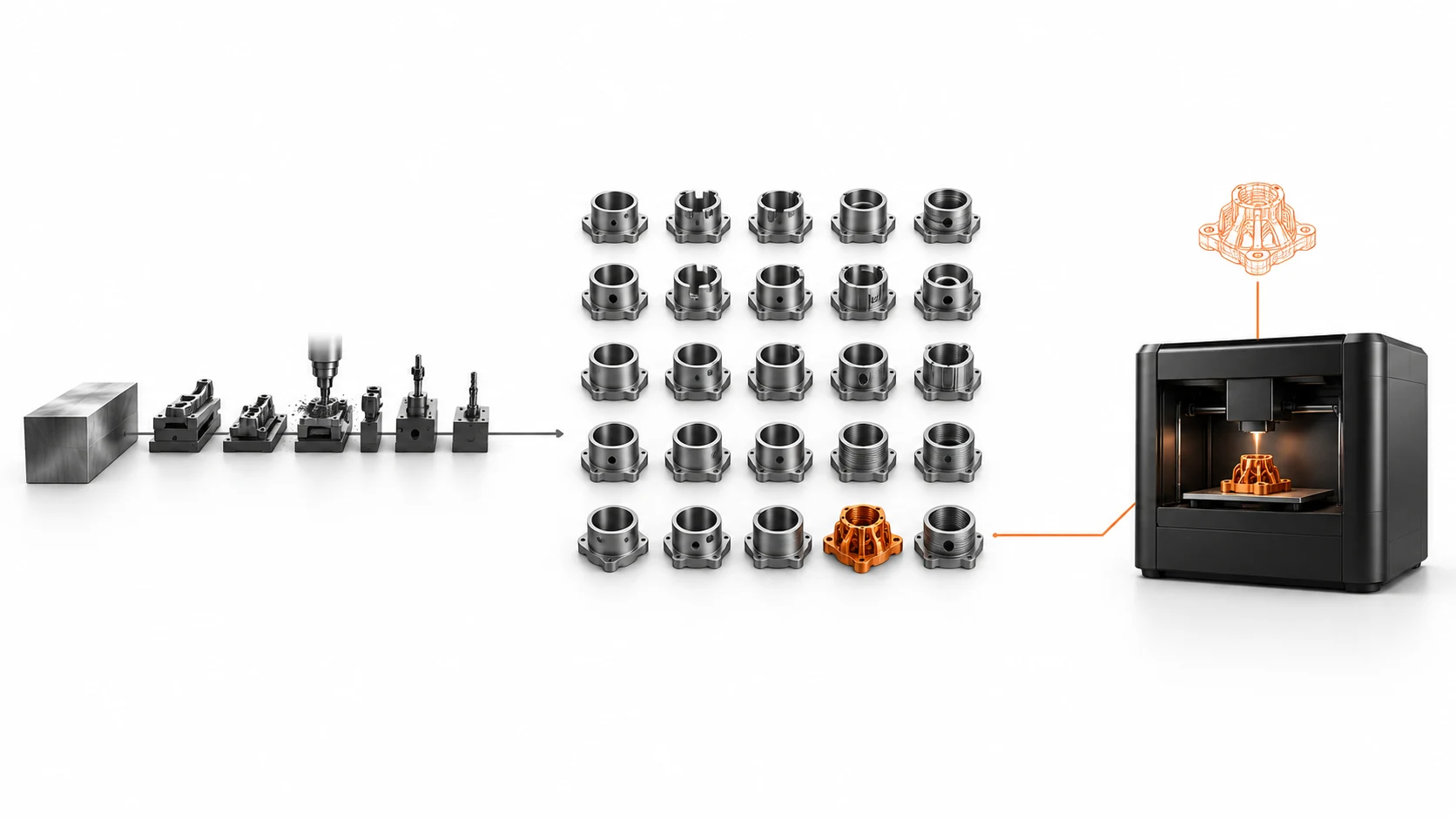
A small engineering workshop receives an order for 25 customised metal components. The geometry is too complex for straightforward machining, but the quantity is too low to justify expensive tooling. Outsourcing the parts could take several weeks, especially if the customer requests design changes. So now what to do?
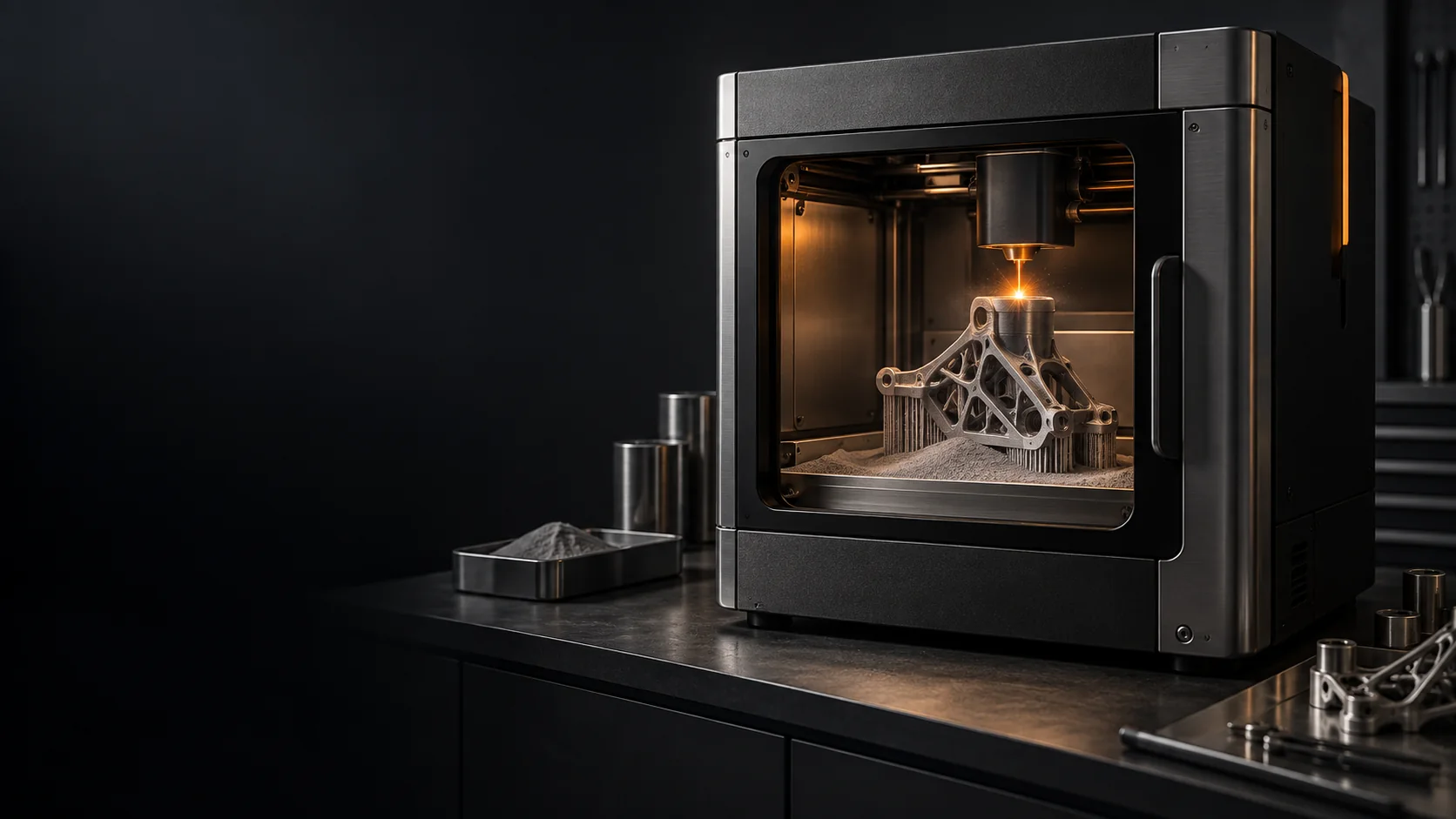
This is where a metal 3D printer for small businesses can become a practical manufacturing option.
But choosing a machine is not simply about finding the smallest or most affordable printer. A small manufacturer needs to consider the parts it wants to produce, materials, production volume, machine utilisation, post-processing, infrastructure, and the skills that they have in-house.
So, when does bringing metal 3D printer in-house actually make sense for a small business, and what should you look for before investing?
What Is Metal 3D Printing?
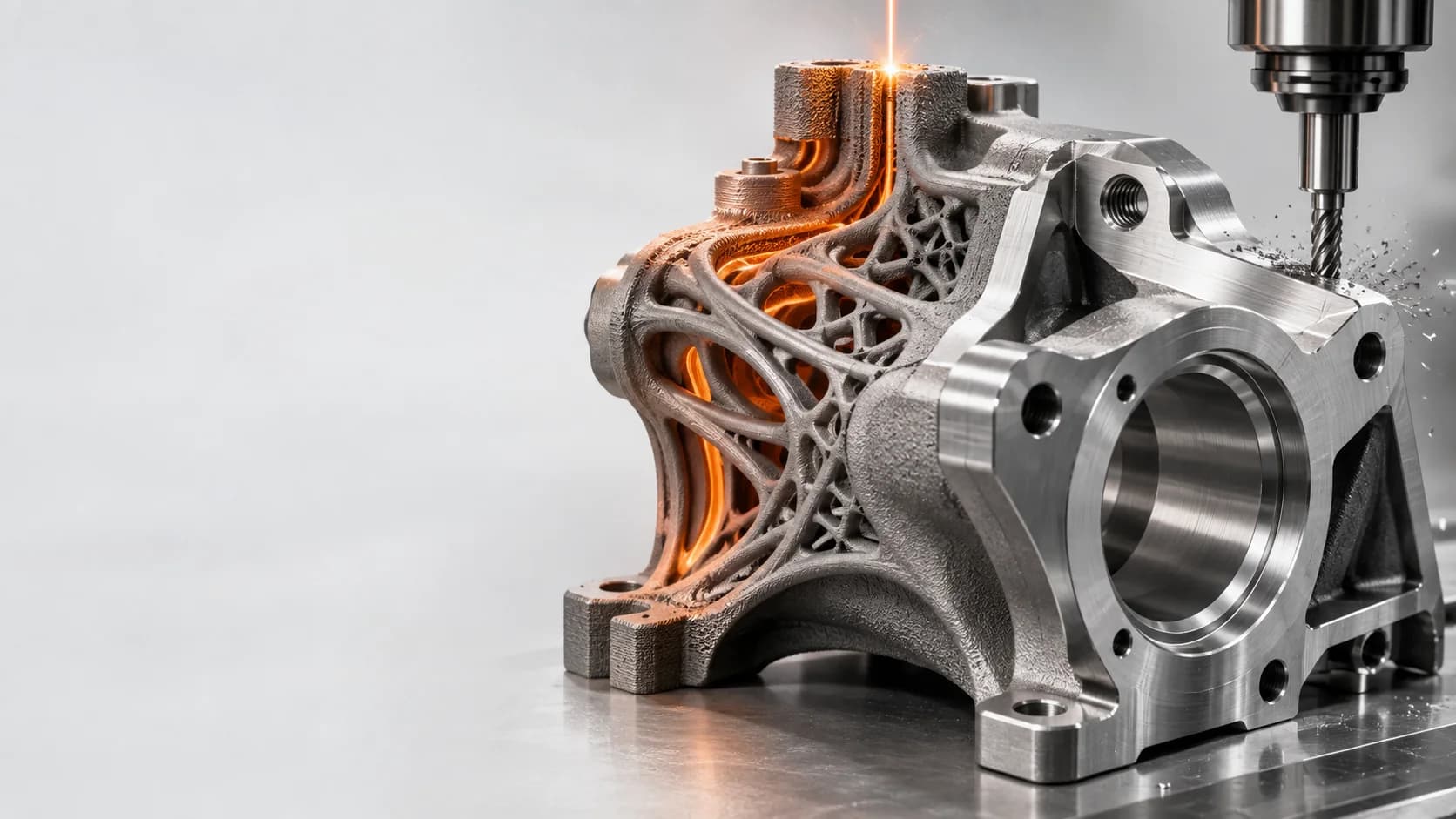
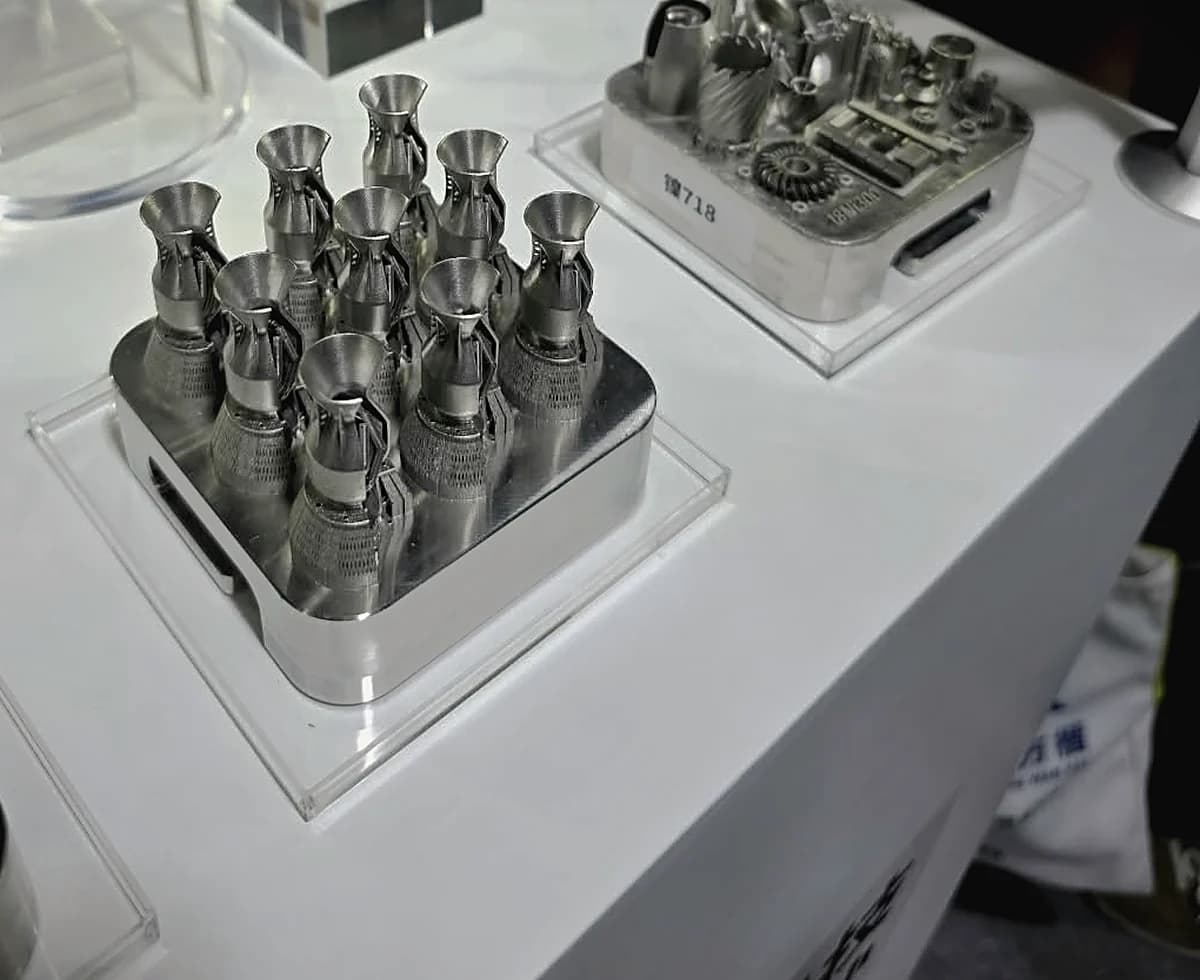
Metal 3D printing is a way of making metal parts directly from a digital 3D design. Instead of cutting the part out of a larger block of metal, the printer builds it layer by layer until the complete component is formed. This allows manufacturers to create complex shapes, customised parts and small production batches without always needing expensive moulds or tooling.
In simple terms, if you can design a metal component digitally, a metal 3D printer can turn that design into a physical part by building it one layer at a time.
Why Are Small Businesses Considering Metal 3D Printing?
Metal additive manufacturing has traditionally been associated with large industrial manufacturers, particularly in sectors such as aerospace, automotive and medical manufacturing. But the range of available metal AM processes has expanded, giving smaller manufacturers more options.
A 2024 study examining metal additive manufacturing adoption in small and medium-sized enterprises (SMEs) compared Powder Bed Fusion (PBF), Directed Energy Deposition (DED), Binder Jetting and Metal Material Extrusion. The researchers noted that SMEs still face challenges related to cost and technical complexity, but the increasing availability of different processes also creates more opportunities for smaller businesses to adopt metal AM.
That distinction is important. A small workshop does not necessarily need the same machine or process used by a large production facility.
For one business, the priority may be producing complex prototypes. Another may need customised replacement components. A research organisation may need greater control over materials and process parameters.
The question is therefore not whether a small business can use metal 3D printing.
It is:
Where can metal 3D printing provide a genuine advantage over the way you manufacture today?
What Can Small Businesses Make With Metal 3D Printing?
Metal 3D printing is most useful when the part, production volume or development process creates a problem for conventional manufacturing.
1. Custom and Replacement Parts
Small manufacturers often need components that are produced in relatively low quantities. A replacement component may only be required a few times. A customer may also need a customised version of an existing part.
Conventional manufacturing can still be the right choice for many of these applications. However, when tooling, setup or supplier lead times become significant, in-house metal printing can provide another option.
This can be particularly useful for:
- Custom components
- Replacement parts
- Machine fixtures
- Tooling
- Brackets and housings
- Specialised components
- Components that are no longer readily available
The value is not necessarily that every printed part will cost less. The value may be that you can produce the part when you need it.
2. Rapid Prototyping
Consider a workshop developing a new component.
The traditional process might look like:
Design → Supplier quotation → Manufacturing → Delivery → Testing → Redesign
If every design iteration is outsourced, even a small change can extend the development cycle.
An in-house printer can shorten that loop:
Design → Print → Test → Redesign
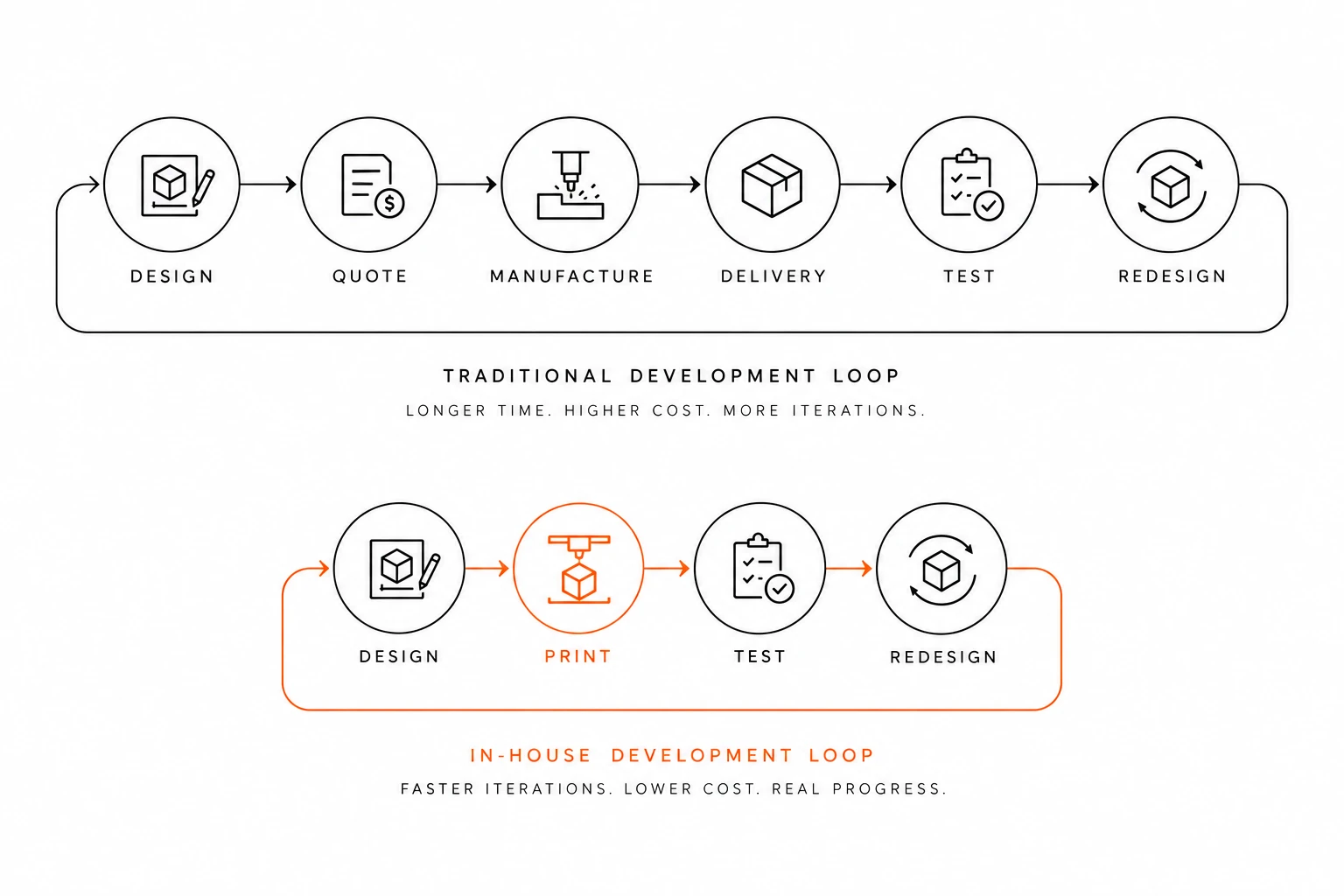
This can be particularly useful when engineers need to test several physical iterations before finalising a component. The business benefit may therefore come from reducing development time, rather than simply reducing the cost of each individual prototype.
3. Short Production Runs
Small production batches are another potential application. When only a limited number of parts are required, tooling and setup costs associated with conventional processes can have a greater influence on the economics. However, low production volume does not automatically mean metal AM will be cheaper.
The actual economics depend on factors such as:
- Part geometry
- Material
- Build time
- Machine utilisation
- Labour
- Post-processing
- Inspection
- Production quantity
This is why a small business should calculate the total cost of producing the part, rather than comparing only the purchase price of a machine with an external supplier's quotation.
4. Complex Geometries
One of the strongest reasons to consider metal additive manufacturing is design freedom.
Traditional machining removes material from a larger workpiece. Some internal channels, lattice structures, lightweight geometries and highly integrated components can therefore be difficult or expensive to manufacture.
Metal AM changes the design approach because components are built layer by layer.
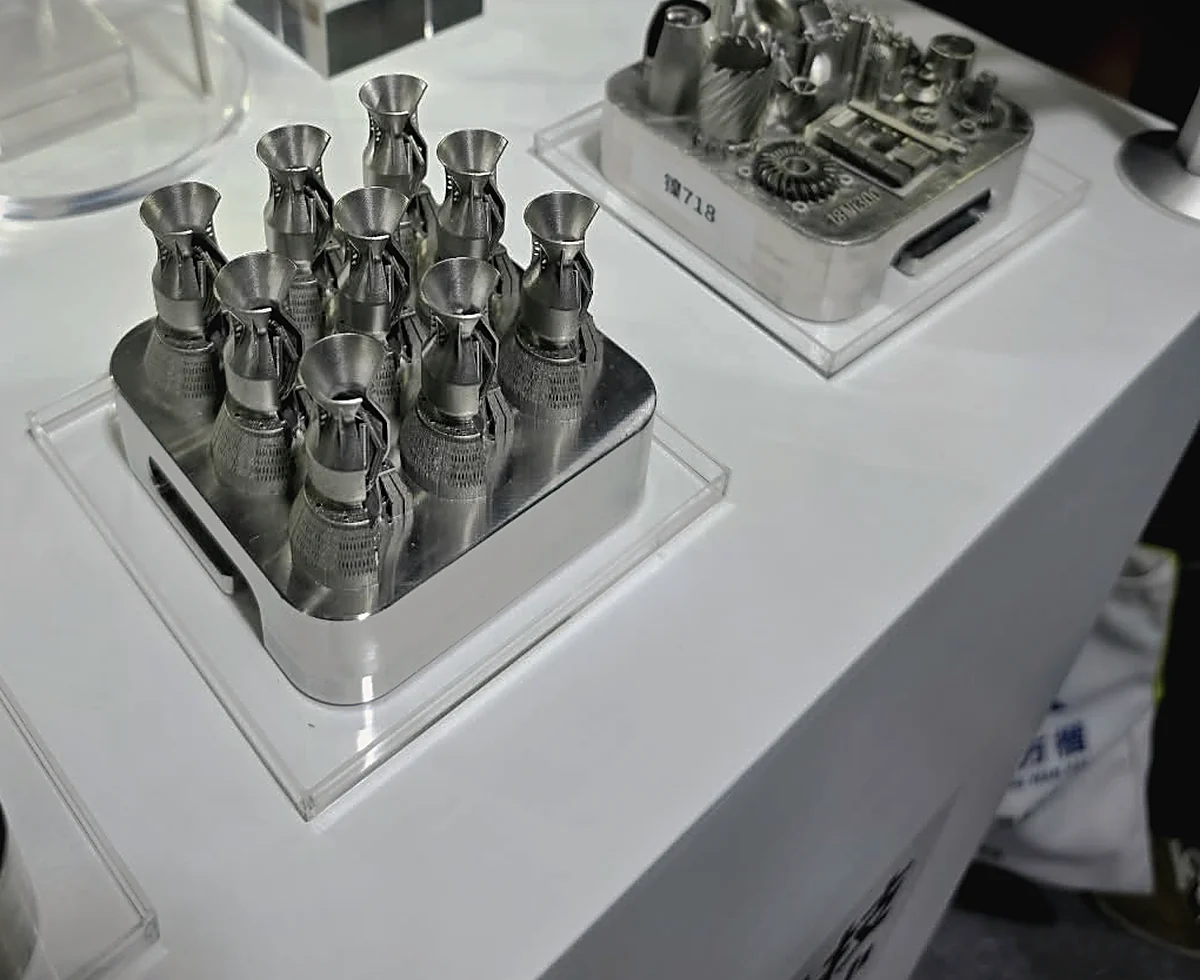
Research into topology optimisation and metal AM has shown how the combination can enable complex and lightweight structures that are difficult to achieve using conventional design and manufacturing approaches. At the same time, those designs still need to account for AM-specific constraints such as overhangs, minimum feature sizes, surface roughness, residual stress and distortion. So, additive manufacturing does not remove manufacturing constraints.
It gives designers a different set of constraints and possibilities to work with.
Desktop vs Compact vs Industrial Metal 3D Printers
A business researching an affordable metal 3D printer will quickly encounter terms such as desktop, benchtop, compact and industrial.
These terms can help describe the general positioning of a system, but they should not be treated as universal technical classifications. Machines within the same category can have very different capabilities.
| Factor | Desktop Metal 3D Printer | Compact/Benchtop System | Industrial Metal 3D Printer |
|---|---|---|---|
| Typical application | Education, research and prototyping | R&D, prototyping and selected production | Production and advanced manufacturing |
| Footprint | Generally smaller | Moderate | Generally larger |
| Build volume | Usually smaller | Small to medium | Medium to large |
| Production capacity | Limited | Moderate | Higher |
| Infrastructure | Generally lower, depending on technology | Moderate | Usually higher |
| Material flexibility | System-dependent | System-dependent | Often broader |
| Process control | Varies | Varies | Often more extensive |
| Operator expertise | Low to moderate | Moderate | Moderate to high |
| Initial investment | Generally lower | Moderate | Higher |
| Suitable for | Learning, development and early applications | SMEs, workshops and research teams | Industrial production |
The important point is that the smallest machine is not automatically the best machine for a small business. A desktop metal 3D printer may provide a convenient footprint, but it may not offer the build volume, material compatibility or process control required for a particular application.
Likewise, an industrial machine may provide capabilities that a small workshop simply does not need. The right choice should therefore start with the application, not the machine category.
What Should You Look for in a Metal 3D Printer?
Once you know what you want to manufacture, you can begin comparing machines.
1. Build Volume and Physical Footprint
Start with the parts you actually expect to produce. If most of your components are small, buying a machine with a much larger build volume may not provide much additional value.
But the printer itself is not the only space requirement.
Depending on the technology, you may also need space for:
- Material storage
- Gas systems
- Ventilation or extraction
- Post-processing
- Inspection
- Maintenance
- Operator access
A compact metal 3D printer can reduce the machine footprint, but the complete workflow still needs to fit within the available workspace.
2. Material Compatibility
Material requirements should be considered before machine price.
Ask:
- Which alloys can the system process?
- Are suitable process parameters available?
- What form does the feedstock take?
- Can the material be sourced consistently?
- How is the material stored and handled?
- What post-processing does the material require?
This becomes especially important when comparing different metal AM technologies.
A business that requires stainless steel, titanium or nickel-based alloys may need a very different system from a workshop focused on a smaller range of applications. See the materials supported by each Lasefinity system.
3. Laser Power and Beam Characteristics
For laser-based systems, laser power is an important specification, but it should not be considered in isolation. Other factors such as beam characteristics, scan strategy, layer thickness, material properties and process parameters also influence how the system behaves. A higher laser power does not automatically mean a better machine.
The better question is:
Does the complete process configuration provide the performance required for your application?
4. Process Control and Monitoring
Process control becomes particularly important when a business is developing new materials, applications or manufacturing parameters.
A system with greater control over process parameters can provide engineers with more flexibility during development.
Process monitoring can also provide information about what happens during a build rather than relying solely on inspection after the part has been produced.
This distinction can matter when moving from simply producing prototypes to developing a repeatable manufacturing process.
5. Material Handling
The feedstock used by the machine can significantly influence the workflow.
For example, powder-based and wire-fed systems have different material-handling requirements.
This is one reason why businesses should not compare machines purely by saying one is a "small metal 3D printer" and another is an "industrial metal 3D printer".
The underlying technology matters.
How Much Does a Metal 3D Printer Really Cost?
The phrase affordable metal 3D printer sounds simple, but affordability depends on more than the initial machine price.
A realistic calculation should consider the complete cost of ownership.
| Cost Area | What to Consider |
|---|---|
| Machine | Printer and associated hardware |
| Materials | Powder, wire or other feedstock |
| Software | Build preparation and process software |
| Gas | Inert gas requirements where applicable |
| Electricity | Machine and supporting equipment |
| Maintenance | Servicing, consumables and replacement components |
| Training | Operator and engineering training |
| Post-processing | Heat treatment, machining, finishing or other processes |
| Inspection | Measurement and quality-control requirements |
| Installation | Site preparation and commissioning |
What Does Benchtop Metal 3D Printing Require?
A smaller machine does not automatically mean a simple installation. The infrastructure requirements depend heavily on the printing technology.
Before purchasing a desktop metal 3D printer or benchtop system, check the manufacturer's requirements for:
- Electrical supply
- Ventilation
- Gas supply, where applicable
- Material storage
- Workspace
- Fire and safety provisions
- Cleaning and maintenance
- Post-processing
- Operator training
This is particularly important when comparing powder-based systems with other metal AM processes.
For example, a powder-bed process and a wire-fed DED process do not have the same feedstock or material-handling workflow.
The machine footprint may be small, but the manufacturing workflow still needs to be planned.
Do Small Businesses Need Specialised Skills?
A small business does not necessarily need a large engineering department to begin exploring metal additive manufacturing. However, it does need people who understand more than simply pressing "print".
Depending on the technology and application, operators and engineers may need to understand:
- CAD and build preparation
- Material selection
- Process parameters
- Machine operation
- Basic troubleshooting
- Safety requirements
- Post-processing
- Inspection and quality requirements
The level of expertise required depends on how the system will be used.
A business purchasing a desktop metal 3D printer primarily for education and prototyping may have different training requirements from a manufacturer using metal AM for repeat production. Lasefinity includes installation and operator training with every system.
Which Metal 3D Printing Technology Is Right for a Small Business?
There is no single metal AM technology that is best for every application.
1. Laser Powder Bed Fusion
Laser Powder Bed Fusion (L-PBF) selectively melts or fuses layers of metal powder using a laser.
It can be useful for applications where complex geometries, fine features and controlled laser-based processing are important.
Lasefinity's FusionX is an L-PBF system designed for metal 3D printing and includes layer-by-layer process monitoring. It supports applications involving materials including stainless steel, titanium, superalloys and high-entropy alloys.
2. Wire-Fed Directed Energy Deposition
Wire-fed Directed Energy Deposition (DED) deposits metal wire using a controlled energy source.
It provides a different approach from powder-bed systems and can be relevant to research, education, prototyping and applications where wire feedstock is preferred.
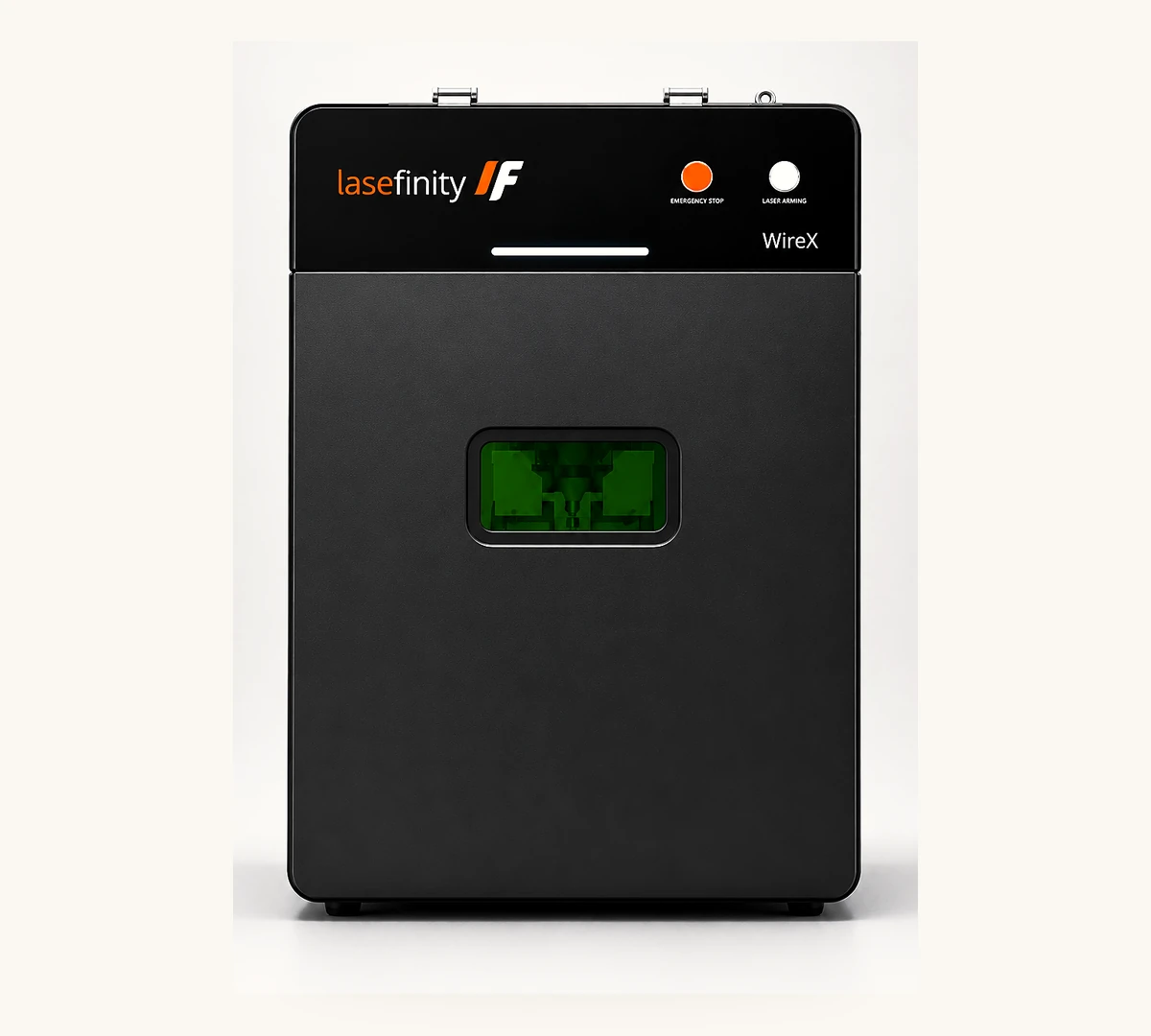
Lasefinity's WireX is a compact wire-fed DED metal 3D printer designed for research, education and prototyping. Because it uses metal wire rather than powder, its material-handling workflow differs from conventional powder-bed systems.
The important point is that neither technology should be considered universally better.
The application determines which process makes sense.
When Is In-House Metal 3D Printing Worth It?
Before investing in a machine, compare what you currently spend on manufacturing with what the complete in-house workflow would cost.
Start with the current cost of producing the part externally.
Then calculate:
Total in-house cost = Material + Machine time + Labour + Energy + Post-processing + Maintenance + Inspection
You can then use a simple calculation:
Potential annual saving = Current external manufacturing cost − Total annual in-house cost
And:
Simple payback period = Initial investment ÷ Annual saving
These calculations are only a starting point.
A small business should also consider benefits that are harder to measure, such as:
- Faster prototyping
- Shorter lead times
- Reduced supplier dependency
- Ability to produce customised components
- Faster design iteration
- New products or services
- Greater control over development
Research into metal AM adoption by SMEs shows that cost, complexity, energy consumption, quality and production characteristics can all influence whether a particular process is appropriate for an SME. This reinforces why there is no universal "best" machine for every small manufacturer.
When Should a Small Business Continue Outsourcing?
Bringing production in-house is not always the right decision.
Outsourcing may remain more practical when:
- You only need a small number of parts each year.
- Your components are straightforward to manufacture conventionally.
- Your expected machine utilisation is very low.
- The necessary post-processing is difficult to perform in-house.
- Your required materials are not supported by the machine.
- The cost of installing and operating the system outweighs the benefit.
Metal AM also does not need to replace conventional manufacturing.
A workshop could use:
- Metal 3D printing → for complex or customised components
- CNC machining → for finishing and tight-tolerance features
- Conventional manufacturing → for higher-volume standard components
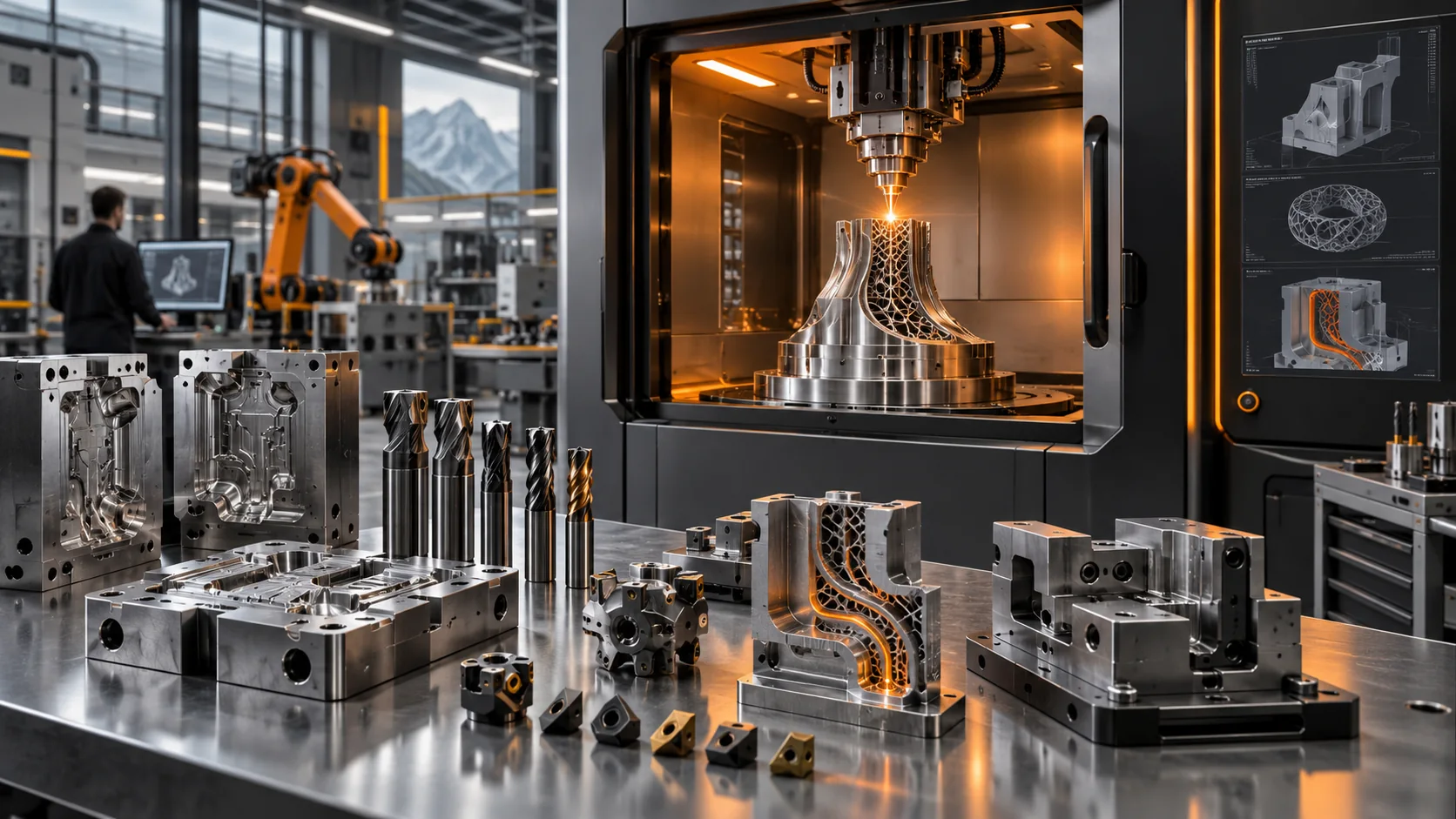
In many cases, the most practical approach is to use additive and conventional manufacturing together.
How Should a Small Business Choose a Metal 3D Printer?
Before requesting quotations, define your requirements.
| Question | Why It Matters |
|---|---|
| What parts will we manufacture? | Determines whether AM is appropriate |
| What materials do we need? | Narrows the technology and machine options |
| How many parts will we produce? | Helps estimate machine utilisation |
| What build volume is required? | Prevents paying for unnecessary capacity |
| How complex are the components? | Helps determine suitable AM processes |
| What post-processing is required? | Determines the real production cost |
| Who will operate the system? | Identifies training requirements |
| What infrastructure is available? | Determines installation requirements |
| What quality level is required? | Influences process monitoring and inspection |
| What is the expected payback? | Tests the commercial case |
The goal should not be to find the cheapest desktop metal 3D printer or the most powerful industrial system.
It should be to find a system that solves a real manufacturing problem while fitting your budget, workflow and future requirements.
Final Thoughts
Metal 3D printing can give small manufacturers another way to approach prototypes, customised components, replacement parts, tooling and short production runs.
But bringing the technology in-house is not simply a matter of purchasing an affordable metal 3D printer.
The decision should start with the application.
Understand the parts you want to manufacture, the materials you need, the production volume, the required quality and the complete post-processing workflow. Then compare the available technologies, calculate the total cost of ownership and determine whether the machine can be used often enough to justify the investment.
For businesses exploring different metal additive manufacturing approaches, Lasefinity offers both Laser Powder Bed Fusion and wire-fed Directed Energy Deposition systems for different development and manufacturing requirements.
Explore Lasefinity's metal 3D printing systems
The right metal 3D printer is not necessarily the smallest, cheapest or most powerful machine.
It is the one that fits the way you actually manufacture.