

X-Series
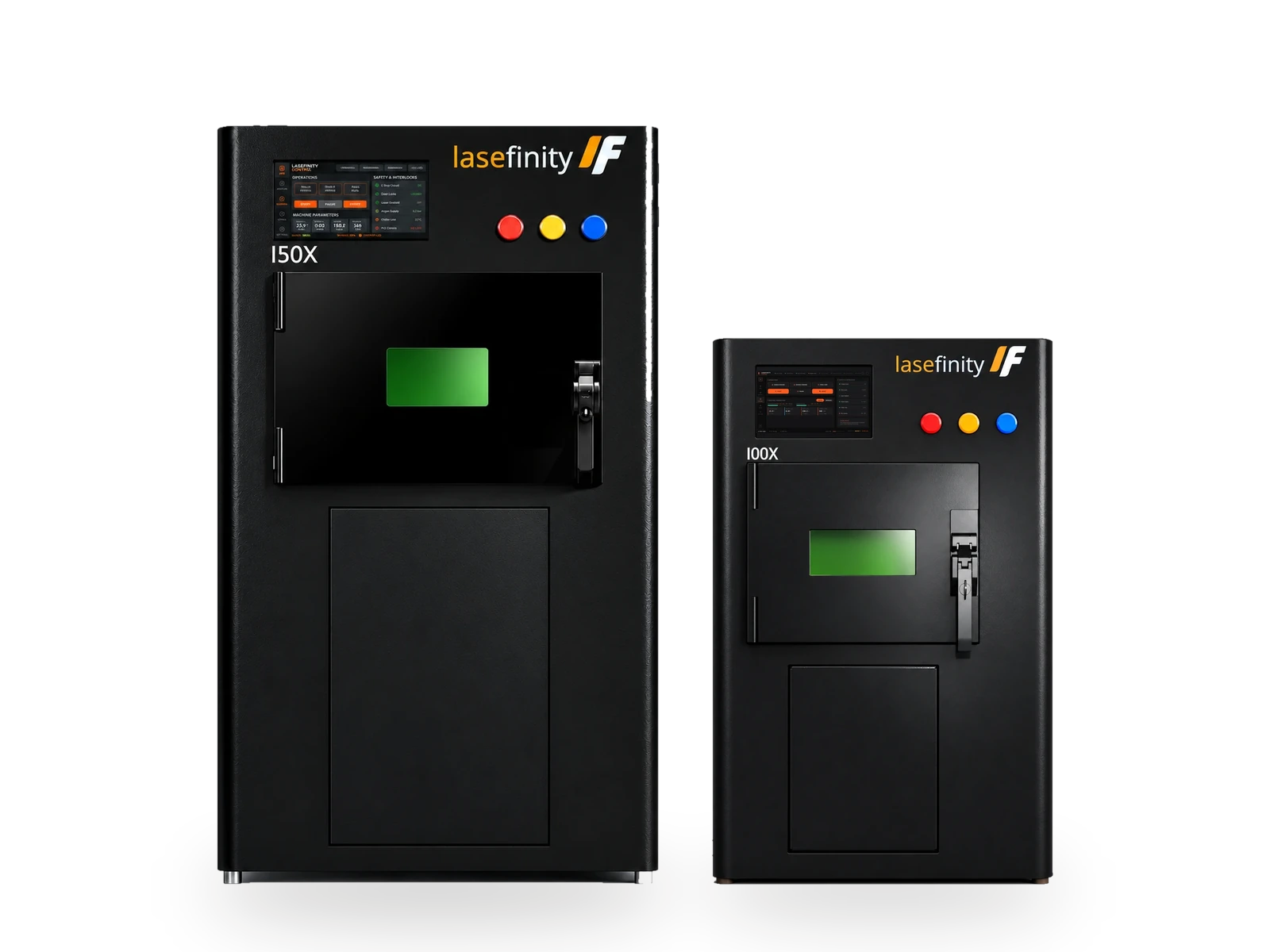
Two L-PBF Metal 3D Printers: 100X and 150X
The X-Series is built around one idea: prove your parameters on the 100X, then scale the same process to larger parts on the 150X. Both machines run a 500 W fibre laser with galvo scanning and a 70-150 µm beam diameter, so what you develop on one carries over to the other.
One Process, Two Build Volumes
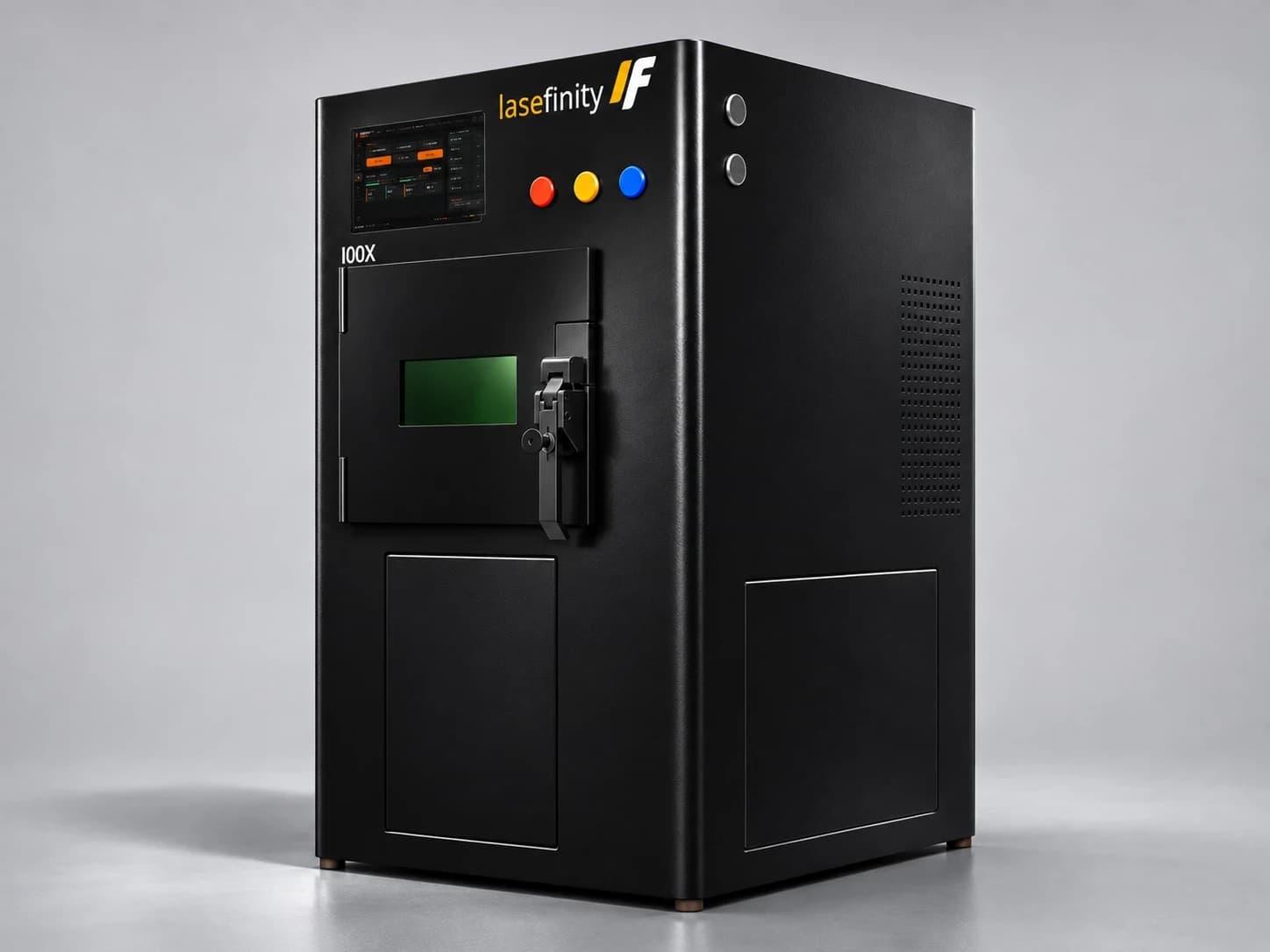
Developing a new alloy or a new part on a large machine is expensive: every trial consumes powder, machine hours and argon. The 100X keeps that development work in a 100 mm cube and a 460 × 460 × 720 mm cabinet, so a laboratory, a workshop corner or a teaching space can run it.
When the parameters are settled and the parts get bigger, the 150X runs the same 500 W fibre laser, the same galvo scanning and the same 70-150 µm beam diameter in a 150 mm cube. The process you proved does not have to be re-developed for a different machine.
Shared across both machines
- 500 W fibre laser with galvo scanning
- 70-150 µm beam diameter
- Front-loading build chamber with a viewing window
- Touchscreen control with operations, parameters and interlock status on one screen
- Emergency stop and status indicators on the front panel
Which Machine Fits Your Work?
The two machines differ in build volume and footprint, not in the process itself.
100X — develop and prove
A 100 × 100 × 100 mm build volume in a 460 × 460 × 720 mm cabinet weighing 100 kg. Suited to parameter development, coupons, small components, teaching and shared laboratory space.
150X — scale the same process
A 150 × 150 × 150 mm build volume in a 560 × 560 × 1000 mm cabinet weighing 150 kg. The step up when the part, the batch or the demonstrator no longer fits a 100 mm cube.
Both — the same laser and optics
A 500 W fibre laser with galvo scanning and a 70-150 µm beam diameter on both machines, so scan strategies and energy-density work transfer between them.
Not sure yet?
Send us the parts you want to build, the materials you work with and the space you have. We will tell you honestly which machine fits, including when the answer is WireX or another route entirely.
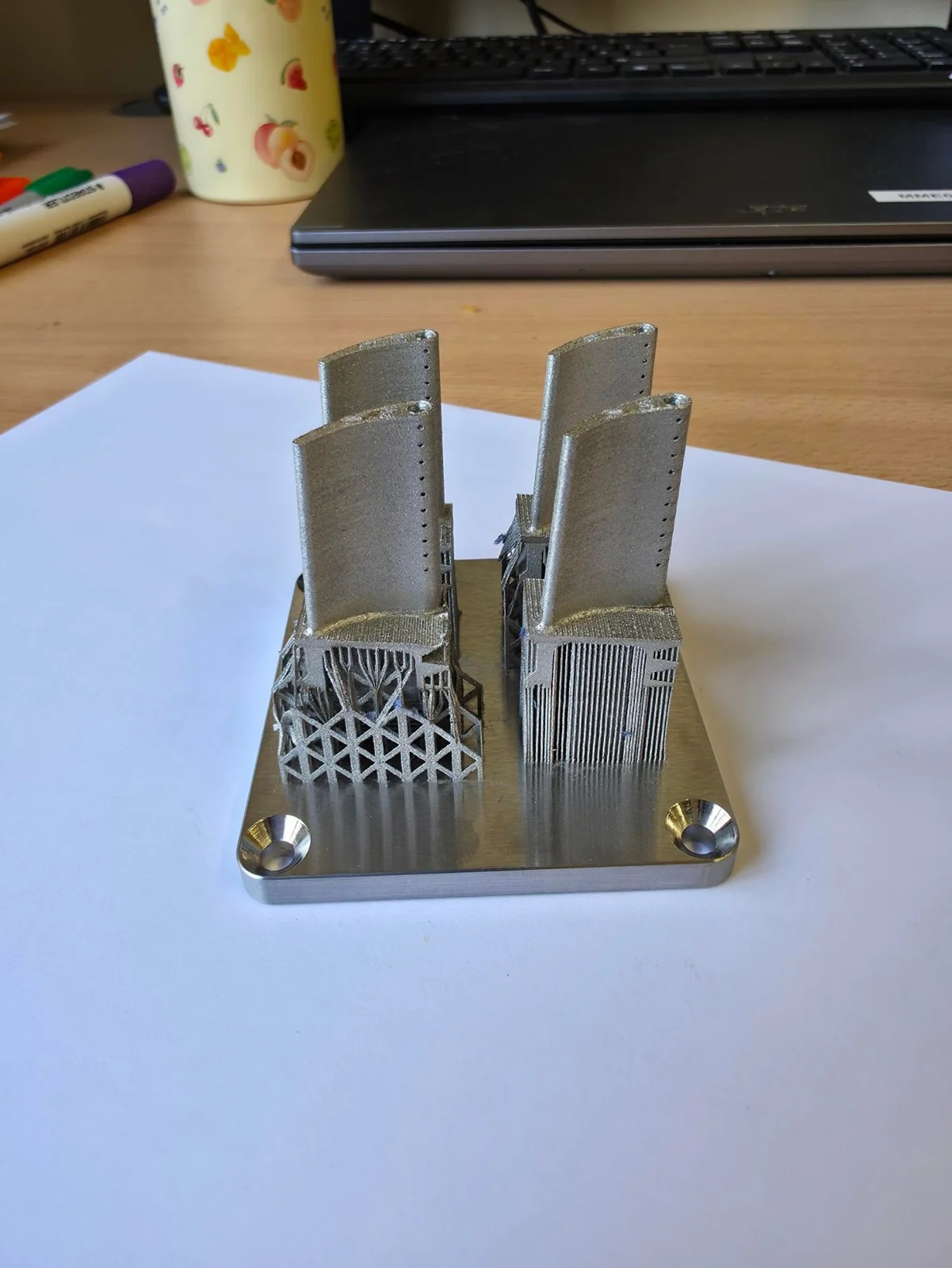
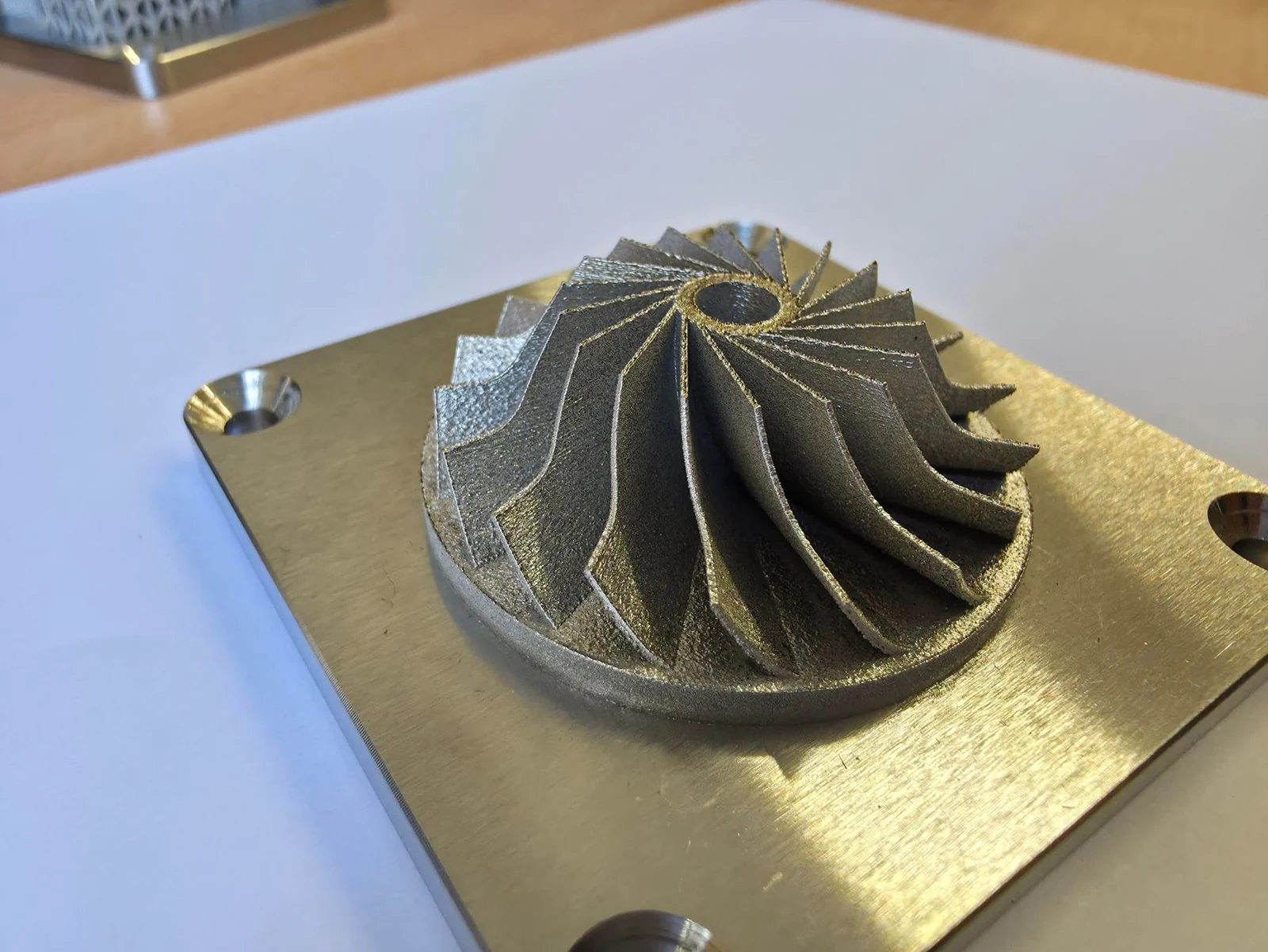
Parts From Our L-PBF Development Work
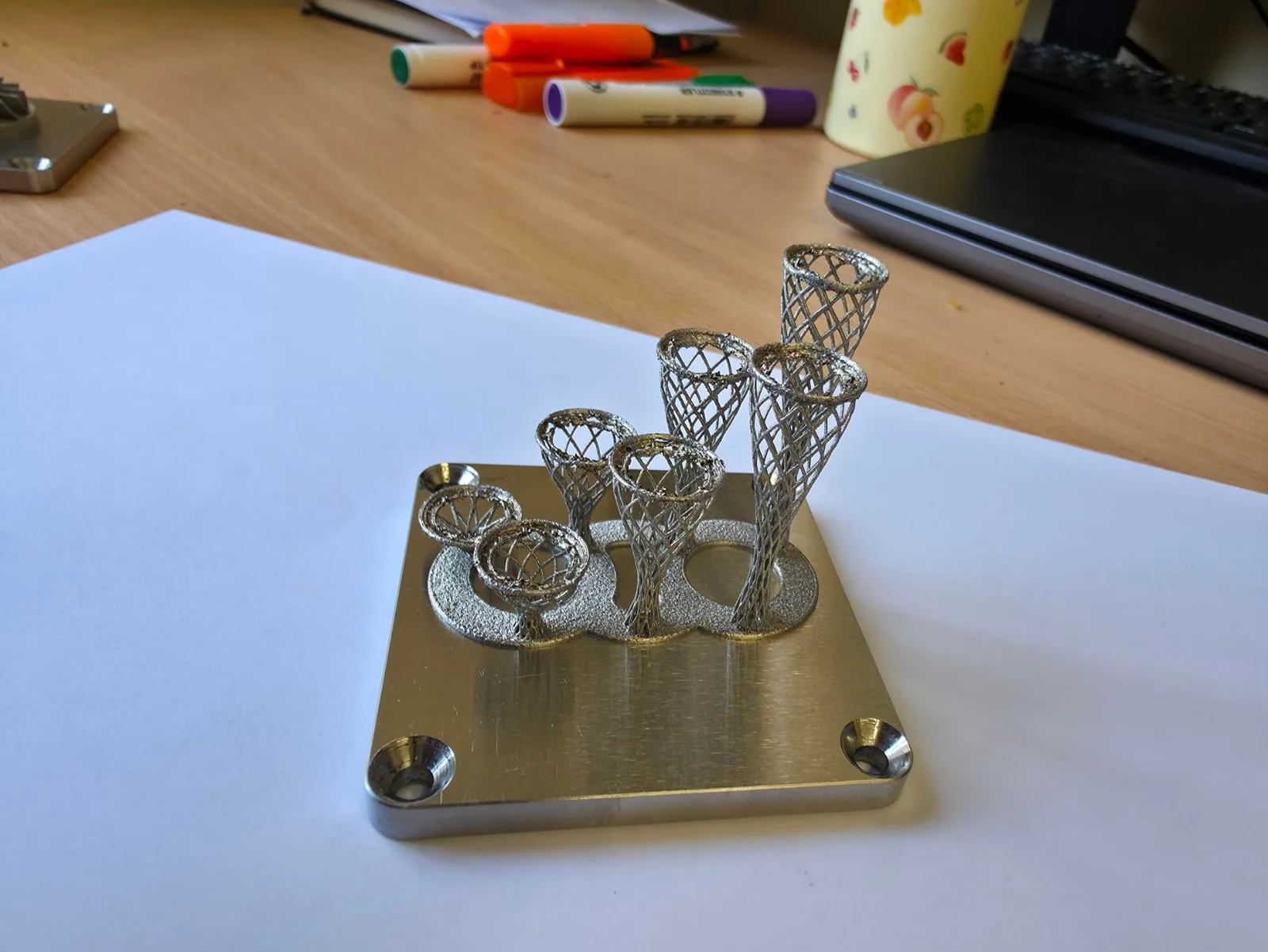
Thin-walled aerofoils, a bladed impeller and open lattice structures, straight off the build plate before support removal and finishing.
100X Technical Specifications
The compact machine in the series: a 100 mm cube build volume in a 460 × 460 × 720 mm cabinet.
150X Technical Specifications
The same laser, optics and beam diameter as the 100X, with a 150 mm cube build volume.
How Laser Powder Bed Fusion Works
A thin layer of metal powder is spread across the build area and the laser selectively melts the cross-section of the part. The platform drops by one layer thickness, the recoater spreads fresh powder, and the cycle repeats until the component is complete.
Because the part is built layer by layer, L-PBF can produce internal channels, lattice structures and consolidated geometry that would be difficult or uneconomical to machine. Our guide to design for additive manufacturing covers the design rules that decide whether a part prints well.
Where the X-Series Fits
The X-Series is aimed at research groups, universities and engineering teams that need their own L-PBF capability rather than a service-bureau slot: alloy and parameter development, coupons and test geometry, teaching, and functional prototypes.
If your work is wire-fed deposition, repair or cladding instead, WireX is the better starting point, and LaseX1 covers standalone fibre-laser integration.
Request a Quotation
X-Series pricing depends on configuration, so we quote per enquiry rather than publishing a single figure. The conversation usually takes three steps.
How it works
- Tell us the parts, materials and build size you are working with
- We recommend the 100X or the 150X, and say so if neither is the right answer
- You receive a quotation with lead time, installation and training options
Frequently Asked Questions
What is the difference between the 100X and the 150X?
Both machines use the same 500 W fibre laser, galvo scanning and 70-150 µm beam diameter. The 100X has a 100 × 100 × 100 mm build volume in a 460 × 460 × 720 mm cabinet, and the 150X has a 150 × 150 × 150 mm build volume in a 560 × 560 × 1000 mm cabinet. The idea is to prove parameters on the 100X and scale the same process to larger parts on the 150X.
Which machine should I start with?
If your work is parameter development, coupons, small components or teaching, the 100X usually fits the space and the budget. If you already know your parts are larger than a 100 mm cube, start with the 150X. Tell us the parts you need to build and we will recommend one.
Is the X-Series the same as SLM or DMLS?
SLM and DMLS are commonly used names for laser-based powder bed fusion. The X-Series machines are L-PBF systems, so a search for an SLM or DMLS machine refers to the same family of technology, although terminology varies between manufacturers.
What beam diameter do the X-Series machines use?
Both machines use a 70-150 µm beam diameter with galvo scanning, which covers fine detail and faster area scanning on the same system.
How much space do I need?
The 100X occupies 460 × 460 × 720 mm and weighs 100 kg. The 150X occupies 560 × 560 × 1000 mm and weighs 150 kg. Allow additional clearance for access, services and powder handling.
How much does the X-Series cost?
Pricing depends on configuration, so the X-Series is quoted per enquiry. Send us your application, materials and build-size requirements and we will come back with a quotation, lead time and installation options.
Can I see the machines before buying?
Yes. We exhibit the systems and show printed parts in person, and our engineers are happy to go through your application in a call or a visit. Contact us to arrange it.
Compare our products
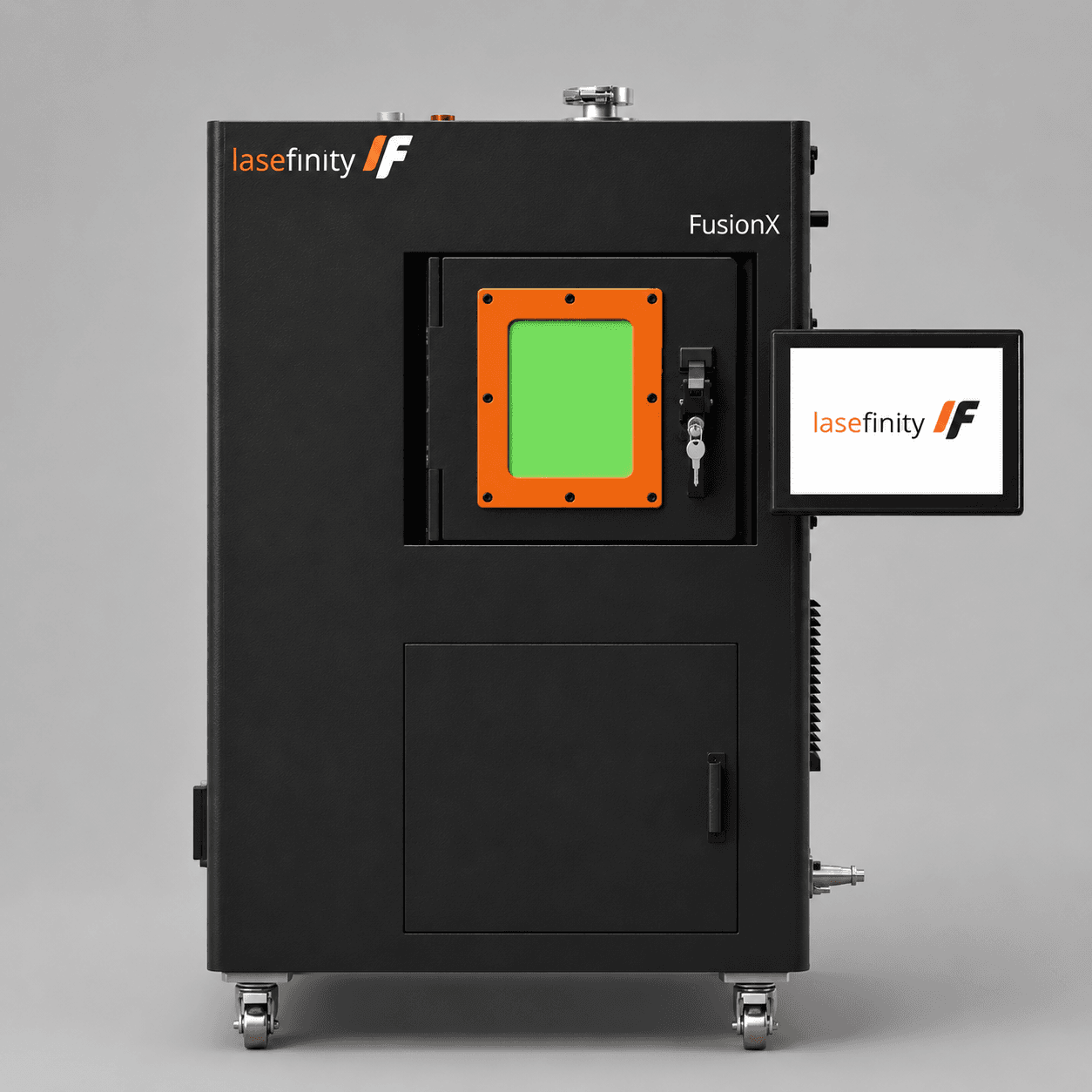
FusionX
A precision laser powder bed fusion system for metal 3D printing, offering control over energy delivery for fine-detail builds and advanced material development across stainless steel, titanium, superalloys and high-entropy alloys.
Explore FusionX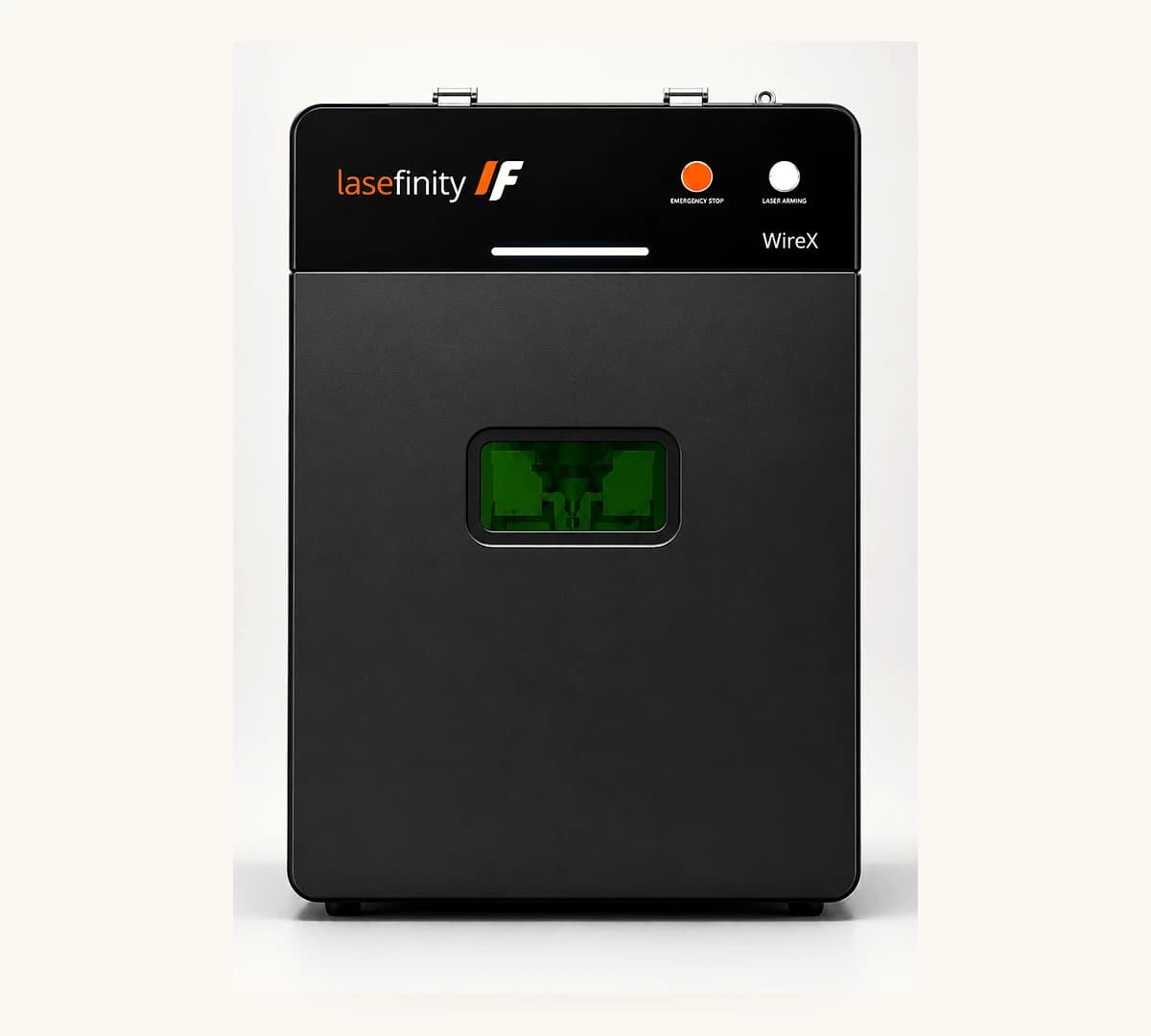
WireX
A compact wire-fed DED metal 3D printer designed for research, education and prototyping. By using metal wire instead of powder, WireX avoids the powder-handling concerns associated with conventional powder-bed systems, making it well suited to shared research and educational environments.
Explore WireX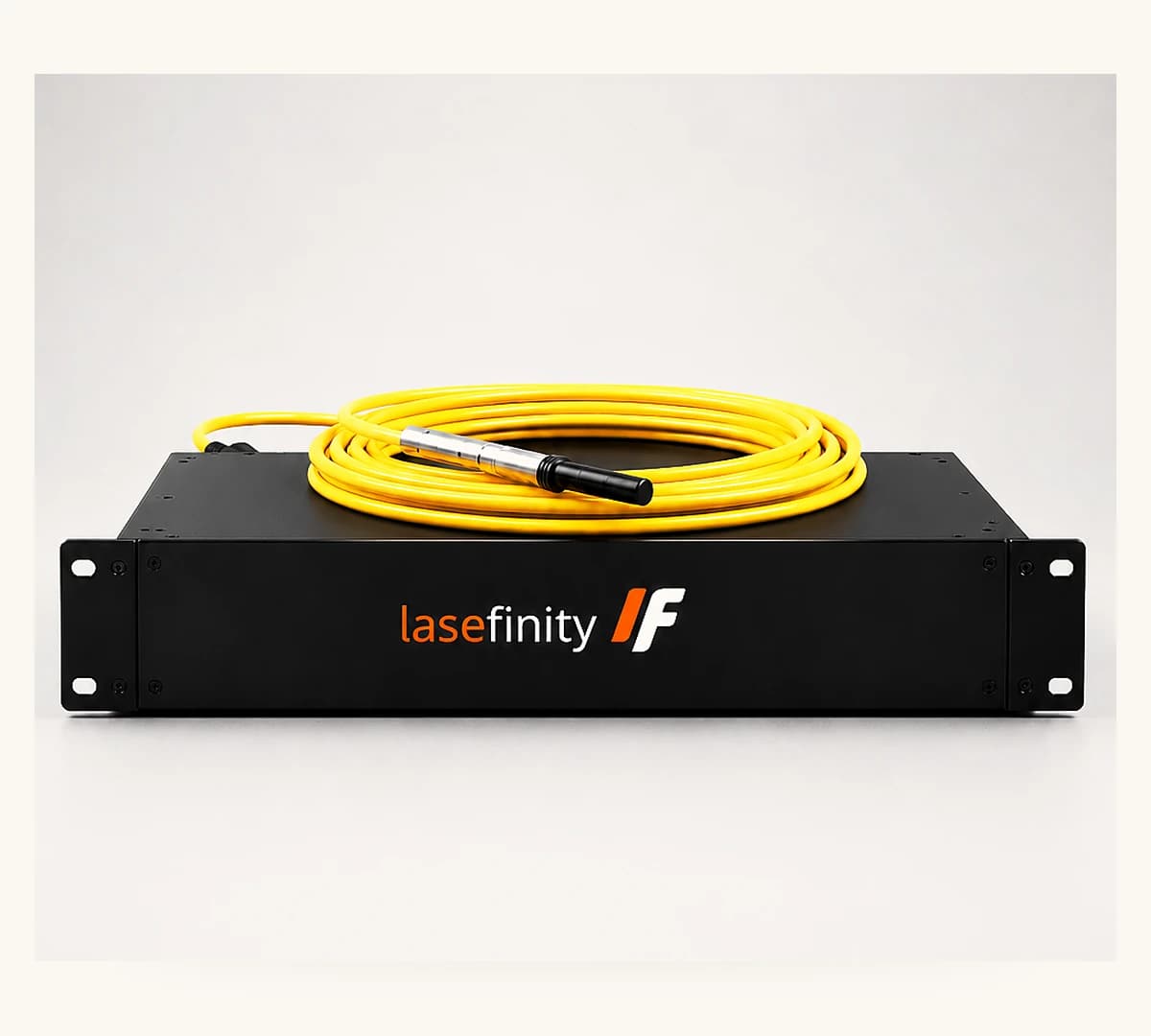
LaseX1
A high-performance 500W fibre laser source designed for industrial material processing, additive manufacturing and OEM integration. With stable power delivery from 10-100%, flexible control and a compact 14.5 kg design, it is built for integration into laser systems, CNC equipment and custom automation platforms.
Explore LaseX1Request a quotation
Send us the material, the part geometry and the tolerances you are working to. We will recommend the right process and system configuration, including telling you when the answer is not one of ours.